
Key Takeaways
- **Regulatory Headwinds & Valuation Scrutiny:** The high-level dialogue between policymakers and AI leaders, coupled with CEO Dario Amodei’s calls for slowing AI advancement, signals an impending era of increased regulatory scrutiny. This could temper the frothy valuations seen in the AI sector, particularly for private firms like Anthropic eyeing a public debut, as compliance costs and operational restrictions become clearer.
- **Geopolitical AI Arms Race Intensifies:** Former President Trump’s explicit framing of AI as a critical “US vs. China” race underscores the strategic national importance of AI dominance. This narrative will likely drive significant government R&D investment and potential trade policies (e.g., export controls), creating both opportunities for domestic champions and complex challenges for companies with global supply chains or international market ambitions.
- **Corporate Reputation & Market Access Risks:** Anthropic’s designation as a “supply chain risk” by the Pentagon highlights how ethical concerns and perceived national security vulnerabilities can directly impact a company’s market access and reputation, especially in sensitive sectors. This sets a precedent for how government agencies might evaluate AI vendors, influencing procurement decisions and potentially limiting growth avenues for firms perceived as risky.
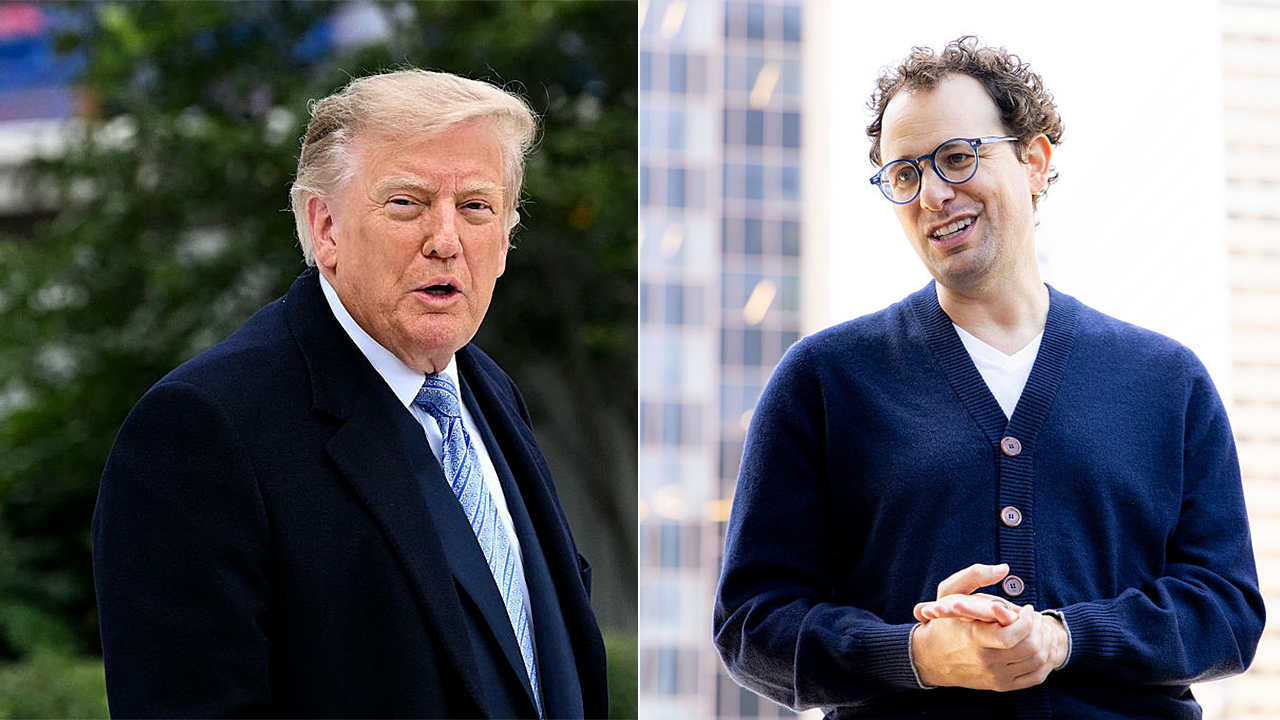
In a move underscoring the escalating convergence of cutting-edge technology, national security, and political strategy, former President Donald Trump held a private dinner with Anthropic CEO Dario Amodei at the White House on Sunday evening. This high-profile meeting unfolds against a backdrop of intensifying debate over artificial intelligence’s rapid advancement, its inherent risks, and the urgent need for regulatory frameworks, all of which carry significant implications for the burgeoning AI market and its multi-trillion-dollar potential.
Trump confirmed the confidential meeting to Fox News’ Aishah Hasnie, bringing the CEO of one of the leading generative AI developers into the political spotlight. The discussion’s timing is particularly salient, coming just weeks after Amodei publicly voiced profound concerns regarding the accelerating pace of AI development, advocating for a deliberate slowdown to manage its potential societal and economic risks.
“We must slow the pace at which we improve the capabilities of AI models. Progress will still seem fast, and we must make wise use of the time we gain,” Amodei articulated in a recent essay. Such a stance from a top executive in the competitive AI landscape – where companies are in a relentless race for computational power and model superiority – naturally raises questions among investors about future R&D spending, market growth trajectories, and the potential for self-imposed or government-mandated deceleration that could impact profitability, particularly for a highly valued private entity like Anthropic, which is frequently discussed as a potential IPO candidate.
ANTHROPIC CEO SAYS AI COULD CURE MOST DISEASES WITHIN NEXT DECADE – A DUAL NARRATIVE FOR INVESTORS
President Donald Trump and Anthropic CEO Dario Amodei are meeting for a private dinner at the White House on Sunday evening.(Getty Images / Getty Images)
Amodei’s advocacy extends beyond domestic discussions. Just last week, he addressed the U.N. Security Council, emphasizing the critical need for the AI industry to establish robust international standards and foster global cooperation to mitigate the systemic threats posed by increasingly sophisticated AI capabilities. This call for global governance echoes through boardrooms, hinting at a future where AI development might be shaped not just by market forces but by multinational accords, potentially affecting intellectual property rights, data sovereignty, and the global distribution of AI talent and infrastructure. For investors, this suggests a more complex, globally interdependent regulatory environment that could introduce friction into international market expansion plans for AI firms.
The internal dissent within the AI community further amplifies these concerns, adding a layer of market uncertainty. Former Anthropic researcher Jacob Coxon’s dramatic resignation earlier this month serves as a stark warning. Coxon, who previously worked at OpenAI, accused leading AI companies of a reckless pursuit of “self-improving superintelligence,” arguing they are “gambling with our lives.” Such high-profile defections, particularly from technical experts, can erode investor confidence by highlighting unquantifiable “tail risks” associated with advanced AI, potentially leading to increased due diligence requirements for venture capitalists and public market investors alike, and even influencing long-term risk premiums on AI-related assets.
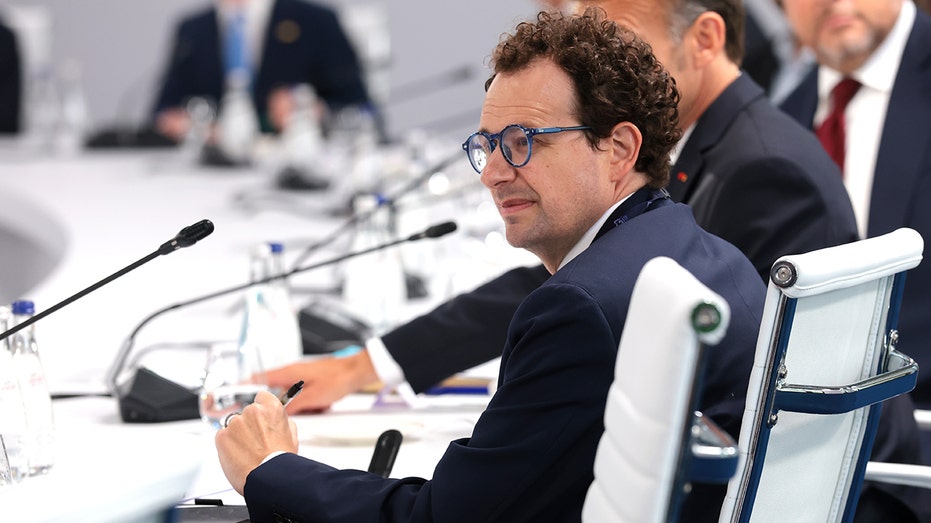
CEO of Anthropic, Dario Amodei, warned that the pace of AI advancement needs to be slowed down.(Anna Moneymaker/Getty Images / Getty Images)
When pressed by Hasnie on Amodei’s call for caution, former President Trump’s response painted a picture of geopolitical urgency and fierce competition. “We’re going to talk about it. I’m for let’s go and let’s win. We’re about a year, maybe a year and a half up on China. There is nobody in third place. It’s just us and China. We’re leading by quite a bit. I spoke a little bit about it with President Xi. Not too much, it wasn’t a topic of conversation. Because I think if you, as they say, open it up to China, you give up the lead. But I’ll be speaking to Dario and others,” Trump stated.
This “let’s go and let’s win” philosophy directly contrasts Amodei’s more cautious approach, signaling a potential policy divergence that could impact domestic AI investment strategies. For investors, this implies continued government support for innovation and R&D in the U.S. AI sector, but also the looming threat of heightened trade barriers, export controls on critical AI technologies (like advanced chips and foundational models), and restrictions on cross-border AI collaborations, particularly with China. Companies like NVIDIA, AMD, and various cloud providers (Microsoft Azure, AWS, Google Cloud) that supply the foundational infrastructure for AI development would be directly impacted by such geopolitical strategic shifts, potentially leading to market fragmentation and distinct regional investment opportunities.
MELANIA TRUMP URGES AI ‘VIGILANCE,’ SAYS AMERICANS NEED TO GET EDUCATED – A SIGNAL FOR PUBLIC ENGAGEMENT
The broader landscape of White House engagement with the tech sector further illustrates this evolving narrative. Notably, Amodei was absent from Thursday’s state dinner for Chinese President Xi Jinping, an event that saw the attendance of other tech luminaries such as OpenAI CEO Sam Altman, Amazon CEO Jeff Bezos, and Meta CEO Mark Zuckerberg. This selective invitation list suggests a deliberate alignment of certain tech leaders with specific geopolitical stances, or perhaps a strategic exclusion based on existing policy disagreements. The presence of Altman, in particular, highlights OpenAI’s prominent position in the AI race and its extensive engagement with policymakers, potentially putting Anthropic at a disadvantage in direct government lobbying efforts if their stances are perceived as misaligned with current administration priorities, impacting future funding or partnership opportunities.
Looking ahead, Trump also announced a more expansive White House meeting scheduled for Tuesday, involving House Speaker Mike Johnson and a broader cohort of AI executives. “We have a very big meeting on Tuesday where everybody’s coming in and that’ll be very important,” Trump told Hasnie. These high-level gatherings are crucial signals for the market, indicating that AI regulation and national strategy are ascending to the forefront of the political agenda. Investors should anticipate forthcoming policy proposals, potential legislative action, and increased government funding initiatives that will inevitably reshape the competitive landscape for AI companies, from startups to established tech giants, by creating new market incentives, compliance burdens, or barriers to entry.
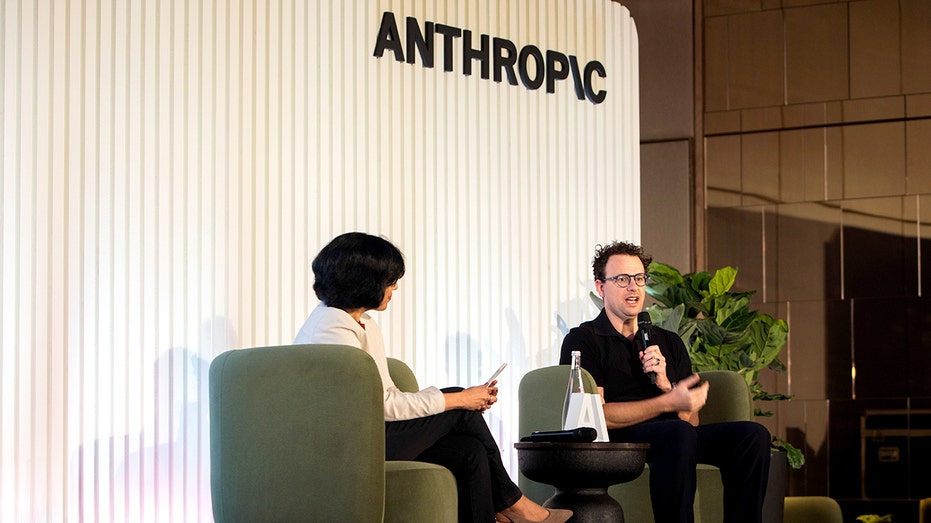
Anthropic has been involved in a legal fight with the Pentagon over its designation of the tech company as a supply-chain risk.(Samyukta Lakshmi/Bloomberg via Getty Images / Getty Images)
Adding another layer of complexity to Anthropic’s market positioning is its ongoing legal dispute with the Pentagon. The company has been fighting its designation as a “supply chain risk,” a label that carries significant implications for its ability to secure lucrative government contracts and participate in critical national defense initiatives. In a 2-1 ruling Friday, an appeals court sided with the Pentagon, upholding the department’s right to maintain this designation for Defense Department procurement purposes.
“Confirmed: @AnthropicAI=Supply Chain Risk. The @DeptofWar does what is right for the Country and our Warriors,” Pentagon chief Pete Hegseth posted on social media following the ruling. This adverse legal outcome is a tangible setback for Anthropic. For investors, it signals potential limitations on the company’s growth vectors, particularly in the high-value government sector, and casts a shadow on its overall risk profile. Furthermore, it sets a precedent for how other AI firms might be evaluated for national security risks, potentially leading to a more stringent vetting process for all AI vendors seeking to partner with government agencies, thereby increasing compliance burdens and market entry barriers, while potentially reducing the total addressable market for certain AI applications.
GET FOX BUSINESS ON THE GO BY CLICKING HERE – STAY INFORMED ON AI’S MARKET MOVEMENTS
Market Impact
The confluence of high-level political engagement, ethical debates within the AI community, and geopolitical competition portends a transformative period for the artificial intelligence market. Investor sentiment, already sensitive to the rapid pace of technological change and valuation concerns, will be heavily influenced by the impending regulatory environment. While calls for “slowing down” AI development could introduce friction, increase compliance costs, and potentially extend R&D timelines, the overarching drive for national AI superiority, particularly against China, suggests continued, albeit more focused, government investment and strategic support for domestic AI champions. Companies like Anthropic, navigating both ethical imperatives and national security designations, face heightened scrutiny. Their ability to successfully balance innovation with responsible development and strategic alignment with national interests will dictate their long-term growth trajectory and public market appeal. The market should brace for increased volatility as policy frameworks materialize, potentially differentiating winners and losers based not just on technological prowess but also on perceived trustworthiness, ethical governance, and alignment with national strategic priorities, thereby recalibrating the risk-reward profiles across the entire AI ecosystem.