
Key Takeaways
- Revolutionary Hearing Aid Alternative:Legato emerges from stealth with $12 million in funding, introducing “Legato Frames” – AI-powered hearing glasses designed to address mild to moderate hearing loss with discretion and ease.
- AI-Driven Clarity, Not Just Amplification:Unlike traditional hearing aids, Legato Frames utilize advanced AI to intelligently differentiate between background noise and human voices, amplifying only what’s essential for clearer, less fatiguing conversations.
- Bridging the Treatment Gap:Founded by former Bose and EssilorLuxottica veterans, Legato aims to overcome the cost, comfort, and stigma associated with conventional hearing aids, making hearing care as “ubiquitous as vision.”
Legato Unveils AI Hearing Glasses: A Stealthy Leap Towards Ubiquitous Hearing
Hearing loss is a silent epidemic affecting approximately 50 million adults in the United States, yet a staggering 80% of those diagnosed never seek treatment. The reasons are multifaceted: high costs, discomfort, and the persistent social stigma associated with traditional hearing aids. Enter Legato, a new hearing technology company poised to disrupt this landscape, emerging from stealth with a formidable $12 million in funding and a groundbreaking product: AI hearing glasses named Legato Frames.
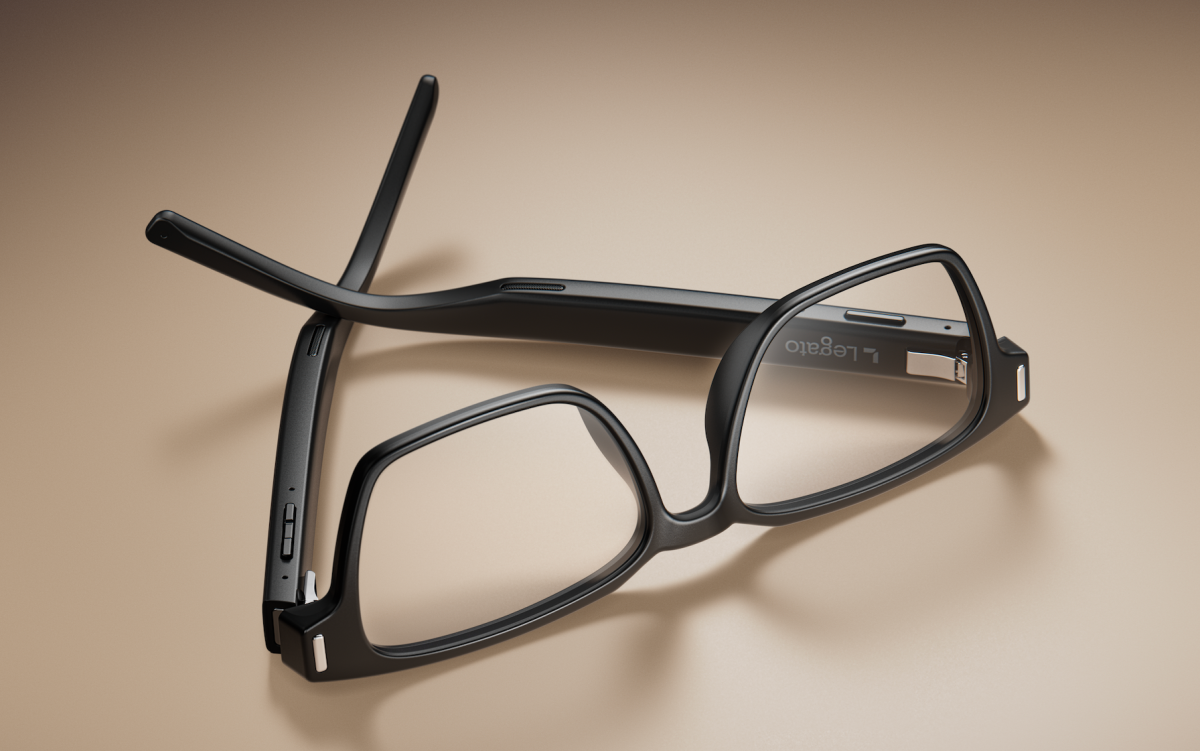
These innovative frames, exclusively unveiled to TechCrunch, integrate patented hearing-assistance technology seamlessly into standard eyewear. Scheduled for a launch later this fall, Legato Frames are designed to look and feel like regular glasses, promising a discreet and user-friendly solution that could fundamentally change how millions experience sound.
The Visionaries Behind Legato’s Innovation
Legato is the brainchild of Mehul Trivedi and Steve Romine, two industry veterans whose careers have consistently pushed the boundaries of wearables and hearing care. Trivedi, a pioneer in smart eyewear, notably spearheaded the creation of Bose Frames and later led smart eyewear initiatives at EssilorLuxottica, contributing to projects like the Meta Ray-Bans. Romine brings extensive expertise from the hearing care sector, having previously managed Bose’s hearing aids division and served as COO of Audicus.
Their paths converged in late 2024 after Trivedi took time away from larger corporations to explore the burgeoning intersection of hearing technology and smart eyewear. Discovering a technology he believed could bridge these two worlds, he reconnected with Romine, and Legato was born. Their shared experience and vision laid the groundwork for a company determined to redefine hearing accessibility.
“Our goal is to make hearing as ubiquitous as vision,” Trivedi articulated in an interview with TechCrunch. “It’s kind of a no-brainer that you go to an eye exam, you get your glasses, you wear your glasses, and you’re happy, and you do that for the rest of your life — and the idea of it being blurry again where you would just stop wearing them is not a consideration. I think that’s what we want to do with hearing: just make it something that people address and almost forget about.”
This philosophy underscores Legato’s mission: to transform hearing assistance from a cumbersome medical device into an effortless, integral part of daily life, much like prescription eyeglasses.
Legato Frames: Redefining Discreet Hearing
Legato is specifically targeting individuals with mild to moderate hearing loss, a demographic that represents the largest segment of the hearing-loss population and is often the least served by traditional solutions. The company’s core objective is to dismantle the formidable barriers of cost, comfort, and stigma that prevent so many from seeking help.
From the outset, Legato committed to creating glasses that are as small and lightweight as possible, ensuring they blend seamlessly into everyday life. This commitment led to the development of a proprietary acoustic system, a sophisticated signal-processing stack, and an innovative mechanical architecture—all designed to deliver effective hearing assistance without compromising on aesthetics or comfort. The aim is to create a product that users embrace, rather than hide.

The AI Advantage: Clarity in a Noisy World
Where Legato truly differentiates itself is in its sophisticated approach to sound processing. Traditional hearing aids often rely on directional microphones, which can effectively amplify sounds from a specific direction in quiet settings but struggle to isolate voices in complex, noisy environments like bustling restaurants. This often leads to a “cognitively draining” listening experience, where the brain works overtime trying to parse desired sounds from overwhelming background noise.
Legato Frames take a revolutionary different path. They employ an AI-powered system specifically engineered to intelligently differentiate between background noise and human voices. This allows the technology to amplify only the voices, delivering unparalleled clarity without the overwhelming cacophony of amplified ambient sounds. The goal is to make conversations flow naturally, reducing listener fatigue and enhancing engagement.
“We wanted to deliver an experience that was unique,” Trivedi explained. “So a form factor that’s really discreet and looks normal. They’re meant to feel and look like regular glasses. And so, we want it to be a product that’s effortless, easy to use, with kind of no controls that you need to fiddle with, works everywhere, works throughout your day, doesn’t need a ton of configuration, and just delivers you better hearing.”
This focus on an effortless user experience is central to Legato’s design philosophy. Users won’t need to fiddle with complex controls; the AI handles the heavy lifting, adapting to various soundscapes throughout the day.
Engineered for Privacy and Seamless Integration
A common concern with open-ear audio devices is sound leakage, but Legato has engineered a solution. While the frames feature an open-ear design for comfort and situational awareness, they incorporate a sophisticated dual-speaker system. This system precisely directs sound toward the wearer while simultaneously canceling sound that attempts to escape, reducing external sound by an impressive 99% just a few inches away from the ear. This ensures that the hearing assistance remains a private experience for the wearer.
Bottom Line
Legato’s entry into the hearing tech market marks a significant moment, promising to dismantle long-standing barriers to hearing care. By combining smart eyewear aesthetics with advanced AI-driven audio processing and a user-centric design philosophy, Legato Frames are poised to transform hearing assistance from a stigmatized necessity into a seamless, integrated enhancement for daily life. With substantial funding and a clear vision, Legato is well-positioned to make better hearing not just accessible, but truly ubiquitous.

Legato’s Smart Frames: Blending Vision, Hearing, and Connectivity for the Modern Age
**Key Takeaways:**
* **Disrupting Hearing Health:** Legato is poised to revolutionize the hearing aid market with stylish, integrated smart frames that offer advanced hearing assistance without the stigma or prohibitive cost of traditional devices.
* **Beyond Just Hearing:** The company emphasizes the profound impact of better hearing on overall well-being, including reducing risks of dementia and depression, framing their product as a tool for enhanced connection and quality of life.
* **Accessible Innovation:** Launching through eye-care providers and potentially eligible for vision insurance, Legato aims to make cutting-edge hearing and vision technology more affordable and widely available than ever before.
—
In an era where technology increasingly seeks to seamlessly integrate into our daily lives, a new player, Legato, is stepping onto the scene with an innovation that promises to bridge a critical gap in personal health tech: integrated hearing and vision assistance. Forget bulky hearing aids or clunky wearables; Legato is introducing smart frames that elegantly combine corrective vision with advanced hearing support, all wrapped in a design that’s meant to be worn for 16 hours a day.
The company’s approach isn’t just about miniaturizing technology; it’s about re-imagining accessibility and breaking down the barriers that have long prevented millions from addressing their hearing needs. With substantial backing from prominent investors like Neotribe Ventures, Listen, and Village Global, Legato has primarily channeled its funding into robust product development and strategic marketing, signaling a strong belief in the market’s readiness for a paradigm shift.
The company’s funding, which is from Neotribe Ventures, Listen, and Village Global, has largely gone toward product development, along with marketing efforts.
### The Hidden Costs of Hearing Loss: More Than Just Sound
Legato’s vision extends far beyond simply amplifying sound. As Trivedi, a key figure at Legato, articulates, the challenge of hearing isn’t merely about needing to “hear the TV better.” It’s fundamentally about **connection**. The implications of unaddressed hearing loss are profound, impacting social interaction, mental well-being, and even cognitive health.
“We have an opportunity to address a population with this product and build something that delivers without all the compromises of traditional hearing aids,” Trivedi said. “Hearing, at first glance, it’s not so much just like ‘I want to hear the TV better.’ It’s really about connection. When you hear better, you connect to the world. It reduces dementia risk and depression risk,” he continued.
Indeed, scientific research increasingly links hearing impairment to higher risks of cognitive decline, dementia, and social isolation, which can lead to depression. By restoring the ability to hear clearly, Legato’s smart frames aim to reconnect individuals with their environment, conversations, and ultimately, their lives. This positions their product not just as a medical device, but as a crucial tool for holistic health and improved quality of life.
### Reimagining Wearable Tech: Form Meets Function
Legato’s smart frames represent a significant leap in wearable technology. Designed to be worn comfortably for extended periods, they integrate sophisticated audio processing directly into eyeglass frames. This seamless blend of form and function means users no longer have to choose between stylish eyewear and effective hearing assistance. The frames likely incorporate directional microphones, advanced noise cancellation algorithms, and personalized sound profiles, allowing users to tailor their hearing experience to different environments – from quiet conversations to bustling public spaces.
The focus on a 16-hour wear time underscores the company’s commitment to creating a device that becomes an integral, unobtrusive part of the user’s day, rather than a cumbersome accessory. This long battery life, combined with durable and lightweight materials, suggests a product engineered for practical, everyday use, dissolving the barrier between “medical device” and “personal accessory.”
“There’s impactful hearing health factors associated with better hearing. We’ve got a product that lives on people for 16 hours that is trusted to help them with their hearing and their vision, and we’d love to continue helping them in every way we can.”
### A New Distribution Model for Greater Accessibility
One of Legato’s most compelling strategies is its plan for market entry. Rather than confining distribution to audiologists or specialized medical outlets, the company intends to launch its frames later this year through select eye-care providers nationwide. This move is ingenious: it leverages existing infrastructure for vision correction and targets a demographic already accustomed to purchasing and wearing frames.
Crucially, Legato states their product will “cost a fraction” of traditional hearing aids. This aggressive pricing strategy, combined with the potential for eligibility under vision insurance when purchased through an eye-care clinic, could significantly lower the financial barrier to entry for millions. For too long, the high cost of hearing aids has been a major deterrent, often leaving individuals with limited options. Legato’s approach could democratize access to essential hearing health, making advanced solutions available to a much broader audience.
When the frames launch later this year, Legato says they’ll be available through select eye-care providers nationwide and will “cost a fraction” of traditional hearing aids and may be eligible for vision insurance when purchased through an eye-care clinic.
### The Bottom Line
Legato is not just launching a new product; it’s spearheading a movement to redefine personal health technology. By merging essential vision and hearing support into a single, fashionable, and accessible device, they are directly challenging the status quo of a traditionally segmented and often expensive market. Their emphasis on enhanced connection and overall well-being, coupled with a smart distribution and pricing strategy, positions Legato to become a significant disruptor. As these smart frames hit the market, they hold the promise of not only improving hearing and vision but profoundly enhancing the quality of life for countless individuals, fostering a more connected and engaged world.
When you purchase through links in our articles, we may earn a small commission. This doesn’t affect our editorial independence.
Source:{feed_title}