

Spear Invest founder and CIO Ivana Delevska discusses the evolving AI value chain and its potential role on the global stage on ‘Making Money.’
**Key Takeaways**
- **Intensifying Geopolitical Tech Race:** While the U.S. maintains a lead in artificial intelligence (AI), China’s aggressive global strategy, particularly through Huawei’s integrated offerings, is rapidly narrowing the gap, fueling investor uncertainty and heightening geopolitical risk premiums across tech sectors.
- **Beyond Models – Foundational Market Pillars:** The AI competition extends far beyond just developing sophisticated models, encompassing critical market infrastructure such as energy generation, advanced semiconductors, vast data center capacity, and the establishment of global technical standards, creating diverse investment opportunities and risks across multiple industrial sectors.
- **Demand for a “Trusted Full-Stack Alternative”:** China’s vertically integrated technology solutions, often coupled with state financing and rapid deployment, compel the U.S. to foster a more competitive, trusted, and comprehensively supported “full-stack” alternative to secure global market share, technological leadership, and long-term economic influence.
The global contest for artificial intelligence supremacy between the United States and China is intensifying, evolving beyond a mere technological arms race into a high-stakes economic battle with profound implications for global markets and corporate valuations. While the U.S. currently holds a precarious lead, former State Department official Keith Krach warns that this advantage is eroding as Beijing leverages its state-backed enterprises, notably Huawei, to expand its technological footprint and influence worldwide. This isn’t just about who builds the fastest AI model; it’s about controlling the underlying economic infrastructure that will power the next era of innovation and commerce.
Krach’s assertion that “America is still ahead, but we are not comfortably ahead” should resonate deeply within investor circles. A “comfortable lead” implies stability, predictability, and reduced geopolitical risk – factors that currently feel scarce. The competition now encompasses foundational market pillars: energy, infrastructure, semiconductors, talent, exports, and the critical technical standards that will dictate interoperability and market access for decades. Each of these areas represents both significant capital expenditure and immense investment opportunities or, conversely, substantial risks.
The Trump administration’s “Winning the Race in July 2025” strategy, unveiled roughly a year ago, underscored Washington’s recognition of these broader stakes. For financial markets, the success or failure of such strategies directly impacts sectors from utilities to high-tech manufacturing. The insatiable power demands of AI data centers, for instance, are driving unprecedented investment into energy generation and grid infrastructure, presenting a boon for utilities, renewable energy developers, and related equipment manufacturers. Similarly, the push for faster data center construction fuels demand for real estate investment trusts (REITs) specializing in data centers, as well as construction and network equipment companies.
Former State Department official Keith Krach told FOX Business the U.S. remains ahead of China in the global artificial intelligence race, but its lead is narrowing.(Obtained by FOX Business)
Krach highlights the U.S.’s enduring strengths: robust private investment, leadership in advanced chips, superior cloud infrastructure, world-class universities, and a vibrant entrepreneurial ecosystem. These factors are direct drivers of market capitalization for companies like NVIDIA (advanced chips), Amazon Web Services, Microsoft Azure, and Google Cloud (cloud infrastructure), and fuel the venture capital flowing into AI startups. This sustained private sector dynamism is a core differentiator, attracting significant capital and fostering rapid innovation cycles that are difficult for state-controlled economies to replicate.
However, China’s gains are equally noteworthy and pose a tangible threat to U.S. market dominance. Beijing has made significant strides in AI-related patents, industrial deployment (integrating AI across its vast manufacturing base), research output, robotics, and the development of lower-cost open AI models. The proliferation of these open models, especially in developing economies, could allow China to capture significant market share by offering more accessible, albeit potentially less advanced, AI solutions. This creates a competitive pricing pressure that U.S. firms must contend with, potentially impacting margins and market penetration.
“We are leading today, but the race will be won by the ecosystem the world chooses to build on,” Krach emphasized. This “ecosystem choice” is the ultimate prize. It refers to the global adoption of a nation’s technical standards, software platforms, and underlying infrastructure – essentially, becoming the default operating system for the world’s digital future. The country whose ecosystem is chosen stands to gain unparalleled economic leverage, including recurring revenues, platform lock-in effects, and control over data monetization, profoundly impacting the long-term valuations of its dominant tech players.

A high-tech data center is pictured here. Krach argued that success should be measured through new power generation, faster data center construction, greater semiconductor capacity, wider AI adoption, allied contracts and technical talent.(iStock)
Central to China’s global technology push is Huawei, which Krach describes as a “vertically integrated delivery system” for technological and geopolitical influence. For investors, understanding Huawei’s strategy is crucial. The company offers a comprehensive package: wireless networks, data centers, cloud services, AI chips, software, cybersecurity tools, and crucially, state-backed financing. This “full-stack” approach, often at competitive prices, can be incredibly attractive to governments and enterprises in emerging markets, creating market stickiness that is “costly, disruptive and politically difficult” to dislodge once installed. This strategy directly limits market access and opportunities for U.S. and allied tech companies in these regions, impacting their global revenue streams and growth potential.
Krach underscores that the real strategic asset here is not just the hardware, but “long-term access to data, standards, software updates, technical dependencies and government relationships.” This translates into enduring economic power, data sovereignty challenges, and control over digital economies, influencing everything from data privacy regulations to future market evolution. China’s integrated offering, bolstered by state support and rapid deployment capabilities, poses a significant market challenge that the U.S. must address strategically.
“America must counter it with a trusted full-stack alternative that performs better and strengthens, rather than compromises, a partner country’s independence,” Krach argues. This means US tech companies, often driven by quarterly earnings, must align with national strategic objectives, potentially requiring increased R&D, strategic alliances, and government-backed contracts. Countries will choose American technology not just for its performance and trust, but also if it is easier to finance, deploy, and expand – a direct challenge to the U.S. private sector’s ability to compete with state-subsidized offerings.
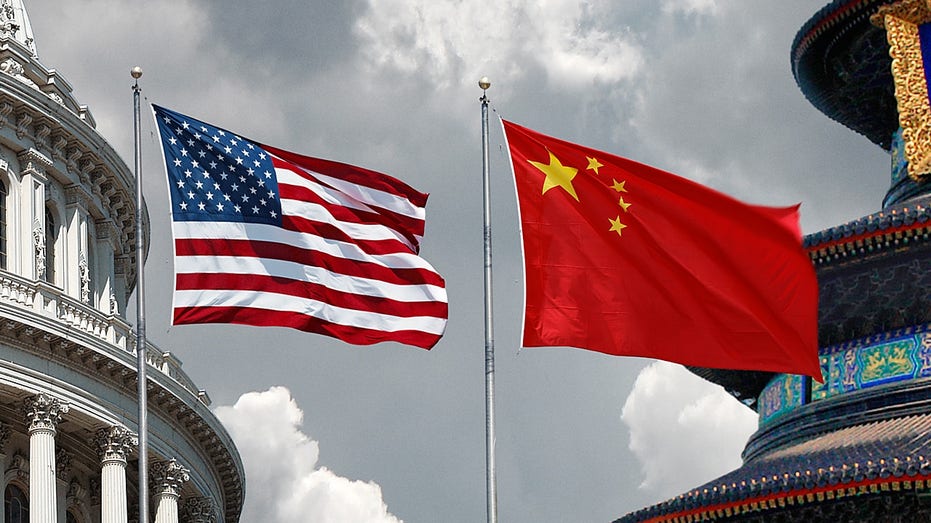
The U.S. and China are competing for dominance in AI and advanced technology.(iStock)
To maintain its competitive edge and ensure its “trusted alternative” is viable, the U.S. must undertake substantial investments. Expanding energy production, for instance, would be a boon for utility companies and the broader energy sector. The continued build-out of data centers and cloud capacity translates into sustained capital expenditures by hyperscalers like Amazon, Microsoft, and Google, and growth for data center REITs. Bolstering semiconductor manufacturing, as seen with the CHIPS Act, directs billions into domestic fab construction by companies like Intel and TSMC (building facilities in the U.S.). Furthermore, a focus on a skilled workforce impacts labor markets, education, and the long-term innovation capacity of tech firms.
Krach also advocates for practical policy changes like faster permitting processes, which would reduce project timelines and costs, making U.S. infrastructure development more competitive. Support for both proprietary and open American AI models fosters innovation and competition within the software sector. Critically, developing export packages that allies can easily purchase and deploy means government-backed financing, strategic alliances, and creating captive markets for U.S. technology – directly influencing the global sales trajectories of American tech giants.
“China’s advantage is coordinated scale,” Krach concludes, referring to its ability to marshal state resources towards national goals. “America’s advantage is freedom, innovation, capital, entrepreneurship and allies.” The complex task for the U.S. is to organize these inherent strengths without stifling the very qualities that make them powerful – a delicate balance between strategic coordination and free-market principles that will ultimately determine which economic ecosystem prevails.
Market Impact
The intensifying U.S.-China AI race is poised to create significant market volatility and shift investment flows across various sectors. Geopolitical tensions will likely continue to command a risk premium in tech valuations, particularly for companies with extensive exposure to both markets or complex global supply chains. However, this competition also unlocks substantial opportunities. Expect heightened capital expenditures in semiconductors, cloud infrastructure, and renewable energy, benefiting chip manufacturers (e.g., NVIDIA, Intel), cloud service providers (e.g., Microsoft, Amazon), data center REITs, and utility companies. Government policies, such as the CHIPS Act and export controls, will act as powerful market movers, directing investment towards domestic production and “trusted” supply chains, potentially leading to onshoring or “friend-shoring” trends. Companies aligned with U.S. strategic objectives or those offering secure, “full-stack” solutions with government backing may see premium valuations, while those heavily reliant on Chinese markets or vulnerable to restrictions could face headwinds. Ultimately, the choice of global technological ecosystems could lead to market fragmentation, impacting multinational corporations’ operating models and long-term revenue growth. Investors will need to keenly track policy developments and geopolitical shifts to navigate these evolving dynamics effectively.