
Keep abreast with complimentary notifications
Merely subscribe to the UK employment myFT Digest — forwarded immediately to your email.
Joblessness in the UK stabilized at a post-pandemic high of 5.2 percent early in the year, emphasizing the predicament for the Bank of England as monetary authorities confront a surge in energy costs and sluggish economic expansion.
The unemployment figure spanning November through January was below the 5.3 percent anticipated by market watchers. This was corroborated by distinct figures derived from taxation data, revealing that recruitment stabilized in the initial months of the year as ambiguity regarding fiscal policy relaxed subsequent to the November financial plan.
Payroll employment saw a modest increase of 6,000 from December to January, stated the Office for National Statistics on Thursday, with preliminary data indicating an additional gain of 20,000 or 0.1 percent from January to February.
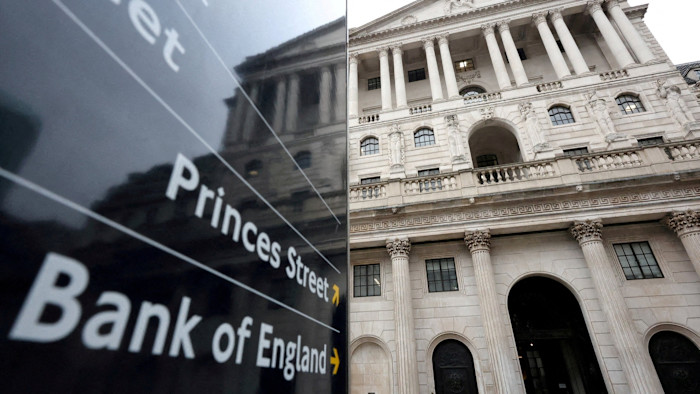
Nevertheless, these statistics are improbable to settle disagreements within the BoE’s Monetary Policy Committee as they convene on Thursday to determine borrowing costs for the initial occasion since hostilities commenced in Iran.
The Monetary Policy Committee has been divided for several months regarding whether to prioritize concerns over the subdued employment landscape or indications of inflationary forces still nascent within the national economy.
The information released on Thursday will offer monetary authorities some comfort that salary increases — a principal driver of inflationary tendencies — are at last decelerating.
Yearly increase in typical weekly private sector earnings, not including additional payments, reached 3.3 percent during the November-to-January quarter, falling short of the 3.5 percent expansion that experts generally predicted.
For the entire labor force, the yearly rise in weekly earnings, excluding additional payouts, diminished from 4.1 percent in the three months to December to 3.8 percent in the most recent three-month span ending January, according to the ONS.
However, the primary apprehension currently is the sudden spike in energy costs, which risks maintaining inflation significantly higher than the BoE’s 2 percent objective by the close of 2026.
This development has dashed earlier expectations that the MPC could reduce lending rates from their present 3.75 percent at the current week’s gathering, and policymakers are anticipated to provide scant direction regarding the future trajectory of monetary strategy while awaiting more definite information concerning the magnitude and length of the disruption.
The value of the pound showed minimal alteration post-data, settling at $1.326, as market participants concentrated on the subsequent BoE assembly.
Financial analysts noted that the figures indicated the UK was facing this fresh inflationary surge in a considerably altered environment compared to the onset of the previous one, thereby lessening the imperative for the Bank of England to modify its position.
“Currently, the job market is considerably less tight than it was when Russia launched its invasion of Ukraine in February 2022,” remarked Andrew Wishart, an economist with Berenberg, further stating: “Despite the fact that the energy cost surge resulting from the Iran conflict will elevate fuel prices, inflation stemming from within the country is poised to revert to a tolerable rate.”
Ashley Webb of Capital Economics consultancy, observed that even with some indications of employment reaching a steady state, the statistics revealed “that the job sector remained feeble prior to the fresh stagflationary impact” and would “likely deteriorate further as elevated energy expenses encourage businesses to reduce their workforce numbers.”
Thomas Pugh, an economist at the auditing company RSM UK, remarked that Thursday’s statistics illustrated “the considerable frailty of the job market at the onset of the Iran crisis”, a context that would “moderate any anticipated assertive policy change from the MPC.”
Unemployment for individuals aged 18 to 24 climbed to 14.5 percent during the November-to-January span, an increase from 14 percent recorded in the three months to December.
Pat McFadden, the secretary for employment and social security, indicated that the data demonstrated there remained “further efforts required to integrate individuals, especially younger demographics, into employment” — highlighting recently declared governmental strategies to augment publicly financed job roles for youthful welfare recipients and broaden apprenticeship schemes.