

Nike CEO Elliott Hill discusses the brand’s NBA and FIFA World Cup partnerships, as well as his strategic plan to improve Nike’s stock on ‘The Claman Countdown.’
Nike’s Strategic Pivot: Back to the Baseline for Long-Term Growth Amidst Market Skepticism
Key Takeaways:
- Back to Core Performance:CEO Elliott Hill is steering Nike away from a perceived over-diversification into lifestyle/fashion, re-emphasizing athletic innovation and performance to recapture brand authenticity and premium market positioning.
- Navigating Profitability Pressures:The company aims to restore gross margins by reducing promotional activities, particularly online, a move intended to reverse the erosion of profitability seen during its recent growth struggles.
- Long-Term Vision vs. Short-Term Impatience:Despite a significant YTD stock underperformance, Hill is committed to a multi-year turnaround, leveraging high-profile global sports partnerships (NBA, FIFA World Cup) as foundational investments for sustained growth, challenging Wall Street’s quarterly focus.
In a candid discussion on “The Claman Countdown,” Nike CEO Elliott Hill laid out the athletic giant’s ambitious turnaround strategy, signaling a definitive return to its roots in sports performance and innovation. The announcement, coinciding with the brand’s annual “Just Do It” Day, comes at a critical juncture for Nike, as it grapples with investor skepticism and a stock price that has significantly lagged the broader market.
Hill, who assumed the CEO role in 2024, articulated a clear vision: Nike’s strongest growth and most authentic brand resonance occur when it remains laser-focused on athletic excellence. “We had become more lifestyle-oriented, more fashion-oriented,” Hill admitted, acknowledging a strategic drift that he believes diluted the brand’s core identity. “When we focus on sport, we win, and that is what I’m challenging the team to do as quickly as possible.” This pivot represents a significant strategic realignment, aiming to differentiate Nike in an increasingly crowded athleisure market where competitors like Lululemon and emerging direct-to-consumer brands have gained traction by focusing on specific niches or premium lifestyle segments.
Reining in Promotional Spends and Rebuilding Margins
A key component of Hill’s strategy involves a disciplined approach to profitability. He pointed to an “excess of online promotions” as a factor impacting the company’s bottom line. Excessive discounting, while moving inventory, can erode gross margins and diminish a brand’s premium perception over time. By refocusing on product innovation and reducing reliance on promotions, Nike aims to restore its pricing power and improve profitability. This move is crucial for a company of Nike’s scale, where even small improvements in margin can translate into substantial gains in net income and, consequently, shareholder value. The challenge lies in executing this without sacrificing market share in a competitive retail landscape.
Elliott Hill, chief executive officer at Nike Inc., following a Bloomberg Television interview in Milan, Italy, on Feb. 11, 2026.(Francesca Volpi/Bloomberg via Getty Images / Getty Images)
“I feel really good about the work the team has done, but like everything, what happens next is revenue, market share and share price follows,” Hill stated, emphasizing the sequential nature of their improvement efforts. “So, it’s a sequential improvement, and I feel much better about the foundation of our business.” This statement reflects a CEO confident in the underlying operational changes, even as the market awaits tangible financial proof points.
Wall Street Impatience vs. Long-Term Vision
The market’s reaction to Nike’s recent performance has been stark. The company’s stock isdown a significant 30%year-to-date, a stark contrast to the S&P 500’s robust 11% gain over the same period. This underperformance has naturally fueled impatience among investors and analysts, prompting FOX Business anchor Liz Claman to press Hill on his interactions with the “Wall Street community that’s kind of pushing you around.”
Hill’s response was resolute, echoing a sentiment common among leaders undertaking deep strategic transformations: “What I keep trying to say is, we’re not managing the business for this quarter or next quarter. We’re managing it for the long term, and we’re setting this business up for the next 20-year run.” This long-term perspective is often at odds with the quarterly earnings cycle and short-term trading behaviors prevalent on Wall Street. Investors are looking for catalysts and immediate returns, while Hill is asking for patience as he rebuilds the brand’s foundation for sustained, rather than cyclical, growth. This tension will likely persist until concrete improvements in revenue acceleration, margin expansion, and market share gains become evident in Nike’s financial reports.
NIKE PARTNERS WITH ROBOTICS COMPANY TO CREATE WORLD’S FIRST MOTOR-POWERED FOOTWEAR SYSTEM
Leveraging Global Sports Partnerships for Growth
Central to Nike’s long-term strategy are its unparalleled sports partnerships. Hill highlighted the company’s enduring relationship with the NBA and its significant sponsorship of 12 teams competing in the upcoming FIFA World Cup, including powerhouses like the United States, France, and Brazil. These multi-year, multi-million-dollar deals are not merely marketing expenses; they are strategic investments designed to embed Nike deeply within the fabric of global sports culture, offering unparalleled brand visibility and opportunities for product placement and innovation.

FIFA World Cup winner’s Trophy at FIFA World Cup 2026 Match Schedule announcement on Feb. 4, 2024, in Miami, Florida.(Photo by Eva Marie Uzcategui – FIFA/FIFA via Getty Images / Getty Images)
The FIFA World Cup, in particular, represents a massive global platform. With Nike outfitting a dozen teams and launching high-profile advertisements featuring global icons like Cristiano Ronaldo, Jason Sudeikis, and Travis Scott, the company is making a clear statement about its commitment to soccer. Hill explicitly called soccer one of the company’s “biggest opportunities,” signaling increased investment in a sport with immense growth potential, especially in emerging markets and ahead of the 2026 World Cup hosted across North America. The debut of Team USA’s red, white, and blue soccer jersey on “The Claman Countdown” was a symbolic gesture, underscoring the immediate relevance and cultural impact of these partnerships.
CHRISTIAN PULISIC EXPLAINS WHY HIS SCREAMING CELEBRATION WAS ABOUT MORE THAN ENDING SCORING DROUGHT
The “Collision of Sport and Culture”
Ultimately, Hill’s strategy hinges on what he describes as the “collision of sport and culture.” He asserts that while “sports, sports, sports” authenticates the brand, its true power lies in the intersection of athletic performance with broader cultural and lifestyle trends. This is where the “specialness and magic” of Nike reside. By leveraging its authentic connection to elite athletes and major sporting events, Nike aims to influence fashion and lifestyle organically, rather than chasing fleeting trends. This strategy seeks to reinforce Nike’s position at the top of the sportswear pyramid, not just as a provider of athletic gear, but as a cultural arbiter.
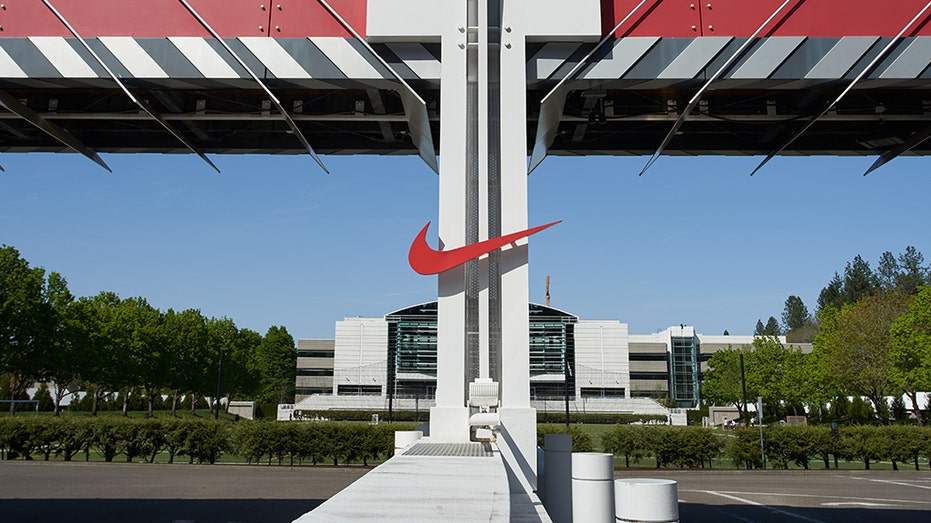
Beaverton, Oregon, USA – Apr 24, 2019: The Nike “Swoosh” logo at one of the entrances to Nike World Headquarters.
GET FOX BUSINESS ON THE GO BY CLICKING HERE
Market Impact
Nike’s strategic recalibration, under Elliott Hill’s leadership, signals a significant shift that bears close watching by investors, competitors, and industry observers. While the market has reacted negatively to recent performance, Hill’s emphasis on a long-term, performance-driven strategy, coupled with a focus on margin recovery through reduced promotions, could lay the groundwork for a more sustainable growth trajectory. The success of this pivot will hinge on Nike’s ability to innovate meaningfully in core athletic categories, translate its massive sports partnerships into tangible sales and market share gains, and effectively communicate its vision to a skeptical Wall Street. If executed successfully, Nike could reassert its dominance in the global sportswear market, driving a rebound in its stock price and reaffirming its premium brand status. However, a failure to demonstrate concrete financial improvements in the coming quarters could lead to further investor erosion and intensify pressure on management, making the next few earnings cycles critical for the athletic apparel titan.