
**Key Takeaways**
1. **Iranian Rial’s Precipitous Decline Signals Acute Economic Distress:** The Iranian rial’s plunge to historic lows against the U.S. dollar underscores the severe economic pressure on Tehran, manifesting as hyperinflation and eroding purchasing power for its citizens. This currency crisis serves as a critical indicator of the escalating effectiveness of U.S. sanctions and a stark deterrent for potential foreign investors, highlighting extreme sovereign risk.
2. **”Absolute Isolation” Strategy Reshapes Global Energy & Financial Flows:** Operation Economic Outcast’s explicit aim to cut Iran off from all global financial networks and its claim of “ZERO crude oil” exports in September represent a significant, albeit potentially volatile, shift in global energy supply dynamics. This aggressive stance compels international financial institutions and corporations to intensify compliance efforts, raising the specter of secondary sanctions and increasing operational costs for entities navigating complex geopolitical risks.
3. **Targeting Industrial & Shadow Networks Intensifies Geopolitical Risk Premium:** The systematic dismantling of Iran’s industrial framework, including aviation, shipping, rail, and automotive sectors, alongside the pursuit of shadow banking networks like the A7, extends the sanctions’ reach beyond finance to real economy assets. This comprehensive isolation strategy amplifies geopolitical tensions, potentially influencing commodity prices, global trade routes, and investor appetite for risk in volatile regions.
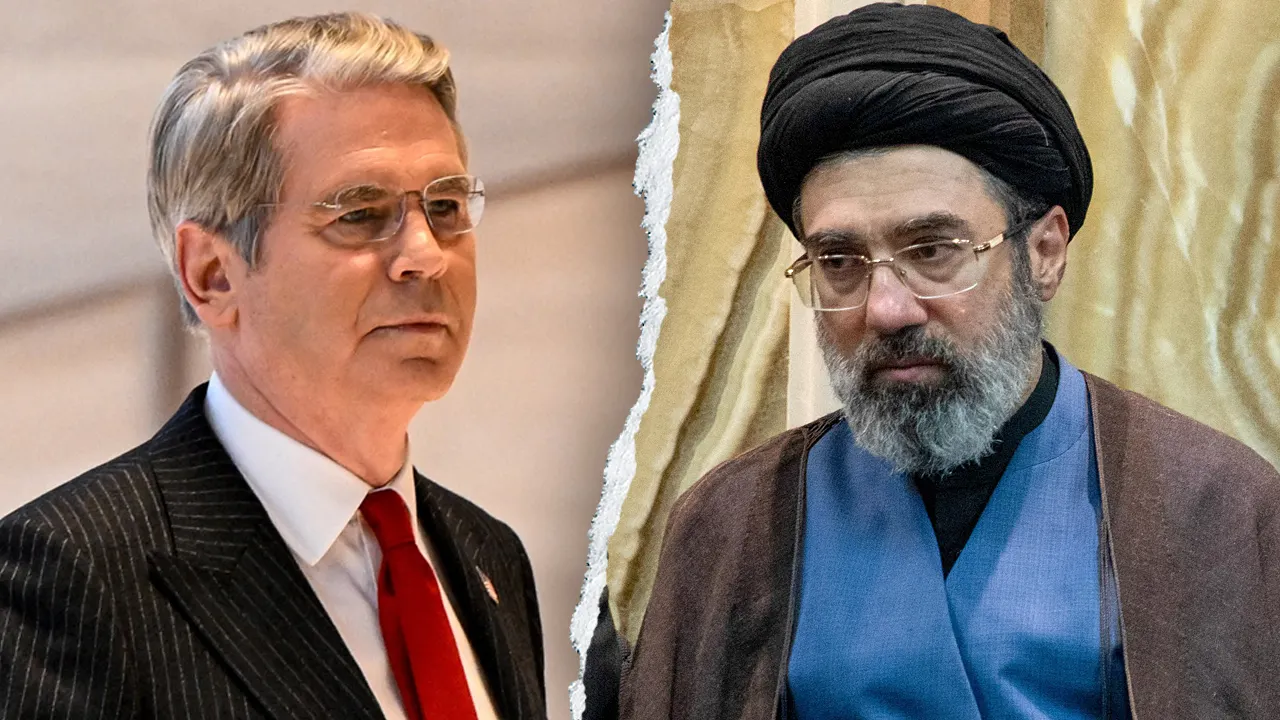
The Treasury Department’s Under Secretary for International Affairs Erin Browne speaks to FOX Business about the impact of the Operation Economic Outcast sanctions campaign against the Iranian regime.
A top official at the Treasury Department told FOX Business she believes the “Iranians know that the U.S. is winning” as the Operation Economic Outcast sanctions campaign is ramping up pressure against Tehran. This assertion comes amidst a period of intense economic statecraft, with the U.S. aiming to systematically isolate the Iranian regime from the global financial system and vital economic lifelines.
Under Secretary for International Affairs Erin Browne made the remark this week as Iran’s official currency plunged to record lows with an exchange rate exceeding 2.5 million rials to the American dollar. This precipitous depreciation of the rial is not merely an internal metric; it sends a clear signal to international markets regarding the severe economic distress gripping Iran. For investors and financial analysts, such extreme currency volatility is indicative of rampant hyperinflation, a catastrophic erosion of purchasing power for Iranian citizens, and a deeply unstable economic environment that virtually eliminates any prospect for legitimate foreign direct investment. The rial’s collapse against the dollar underscores the potency of U.S. financial sanctions, solidifying the dollar’s role as a global reserve currency and an indispensable tool of economic leverage.
“I think the Iranians know that the U.S. is winning in terms of our economic isolation and Economic Outcast against Iran. And we’ve seen the rial fall to its lowest levels. Again, on Tuesday, it hit an all-time low,” Browne stated. “So, we’re seeing the economic damage that this conflict is imposing upon Iran. And the U.S. will continue and be completely relentless in ensuring that they are completely isolated from the global financial system as long as this conflict remains in practice.” This “relentless” approach implies sustained pressure, forcing global financial institutions to significantly ramp up their Know Your Customer (KYC) and Anti-Money Laundering (AML) compliance efforts to avoid inadvertent exposure to illicit Iranian transactions, thereby increasing operational costs across the banking sector and potentially impacting the profitability of institutions with extensive international operations.
US HITS IRANIAN AIRLINES WITH ‘SWEEPING SANCTIONS’ UNDER OPERATION ECONOMIC OUTCAST
Iranian missiles are displayed next to a banner with a picture of Iran’s Supreme Leader, Mojtaba Khamenei, on a street in Tehran, Iran, Sept. 27, 2026. (Majid Asgaripour/WANA/Reuters / Reuters)
When the Treasury Department launched Operation Economic Outcast against Iran on August 24, Treasury Secretary Scott Bessent described it, in a news release, as an “economic onslaught against Iran’s financial connections around the globe.” The campaign marks a significant escalation from previous “maximum pressure” strategies, aiming for “absolute isolation,” a policy shift with profound implications for global trade and finance.
“Teams from the Departments of Treasury, State, and War are engaging counterparts around the world to make clear that the United States expects immediate action. Every country will be given a defined timeline to shut down the Iran-related activity we have identified. If they fail to act, Treasury will act,” the department said at the time. This explicit threat of secondary sanctions casts a long shadow over international trade and finance. Companies globally are now forced to meticulously audit their supply chains and financial dealings, undertaking extensive due diligence to de-risk their operations from any potential, even indirect, Iranian nexus. The compliance burden on multinational corporations, particularly those with complex global footprints, is escalating significantly, impacting profitability and operational agility as they navigate an increasingly fraught geopolitical landscape.
“Any entity that facilitates money laundering or sanctions evasion on behalf of Iran risks being cut off from the U.S. financial system,” it added, noting that the campaign “also expands secondary sanctions exposure for those who continue doing business with the Iranian regime and will accelerate the pace of U.S. enforcement.” This heightened enforcement posture sends a chilling message to any financial institution or trading firm contemplating engagement with Iran, regardless of the perceived legality in their home jurisdictions. The risk of losing access to the dollar-denominated global financial system – a virtually existential threat for many institutions – acts as a powerful deterrent, amplifying the U.S.’s leverage in global economic affairs and strengthening the dollar’s hegemonic position.
The aggressive strategy, described as an “Economic D-Day,” targets critical industries, such as Iran’s digital assets, technology, gold, aviation and shipping in an effort to eliminate the revenue streams that fund international terrorism, Bessent said. This multifaceted approach illustrates a comprehensive effort to dismantle Iran’s economic infrastructure from various angles. The focus on digital assets reflects an understanding of evolving financial technologies, aiming to prevent the use of cryptocurrencies or other blockchain-based systems for sanctions evasion, a growing concern for financial regulators and a challenge for the nascent digital asset market to demonstrate its resilience to illicit activities.
“So, over the last month, Operation Economic Outcast has been a complete success,” Browne told FOX Business. “Under the direction of President Trump, the U.S. is systematically ending all access of Iran to the financial system globally. So, not only are we cutting them off with respect to the financial system. We are also cutting them off militarily and cutting them off from an industrial sector standpoint, so that they will have no access for funds on a go-forward basis.” This declaration of “complete success” is a bold claim, particularly in a complex geopolitical landscape, and its full implications for global commodity markets and trade flows are still unfolding, requiring careful monitoring by investors attuned to geopolitical risks.
TREASURY’S ‘ECONOMIC D-DAY’ AGAINST IRAN COULD FORCE REGIME INTO SITUATION IT ‘FEARS THE MOST,’ EXPERTS SAY
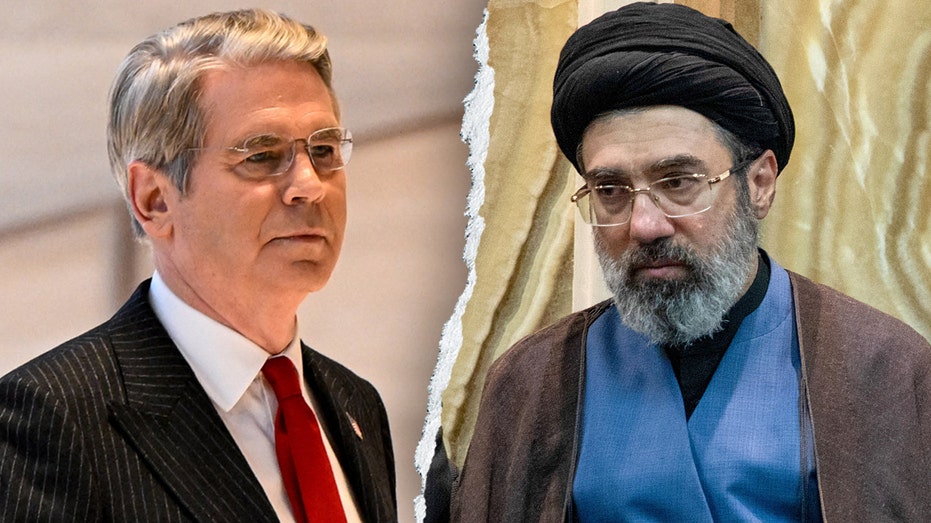
Treasury Secretary Scott Bessent and Iran’s new supreme leader, Mojtaba Khamenei.(Vincent Alban/Reuters; Majid Khahi/ISNA/WANA/Reuters / Reuters)
“We have moved from maximum pressure to absolute isolation, and this has been really effective. Even in the last week, we’ve taken a number of steps as a government in order to cut off Iran across all three avenues,” she added. “So, financially, we have continued to put pressure on them to end any type of financing that they do on a global basis, including cutting them off from all financial networks. We’ve also taken steps militarily, as you’ve seen over the last few weeks. In fact, this week, we sanctioned another 11 individuals in order to end any type of military procurement of the Iranian army. And then, also, from an industrial perspective, we have continued to destroy their industrial framework and their logistical framework so that they are cut off from all logistical transportation, including from their aviation sector.” The targeting of military procurement and logistical frameworks aims to cripple Iran’s ability to project power or resupply its forces and proxies, which has direct implications for regional stability and, by extension, the geopolitical risk premium factored into global asset prices, especially crude oil and defense industry stocks.
Bessent announced this week on X that “Iran loaded ZERO crude oil onto tankers in September,” adding the Trump administration is “cutting off the Iranian regime’s most critical source of revenue.” If verified and sustained, this claim represents a seismic shift in global oil markets. Iran, historically a major crude exporter, being completely sidelined could introduce significant supply constraints, potentially driving up benchmark prices like Brent and WTI. While OPEC+ nations might increase output to compensate, the market would likely price in increased volatility and a tighter supply-demand balance, impacting energy company valuations, inflationary forecasts, and consumer spending globally. This directly affects the profitability outlook for integrated oil companies, refiners, and even alternative energy providers who may see a temporary boost from higher traditional fuel prices.
Just over the last week, as part of the campaign, the Treasury Department also said it sanctioned the “A7 Network, a shadow banking network with ties to Russia used by the Iranian regime to evade sanctions.” “The A7 Network was created and backed by U.S.-sanctioned persons in order to evade sanctions. It has developed a global web of Sub-Agents, companies that are purpose-built to disguise payments linked to sanctioned sectors and persons as ordinary commercial activity,” the department said Thursday. “The A7 Network has been leveraged by Iran, including Iran’s Islamic Revolutionary Guard Corps.” The targeting of such sophisticated shadow networks highlights the ongoing cat-and-mouse game between sanctions enforcers and evaders. For financial institutions, this means a continuous need to invest in advanced analytics and intelligence to identify increasingly complex illicit financial flows, further pushing up compliance costs and adding layers of complexity to international transactions, ultimately affecting bottom lines and shareholder value.
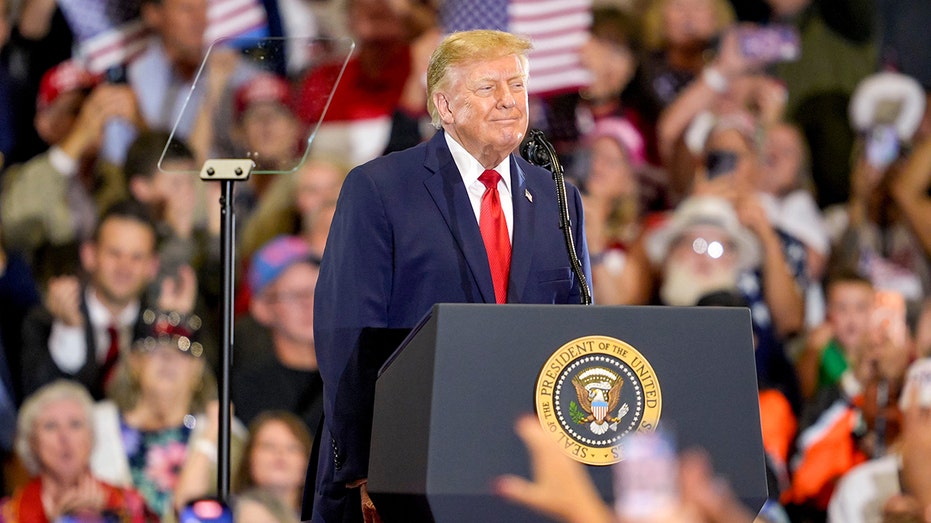
President Donald Trump speaks during a rally at the Choctaw Event Center in Durant, Okla., Thursday, Oct. 1, 2026. (Reuters / Reuters)
The day before, Treasury said it was “targeting some of the last significant elements of Iran’s failing industrial infrastructure, including its rail and automotive conglomerates.” This direct assault on Iran’s foundational industries underscores the holistic nature of Operation Economic Outcast. By disrupting critical transportation and manufacturing capabilities, the U.S. aims to stifle internal economic activity and further curtail Iran’s ability to engage in any meaningful international trade, effectively deepening its economic isolation. This has ripple effects on global supply chains where components or raw materials might inadvertently trace back to sanctioned entities, increasing due diligence requirements for global manufacturers and logistics firms.
CLICK HERE TO READ MORE ON FOX BUSINESS
Market Impact
The intensified “Operation Economic Outcast” against Iran is poised to have multifaceted impacts across global markets. Foremost, the severe curtailment of Iranian oil exports, particularly the claim of “ZERO crude oil” in September, could create a significant supply shock in an already tight energy market, potentially driving crude oil prices (WTI and Brent) higher. This would likely benefit energy sector equities while increasing inflationary pressures globally, impacting central bank monetary policy decisions and potentially influencing bond yields. Secondly, the aggressive stance on secondary sanctions and the targeting of sophisticated evasion networks like the A7 will elevate compliance costs and systemic risk for international financial institutions, leading to further de-risking and potentially constraining global trade finance, with a chilling effect on correspondent banking relationships. Finally, the escalation of economic pressure and the inherent geopolitical tensions will undoubtedly increase the geopolitical risk premium across asset classes, potentially leading to flight-to-safety flows into traditional safe havens like the U.S. dollar, Treasury bonds, and gold. Companies with any exposure to the Middle East, or those reliant on stable global supply chains, will face heightened scrutiny and operational challenges, necessitating a re-evaluation of risk models and investment strategies.
FOX Business’ Louis Casiano contributed to this report.