
Prosper Trading Academy CEO Scott Bauer discusses retail investors’ appetite for upside and downside protection in the market on ‘The Claman Countdown.’
**Key Takeaways:**
1. **Strategic Revival Amid Retail Headwinds:** Toys R Us’s aggressive expansion underscores a broader industry pivot towards diversified retail formats and experiential shopping, leveraging strong brand equity to combat e-commerce dominance and the high costs of traditional brick-and-mortar.
2. **Holiday Season Bellwether:** The timing of 120 new standalone stores signals an optimistic, yet high-stakes, bet on robust holiday consumer spending and the power of nostalgia, potentially impacting market share for major toy retailers and manufacturers.
3. **Partnership-Driven, Asset-Light Growth:** The collaboration with Go! Retail Group and other partners (Macy’s, WHSmith) exemplifies an asset-light growth model, minimizing capital expenditure and operational risk while maximizing brand presence across various consumer touchpoints, from traditional malls to airports.
In a compelling narrative of retail resurgence, Toys R Us, the iconic toy giant, is embarking on its most significant U.S. expansion in years, announcing the launch of 120 new standalone stores just in time for the critical holiday shopping season. This ambitious move, facilitated through a strategic partnership with Go! Retail Group, will swell its U.S. standalone store count to 160, signaling a calculated re-entry into a highly competitive and evolving retail landscape.
The announcement on Thursday marks a pivotal moment in the brand’s arduous journey to rebuild its physical presence, a quest that began in the shadow of its calamitous 2017 bankruptcy and the subsequent shuttering of all U.S. stores in 2018. For market watchers, this isn’t merely a nostalgic comeback; it’s a testament to the enduring power of brand equity and a strategic response to the shifting tides of consumer behavior and retail economics.
While specific details regarding the new locations, opening dates, or store sizes remain undisclosed, and critically, whether all 120 stores will remain open post-holiday season, the intent is clear: to capture a significant portion of holiday consumer spending. This deliberate ambiguity around permanence suggests a flexible, perhaps pop-up-centric, approach that minimizes long-term lease commitments and allows for agile market testing – a smart play in today’s unpredictable retail environment.
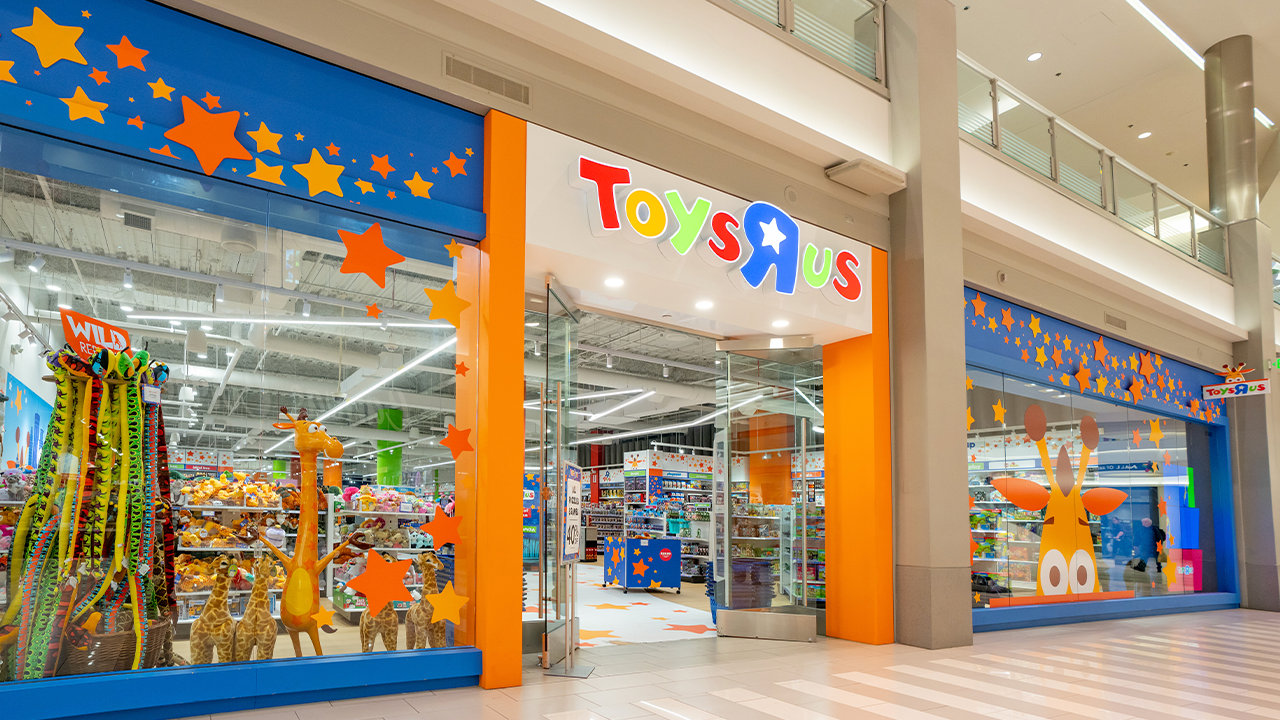
A classic Toys R Us store displays the iconic multicolored logo above its entrance. The toy retailer is expanding its brick-and-mortar presence in the U.S. years after shuttering its stores nationwide.(Bauer-Griffin/GC Images / Getty Images)
The product assortment within these new stores will lean heavily on established, high-demand brands and entertainment properties, including LEGO, Barbie, Hot Wheels, and Pokémon. This focus on proven sellers reduces inventory risk and leverages existing consumer loyalty, a stark contrast to the broader, often less curated, selections that contributed to the brand’s previous struggles. Furthermore, select locations will incorporate experiential elements like candy shops, cafés, and “Creator Studios.” These studios, designed for influencers and toy companies to create content and host product launches, represent a direct embrace of the “retailtainment” trend. In a world dominated by e-commerce, successful brick-and-mortar must offer more than just merchandise; it must provide an experience, fostering engagement and drawing foot traffic in ways online retailers cannot.
“This is a major moment for Toys ‘R’ Us as we significantly expand our presence across the United States,” stated Jamie Uitdenhowen, executive vice president of Toys R Us at parent company WHP Global. Uitdenhowen’s comments highlight the multi-pronged strategy to reach shoppers: standalone stores, dedicated Toys R Us shops inside Macy’s, airport locations, and even Navy Exchanges. This diversified format approach, often dubbed “air, land, and sea,” is a strategic hedge against the vulnerabilities of relying on a single retail model, maximizing brand visibility and accessibility across varied consumer touchpoints.
Go! Retail Group CEO Gideon Schlessinger echoed the sentiment, emphasizing the goal to bring the Toys R Us shopping experience to millions this holiday season. This partnership model is crucial. For WHP Global, a brand acquisition and management firm, leveraging partners like Go! Retail Group for operational execution allows for an asset-light expansion, preserving capital and mitigating direct operational risks – a critical lesson learned from the pre-bankruptcy era burdened by massive debt and real estate overhead.
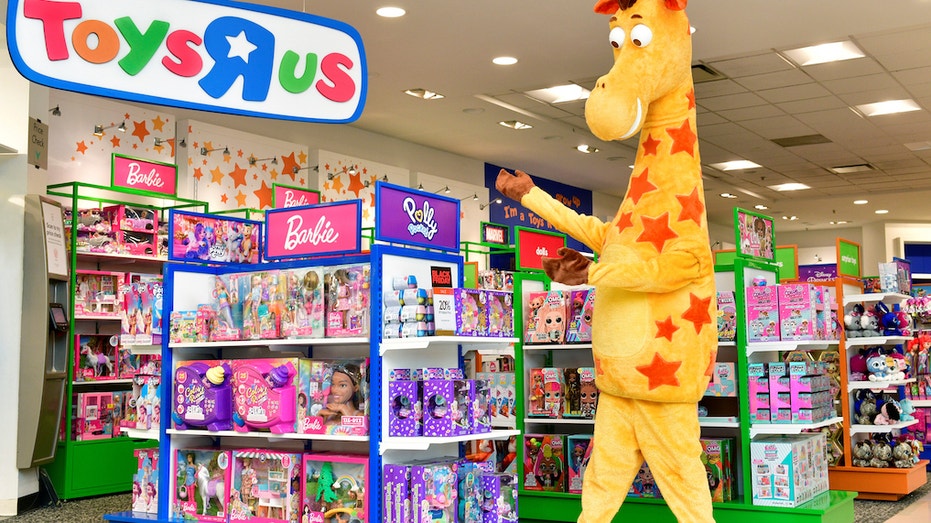
A view of Macy’s Toys R Us July 11, 2022, in Jersey City, N.J. (Eugene Gologursky/Getty Images for Macy’s, Inc. / Getty Images)
The current comeback story is a deliberate acceleration of efforts launched after the 2017 bankruptcy, a period when the retailer buckled under a staggering $5 billion in debt and failed to adapt to the ascendance of e-commerce and discount retailers. The initial, smaller-format stores opened in late 2019 in Paramus, New Jersey, and Houston, Texas, proved short-lived, closing in January 2021 amid the unprecedented challenges of the COVID-19 pandemic. However, the subsequent acquisition of a controlling stake by WHP Global in March 2021 marked a turning point, leading to a new flagship store at American Dream in New Jersey.
The real catalyst for this renewed expansion, and arguably the proof-of-concept for the brand’s enduring appeal, came in 2022 with the widespread rollout of Toys R Us shops inside Macy’s stores nationwide. Macy’s reported a phenomenal 15-fold increase in first-quarter toy sales compared to the period before the partnership, unequivocally demonstrating the power of the Toys R Us brand to drive traffic and sales even within another retailer’s ecosystem. This success likely provided the confidence and blueprint for the current aggressive standalone store expansion.
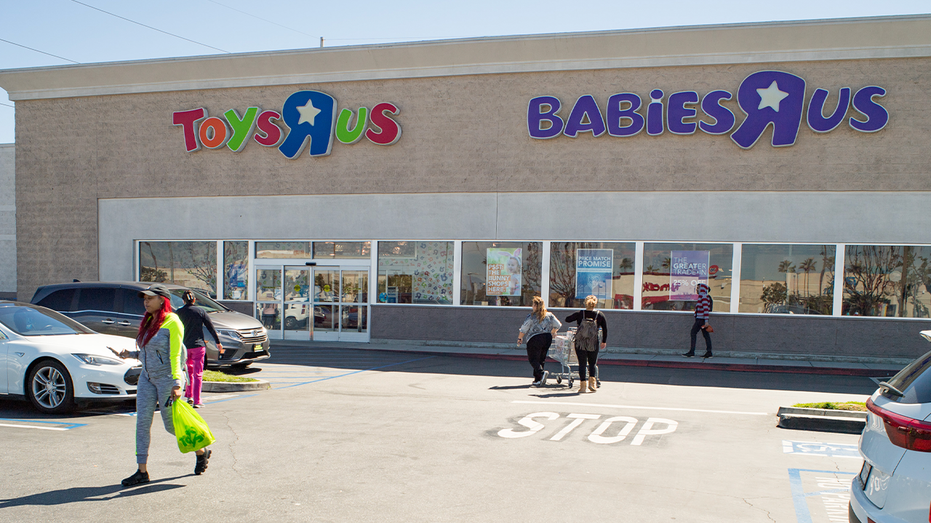
Toys R Us and Babies R Us signage is displayed outside a retail location as shoppers walk through the parking lot. Toys R Us has continued rebuilding its brick-and-mortar presence after its 2017 bankruptcy and 2018 U.S. store closures.(RB/Bauer-Griffin/GC Images / Getty Images)
The partnership with Go! Retail Group in 2023 further cemented the “air, land, and sea” expansion, pushing the brand beyond traditional malls into high-traffic areas like airports. The opening of a shop-in-shop at Orlando International Airport in August, in collaboration with WHSmith North America, and another planned for summer 2027, illustrates a strategic move to capture impulse purchases from travelers, a demographic often overlooked by traditional toy retailers. Furthermore, the company’s presence through Navy Exchange Service Command underscores a commitment to diverse, targeted distribution channels.
Globally, the Toys R Us business generates over $2 billion in annual retail sales through more than 1,680 stores and e-commerce operations across 37 countries. This international footprint provides a strong foundation and revenue stream that supports the more experimental, yet promising, U.S. domestic revival. The current expansion isn’t just about selling toys; it’s about reclaiming market share, leveraging nostalgia, and demonstrating a viable path forward for legacy brands in a dynamically shifting retail landscape.
CLICK HERE TO DOWNLOAD THE FOX NEWS APP
Market Impact:
The aggressive Toys R Us expansion injects a fresh wave of competition into the U.S. toy retail sector, potentially challenging incumbents like Walmart, Target, and Amazon, which have largely absorbed the market share left vacant after Toys R Us’s initial exit. For toy manufacturers, it represents an expanded distribution channel and a potentially significant boost during the crucial holiday period. Investors will be closely watching the sales performance of these new stores, particularly given the temporary nature implied for some, as it will be a key indicator of consumer appetite for experiential, brand-centric retail. A successful holiday season could validate WHP Global’s asset-light, partnership-driven strategy, potentially encouraging similar revival efforts for other distressed legacy brands and signaling a broader trend in commercial real estate towards flexible, short-term leases and experiential concepts. Conversely, underperformance could dampen investor enthusiasm for brick-and-mortar retail comebacks, highlighting the persistent challenges of overheads and e-commerce pressures.