
Unlock the White House Watch newsletter for free
Your guide to what Trump’s second term means for Washington, business and the world
**Key Takeaways**
1. **Political Volatility & Policy Uncertainty:** A significant shift in voter sentiment, particularly among crucial Hispanic demographics, signals increased political instability ahead of midterms, potentially leading to legislative gridlock or drastic policy shifts impacting fiscal spending, regulatory frameworks, and market sentiment.
2. **Economic Discontent Drives Electoral Shifts:** Rising inflation and economic dissatisfaction among key voter blocs directly translate into electoral challenges, signaling potential policy pivots aimed at cost-of-living issues, which could influence consumer spending, interest rates, and sector-specific performance.
3. **Labor & Trade Policy at Risk:** The backlash against aggressive immigration enforcement points to potential future reforms that could alter labor supply dynamics, wage pressures in sectors reliant on immigrant labor (e.g., agriculture, construction, hospitality), and international trade relations, creating both risks and opportunities for businesses.
—
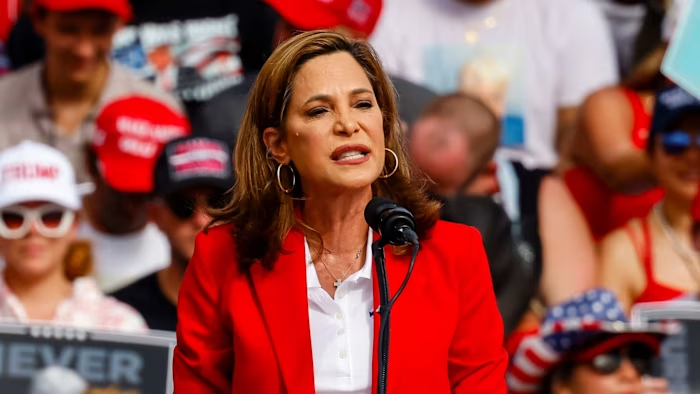
A recent, sharp rebuke from a prominent Florida Republican lawmaker regarding former President Donald Trump’s immigration policies underscores a critical fault line developing within a key voting bloc, with profound implications for the upcoming midterm elections and, by extension, the broader economic and market landscape. Representative María Elvira Salazar’s public dissent suggests not merely a political spat, but a significant shift in voter sentiment among Hispanic communities—a demographic that has proven increasingly influential and economically dynamic.
Salazar, a House member from Miami and the daughter of Cuban immigrants, broke ranks with Trump in a 30-second ad, cautioning that “Mr President, some of your immigration enforcement efforts have gone too far.” Her statement, “The same Hispanics who helped you get to the White House in 2024 feel betrayed today,” isn’t just a political soundbite; it’s a flashing red light for strategists and investors alike. The economic undercurrents driving this sentiment shift are particularly salient. Trump had previously garnered substantial support from Hispanic voters, buoyed by promises of robust economic growth and lower inflation. However, the current political climate paints a different picture, with recent polling indicating a notable migration back to the Democratic Party.
This pivot is largely attributed to widespread disappointment with the administration’s economic stewardship, specifically the persistent challenge of high inflation eroding household purchasing power. For a demographic where disposable income may be more tightly constrained, rising costs for essentials like food, fuel, and housing can have a disproportionately large impact, translating directly into consumer confidence—or lack thereof. For markets, this means a potential slowdown in discretionary spending in key regions and a re-evaluation of growth forecasts for consumer-facing industries, particularly those catering to diverse urban and suburban populations. The housing market, in particular, could see shifts in demand patterns in areas with large Hispanic populations, influencing real estate investment strategies.
The implications of Trump’s crackdown on immigration extend far beyond humanitarian concerns; they ripple through the labor market, impacting everything from agricultural output to the construction and hospitality sectors. Aggressive enforcement, including the deportation of individuals without criminal records and confrontations with protestors, exacerbates existing labor shortages and can drive up wage costs in specific industries. Businesses reliant on a flexible and accessible labor pool may face increased operational expenses or supply chain disruptions. Furthermore, the economic contributions of immigrant communities—through entrepreneurship, tax revenues, and consumption—are substantial. A perceived betrayal by this group could lead to reduced economic engagement, impacting local economies in states like Florida, California, and Texas, which boast significant Hispanic populations and economic activity.
This public distancing by Salazar is not an isolated incident. It reflects a growing trend among Republican candidates in battleground districts who are grappling with the complex legacy of a highly polarizing figure. The reluctance of several Republicans to attend Trump’s recent midterms convention, or to campaign alongside high-profile figures like the Vice President, underscores a strategic effort to insulate their campaigns from potential negative externalities associated with the former President’s declining approval ratings. For investors, this fragmented political landscape signals heightened policy uncertainty. A Republican party less unified around a single figure could lead to more diverse legislative agendas, potentially complicating the passage of critical economic legislation, tax reforms, or regulatory changes.
The broader polling data paints an increasingly bleak picture for Republican prospects. Trump’s approval ratings have sunk to new lows, and voters appear poised to hold lawmakers accountable for perceived failures to curb his more controversial actions—ranging from the imposition of tariffs, which have demonstrably impacted global supply chains and consumer prices, to escalating geopolitical tensions that can send commodity markets into a tailspin. Even nascent discussions around artificial intelligence regulation, an area of profound interest for the tech sector, have been overshadowed by this political infighting.
A bipartisan poll from the Cook Political Report, highlighting a significant seven-point swing towards Democrats in battleground House districts, reinforces the market’s growing apprehension. Such shifts indicate a strong possibility of Democrats flipping control of the House this fall. This prospect introduces a myriad of market considerations:
* **Fiscal Policy:** A Democratic House might push for increased social spending, infrastructure investment, or a more aggressive climate agenda, potentially leading to higher government borrowing and impacting bond yields.
* **Taxation:** Discussions around corporate tax increases or higher taxes on wealthy individuals could resurface, directly affecting corporate earnings and investor sentiment.
* **Regulation:** Industries like technology, finance, and energy could face stricter regulatory scrutiny, influencing investment in these sectors.
* **Trade Policy:** While immigration policy is distinct, a shift in political power could also signal a re-evaluation of trade agreements and tariff strategies, impacting multinational corporations and global supply chains.
The sentiment that “Voters blame Trump for making many of the country’s problems worse, and they’re more worried about Republicans enabling him than Democrats overcorrecting in opposition,” as noted by Patrick Toomey of New River Strategies, encapsulates the market’s current dilemma. It’s not just about who wins, but the anticipated policy direction and the stability of the legislative environment that follows.
### Market Impact
The current political volatility, underscored by the shifting allegiances of key voter demographics and the looming midterm elections, is poised to inject significant uncertainty into financial markets. Investors should brace for potential increases in market volatility, particularly as polling data firms up closer to November. Sectors heavily reliant on government policy, such as healthcare, energy, infrastructure, and technology (due to potential regulatory changes), are likely to experience heightened sensitivity to electoral outcomes. A Democratic-controlled House could signal a pivot towards more progressive fiscal policies, potentially leading to higher bond yields on increased spending expectations, while a divided government might induce legislative gridlock, dampening enthusiasm for large-scale infrastructure projects or tax reforms. Furthermore, the economic discontent driving voter shifts, especially concerning inflation, suggests that future policy debates will prioritize cost-of-living issues, which could influence the Federal Reserve’s monetary policy trajectory and consumer spending patterns. Companies with significant exposure to regions with changing demographic compositions and those reliant on specific labor pools should review their operational and strategic plans in anticipation of potential shifts in immigration and labor policies. Overall, a cautious approach is warranted, with an emphasis on diversified portfolios and a close watch on key economic indicators and political developments.