
L3Harris Technologies Secures Contract for Submarine-Launched Autonomous Underwater Vehicle System
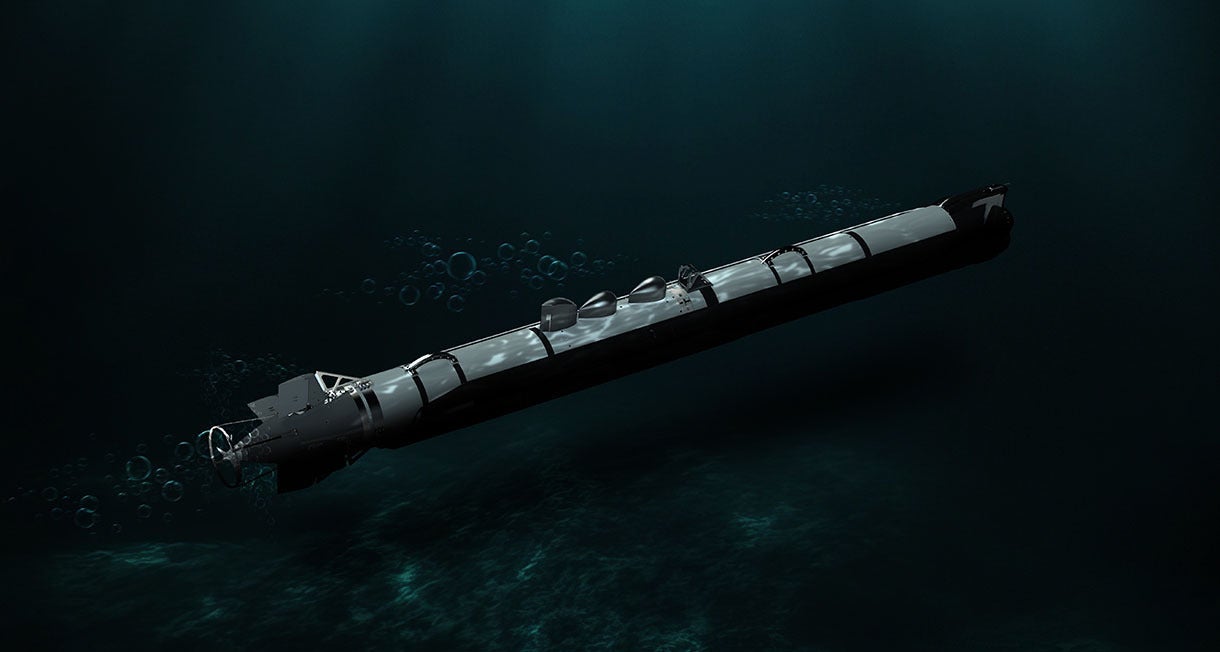
L3Harris Technologies, a global aerospace and defense technology innovator, has announced the receipt of a significant contract from the U.S. Defense Innovation Unit (DIU) for its Torpedo Tube Launch and Recovery (TTLR) system. This advanced system is designed to enable submarines to deploy and retrieve autonomous underwater vehicles (AUVs) directly through their standard torpedo tubes, marking a notable advancement in undersea operational capabilities.
The contract specifically focuses on integrating the TTLR system with L3Harris’s Iver4 900 AUVs. These AUVs are utilized for a range of critical missions, including intelligence, surveillance, and reconnaissance (ISR), mine detection, and seabed warfare. A key operational advantage highlighted by L3Harris is the system’s ability to conduct these missions without requiring the host submarine to surface or expose its personnel to potential risks, thereby preserving stealth and enhancing safety. The urgency with which the U.S. military is pursuing this capability is underscored by the contract’s award mechanism: an Other Transaction Authority (OTA).
The Defense Innovation Unit (DIU) serves as the U.S. Department of Defense’s commercial technology accelerator, tasked with identifying and integrating cutting-edge commercial solutions into military applications to solve national security challenges more rapidly. The use of an Other Transaction Authority (OTA) for this contract is particularly noteworthy. OTAs are specialized contracting instruments that allow the Department of Defense to bypass traditional, often lengthy and bureaucratic, procurement processes. They are typically employed for research, prototyping, and production efforts where speed and flexibility are paramount, reflecting a critical need for rapid deployment of new capabilities in the current geopolitical landscape.
Nino DiCosmo, President of Maritime, Space and Mission Systems at L3Harris, emphasized the immediate relevance and maturity of the technology. “This is not a future capability, it’s answering combatant commander needs today,” DiCosmo stated, highlighting that the system has already undergone validation by the U.S. Navy and allied forces. He further described the TTLR system as the first of its kind to successfully launch and recover AUVs from an operational submarine, providing commanders with unprecedented “flexibility for persistent undersea operations and maintaining essential stealth.” This capability significantly extends a submarine’s reach and sensor footprint without compromising its primary defensive advantages.
The modular design of the TTLR system is central to its strategic value. By allowing existing submarine hulls to serve as motherships for a fleet of AUVs, the system aims to multiply force capacity without necessitating the costly and time-consuming construction of new submarines. This approach maximizes the utility of current assets, offering a more economically viable path to enhancing undersea dominance. Furthermore, the system incorporates what L3Harris describes as the first US Navy submarine and aviation-approved autonomous underwater vehicle lithium-ion battery technology. This innovation is critical for extending mission durations, providing higher energy density, and enhancing operational safety for AUVs. The inclusion of a “hot-swap” capability for these batteries further ensures continuous operations, allowing for rapid battery replacement to minimize downtime and maximize mission tempo.
The operational implications for intelligence, surveillance, and reconnaissance are profound. Submarines, inherently stealthy platforms, can now deploy AUVs into contested or denied areas without exposing the submarine itself. These AUVs can then conduct detailed surveys, gather intelligence, and monitor adversaries for extended periods. In mine detection and countermeasures, AUVs can systematically sweep areas, identifying and classifying underwater threats with greater precision and safety than traditional methods involving surface ships or divers. The nascent field of seabed warfare, which involves mapping, inspecting, or potentially interfering with underwater infrastructure like communication cables or sensor networks, also receives a significant boost. The ability to deploy AUVs from a submarine for these missions provides a clandestine and flexible means of operating in the critical, yet often overlooked, deep-sea environment.
The successful development and contract award for the TTLR system underscore a broader trend in modern naval strategy: the increasing reliance on uncrewed systems to augment and extend the capabilities of traditional crewed platforms. This shift towards human-machine teaming allows navies to operate more effectively, efficiently, and safely in complex maritime environments. The system’s validation by allied navies also points to its potential for interoperability and collaborative operations among partner nations, enhancing collective security and shared intelligence gathering in critical strategic waterways.
Why This Matters
The L3Harris Technologies contract for its Torpedo Tube Launch and Recovery (TTLR) system represents a pivotal advancement in undersea warfare and has far-reaching implications for global security and naval strategy. Here’s why this development is significant:
- Enhanced Submarine Capabilities and Stealth:The ability to deploy and retrieve AUVs from a submerged submarine dramatically extends its operational reach without compromising its primary advantage: stealth. Submarines can now act as motherships for a network of autonomous sensors and effectors, gathering intelligence, detecting threats, and conducting seabed warfare missions in contested waters without surfacing or exposing personnel. This capability is a game-changer for persistent undersea operations.
- Force Multiplication and Cost-Effectiveness:By enabling existing submarine fleets to manage and deploy AUVs, the TTLR system serves as a powerful force multiplier. It enhances the capabilities of current assets, extending their operational footprint and sensor range, effectively increasing naval power without the immense cost and time required for new submarine construction. This offers a more agile and economically viable path to strengthening naval presence and influence.
- Strategic Advantage in Contested Environments:As global powers invest heavily in maritime capabilities, the ability to conduct clandestine intelligence, surveillance, and reconnaissance (ISR), mine countermeasures, and seabed warfare missions from beneath the surface provides a critical strategic advantage. This is particularly relevant in areas where surface presence might be provocative or high-risk, allowing for discreet yet impactful operations.
- Personnel Safety and Risk Reduction:Deploying AUVs to conduct dangerous missions, such as mine detection or operations in highly contested zones, removes human personnel from harm’s way. This significantly reduces the risk to sailors and divers, making critical missions safer and potentially more sustainable over time.
- Acceleration of Autonomous Undersea Warfare:The successful validation and contract award for a system like TTLR signals a clear commitment to accelerating the integration of autonomous systems into naval doctrine. This technology paves the way for increasingly sophisticated human-machine teaming in the undersea domain, where AUVs will play an ever-larger role in everything from surveillance to logistics and potentially even offensive operations.
- Technological Leadership and Innovation:The development of the first U.S. Navy submarine and aviation-approved AUV lithium-ion battery technology, alongside the modularity and hot-swap capabilities, highlights significant technological breakthroughs. These innovations are crucial for extending mission endurance, improving safety, and ensuring continuous operations for autonomous platforms, setting new benchmarks for future undersea systems.