
Report Calls for Overhaul of UK Nuclear Posture Amid Evolving Threats
A recent report co-authored by Peter Watkins, a former Director General at the Ministry of Defence (MoD) with extensive experience in strategic policy, deterrence, and defence industrial matters, argues that the United Kingdom’s nuclear posture requires a significant refresh. Watkins, who served at the MoD from 2014 to 2018, collaborated with William Freer, Research Fellow in National Security at the Council on Geostrategy, on the report titled “Rebuilding the Ladder: Options for Boosting Britain’s Nuclear Posture,” published in late April.
The central contention of the report is that the UK’s current deterrent framework, primarily reliant on a continuous at-sea submarine patrol with Trident ballistic missiles, was conceived for a geopolitical landscape that no longer accurately reflects contemporary threats. The authors assert that the UK is currently missing a critical “rung” on the escalatory ladder, potentially leaving decision-makers with severely restricted options during an escalating crisis.
In an elaboration on the report’s findings, Watkins clarified that the recommendations do not constitute a critique of the Trident system itself. He stated that Trident remains a formidable and credible strategic deterrent against the most extreme threats. However, he emphasized that the strategic environment has evolved considerably since the foundational decisions underpinning the current posture were made in the 1980s and 1990s. Specifically, the UK retired its airborne sub-strategic nuclear capability in the late 1990s, with the government at the time suggesting Trident could assume this role.
Watkins questioned the efficacy of using Trident for sub-strategic strikes, highlighting a significant risk of inadvertent escalation. He noted that an adversary would likely be unable to distinguish between a strategic and a sub-strategic ballistic missile launch, potentially triggering a disproportionate response. Furthermore, he argued that employing Trident in a sub-strategic capacity could compromise its primary role as a secure second-strike capability, thereby diminishing its overall credibility. The report also dismisses the notion that conventional deep precision strike systems could serve as an effective alternative sub-strategic capability. While acknowledging the devastating impact of conventional weapons in recent conflicts, Watkins pointed out that their success in contexts like Ukraine and Iran often occurred where air defences were already suppressed. He maintained that conventional systems, however sophisticated, are unlikely to impose the level of costs necessary to deter a peer adversary like Russia, where advanced air defences would be robust.
A significant focus of the report is the changing nature of the Russian nuclear doctrine. The Kremlin has updated its nuclear doctrine and expanded its sub-strategic arsenal, now estimated at nearly 1,500 warheads. This development, according to Watkins, indicates a willingness by Russia to integrate nuclear weapons into warfighting scenarios in a manner distinct from traditional Western approaches. He drew a clear contrast, stating that the UK’s nuclear doctrine limits the use of nuclear weapons to the “most extreme circumstances of self-defence,” whereas Russian doctrine appears to envisage their use for achieving “war termination on acceptable terms.” The substantial Russian investment in non-strategic dual-capable systems, such as Kalibr and Iskander missiles, further underscores concerns that Russia might consider using nuclear weapons in circumstances that the UK would not, necessitating a comprehensive capability to deter such thinking.
The report outlines a series of recommendations across short, medium, and long-term horizons. In the near term, it advocates for deepened cooperation with France. Watkins cited the unprecedented observation by British officials of France’s “Poker” nuclear exercises in December 2025 as a positive step. While acknowledging France’s strong emphasis on the sovereignty of its deterrent, he believes the framework for enhanced collaboration exists, particularly following the Northwood Declaration signed by both nations’ leaders in July. This declaration signifies a commitment to closer Anglo-French cooperation, even within the constraints of independent decision-making.
Other immediate recommendations include updating the UK’s public-facing nuclear doctrine, which has seen little change in three decades, and improving nuclear education within the MoD, which is currently described as siloed. On broader public engagement, the report suggests adopting a model similar to France, where presidents periodically deliver speeches on nuclear posture and doctrine. Watkins clarified that this is not about aggressive posturing but rather fostering a more informed public discourse, aiming for a higher profile for nuclear capabilities than has been maintained to date.
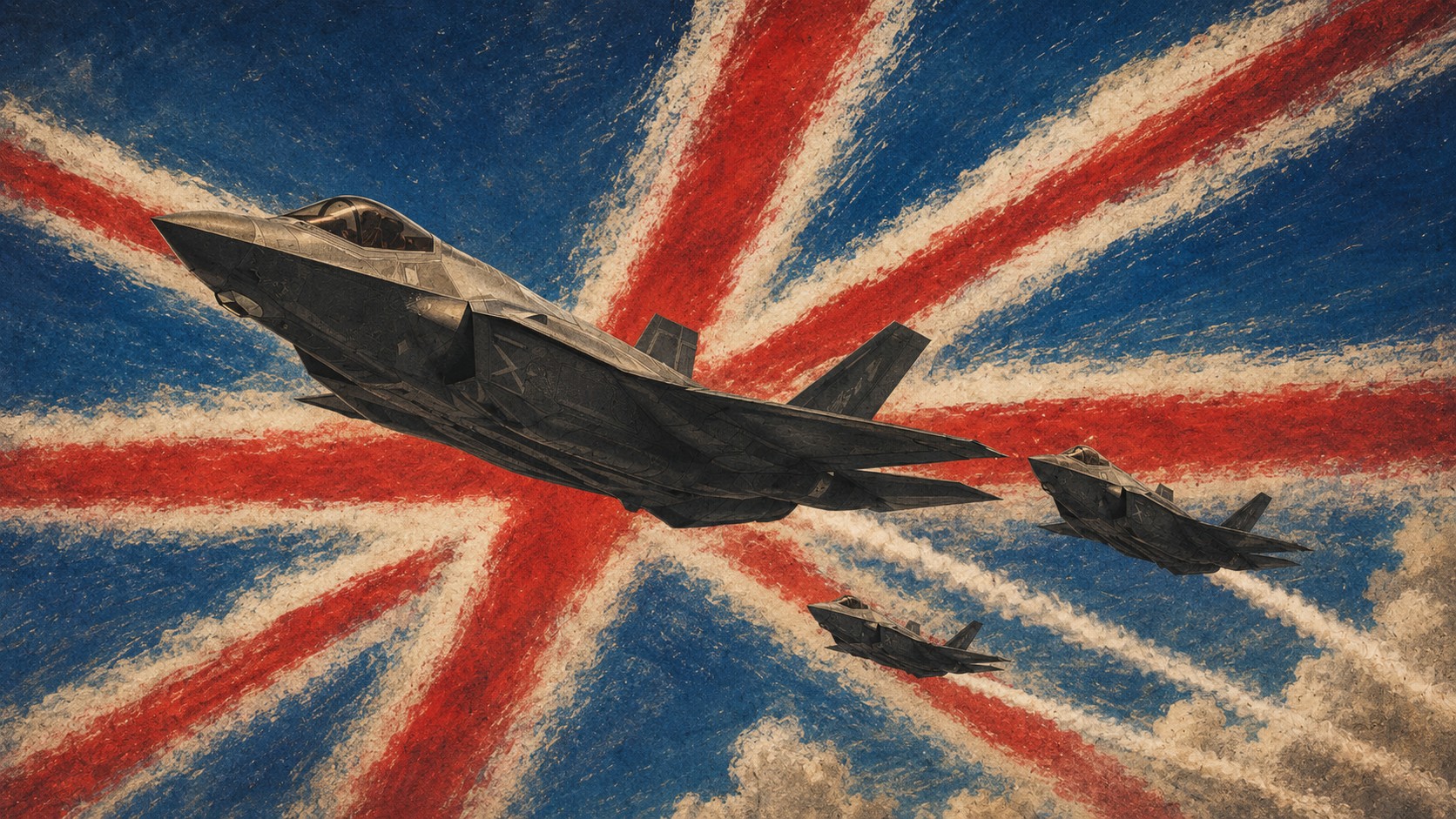
For the medium term, the report calls for an increase in the number of F-35A aircraft, specifically the nuclear-capable variant. It suggests acquiring up to 24 additional F-35A aircraft beyond the 12 currently committed. Watkins clarified that this recommendation is not solely about increased spending but rather a reallocation within the UK’s planned total F-35 fleet of 75 aircraft. He also noted that the current plan for a single unit to handle both nuclear strike and pilot training appears insufficient for the task.
The long-term centerpiece of the report is the development of a sovereign air-launched sub-strategic nuclear weapon, a capability the UK has lacked since the retirement of the WE.177 in the late 1990s. The estimated cost for this endeavor is between £11 billion and £14 billion over a 20-year period. However, Watkins suggests that costs could be significantly reduced by prioritizing simplicity and adapting existing warhead designs rather than starting from scratch. He acknowledged that the capacity of the Atomic Weapons Establishment (AWE) to undertake this additional burden, given its current focus on maintaining and developing a single strategic warhead, presents a challenge, but deemed it surmountable.
Regarding timelines, Watkins indicated that the short-term measures, such as enhanced French cooperation, doctrinal updates, and improved MoD nuclear education, could be implemented relatively quickly and at low cost. He also urged the government to explore accelerating the delivery of the first nuclear-certified F-35A aircraft, currently planned for the early 2030s, stating that it is not evident why this could not be brought forward. The forthcoming Defence Investment Plan is identified as the crucial indicator of whether these recommendations will be adopted and translated into tangible policy and resource commitments.
Why This Matters
The “Rebuilding the Ladder” report by Peter Watkins and William Freer carries significant weight due to Watkins’ senior background in UK defence policy and its timely publication amidst heightened global instability. Its recommendations could profoundly impact the UK’s national security, strategic autonomy, and its role within NATO and broader international alliances.
Firstly, the report directly addresses the UK’s ability to deter a wide spectrum of threats. By arguing that the current posture lacks a critical “escalatory rung,” it suggests that the UK might be forced into a binary choice between inaction and a full-scale strategic nuclear response in a crisis. This “missing rung” scenario could undermine deterrence against adversaries who might believe they could employ sub-strategic nuclear weapons without fear of a proportionate, non-strategic nuclear counter-response, thereby lowering the threshold for nuclear use. Developing a credible sub-strategic nuclear capability, as proposed, aims to restore flexibility and enhance deterrence across the escalatory spectrum, potentially preventing a crisis from escalating to the most extreme level.
Secondly, the report highlights the evolving nature of nuclear deterrence, particularly in the context of Russia’s modernized arsenal and altered doctrine. The emphasis on Russia’s integration of nuclear weapons into warfighting scenarios challenges traditional Western deterrence paradigms. Understanding and responding to this shift is crucial for maintaining effective deterrence and regional stability, not just for the UK but for NATO as a whole. The call for updated public doctrine and improved nuclear education within the MoD underscores the need for clarity and robust understanding of these complex issues at all levels of government and within the armed forces.
Thirdly, the recommendations have significant implications for defence spending and industrial capacity. The development of a sovereign air-launched sub-strategic weapon, with an estimated cost of £11-14 billion, represents a substantial long-term financial commitment. This would necessitate careful prioritization within the wider defence budget, potentially impacting other procurement programmes. Furthermore, it would place considerable demands on the Atomic Weapons Establishment, requiring an expansion of its capacity and expertise. The recommendations regarding F-35A variants also speak to optimizing existing procurement for nuclear roles, rather than simply increasing overall spending, indicating a strategic reallocation of resources.
Finally, the call for deeper cooperation with France and a more transparent public discourse on nuclear policy reflects broader geopolitical considerations. Enhanced Anglo-French nuclear cooperation could strengthen European defence capabilities and provide a more unified front against shared threats. Meanwhile, adopting a French-style model for public engagement could foster greater public understanding and support for the UK’s nuclear deterrent, a critical element for its long-term credibility and legitimacy in a democratic society. The report’s timing, ahead of the UK’s Defence Investment Plan, positions it as a significant contribution to the ongoing debate about the future direction of Britain’s defence strategy in a turbulent world.