
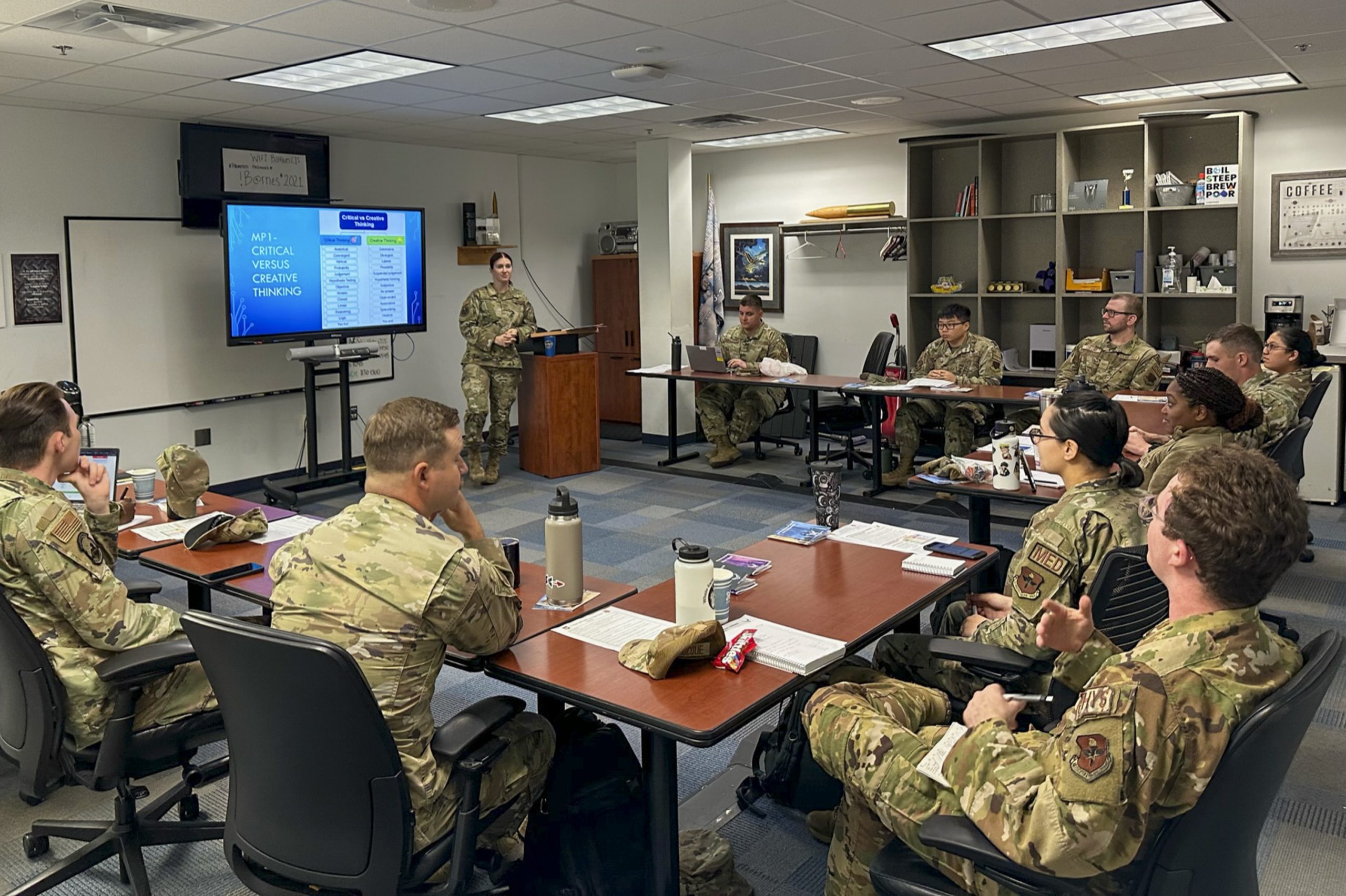
The U.S. Air Force is embarking on a significant modernization effort for its Enlisted Professional Military Education (EPME), with plans to introduce virtual “Foundations” courses and restructure the oversight of its educational centers. These changes aim to enhance the accessibility, relevance, and effectiveness of leadership development for Airmen across the service.
As part of this overhaul, the Air Force intends to offer virtual versions of its enlisted “Foundations” courses. These preparatory leadership programs, initially established in 2024, are designed to bridge the educational gap between traditional leadership schools such as Airman Leadership School (ALS) and the Noncommissioned Officer Academy (NCOA). Currently, Foundations courses are typically conducted at the wing level, often relying on volunteer instructors when available. The shift to a virtual platform seeks to provide Airmen with more flexible access to these critical courses, delivered by highly qualified instructors, without requiring them to leave their operational units for extended periods.
Chief Master Sergeant Jonathan Rapelje, who is overseeing the EPME modernization initiative, elaborated on the benefits of this virtual approach. “So, instead of having an in-residence, five-day Foundations course, what we will eventually achieve with [virtual] Foundations courses is allow Airmen to attend blocks taught by subject matter experts in each area that they’re learning about at a time that’s more convenient to them and not take them out of the workplace,” Rapelje told Air & Space Forces Magazine. He projected that the Virtual Foundations Platform should be operational before 2030, emphasizing that the goal is to provide “better content that’s more easily accessible.”
This initiative is part of a broader, sweeping effort to transform enlisted professional military education into a “more agile, adaptive, and dynamic delivery model,” as articulated by Chief Master Sergeant of the Air Force David R. Wolfe. Speaking at a recent Air Force Sergeants Association’s Summit, Wolfe outlined the philosophical underpinnings driving these changes, highlighting the need for an educational structure that aligns with contemporary operational demands.
“We built much of our educational structure for an Air Force that could periodically pause to learn; today’s Air Force must learn while climbing. Development should not wait for the Airman; it should move with the Airman,” Wolfe stated in his speech, which was later posted on his official Facebook page. He further stressed that “Education should not compete with readiness; it should create readiness. Learning should not depend entirely on geography, one school date, or the availability of a seat precisely at the right moment in someone’s life. Airmen should receive the development closer to the point of need and in ways that respect the realities of operational service.”
Beyond the introduction of virtual courses, a significant organizational restructuring is also underway for professional military education centers. Presently, these centers report to various commands across the Air Force. For instance, large PME centers like an NCOA or ALS, along with development advisors on the same installation, may report to entities such as Pacific Air Forces (PACAF), U.S. Air Forces in Europe (USAFE), or Air Force Education and Training Command (AETC) within the continental U.S. This fragmented reporting structure has led to inconsistencies in oversight and execution.
Moving forward, all PME centers will consolidate their reporting under the wing command structure. Rapelje explained the current disparity: “USAFE operates differently than PACAF and [the continental U.S. centers], so you have three different versions of NCOA command structures.” He clarified that the EPME modernization “consolidates and standardizes that reporting structure, so those NCOAs who currently report to anywhere from the AETC construct to USAFE construct to the PACAF construct will now report to their wing command structure.”
Rapelje emphasized that this change does not involve creating new educational institutions but rather “consolidating all of these installations that have either a large, medium, or small center under the same organizational construct for standardization.”
Chief Master Sergeant Wolfe underscored the strategic advantage of this change, noting that it will make wing leaders “responsible for the readiness of the installation” and grant them “greater visibility over the entire enlisted development continuum.” He also provided a crucial clarification: this new authority “does not mean wings will write their own EPME curriculum or establish their own standards.” Instead, Air University’s Barnes Center for Enlisted Education “will continue to provide enterprise-level curriculum, guidance, and standards.” Wolfe concluded that “The change is that installation leadership will have clearer responsibility for how those programs are connected and executed locally.”
Rapelje further highlighted that these organizational adjustments are foundational. They represent key “organizational changes that need to happen, so that as EPME evolves in the future, we’ve already standardized and built the foundation for that to happen.”
Why This Matters
The Air Force’s modernization of its Enlisted Professional Military Education is a critical development with far-reaching implications for its personnel, operational readiness, and long-term strategic capabilities. For individual Airmen, these changes promise more flexible and accessible pathways to career development. By offering virtual Foundations courses, the Air Force aims to remove geographical and time-based barriers, allowing Airmen to pursue leadership training without disrupting their primary duties or personal lives. This approach recognizes the demands of a modern, globally deployed force, where traditional, in-residence training can sometimes conflict with operational schedules. Access to high-quality, standardized content delivered by subject matter experts ensures that Airmen receive consistent and relevant education, regardless of their location.
From an institutional perspective, the restructuring of PME center oversight under wing command structures is designed to streamline operations and enhance accountability. By standardizing reporting structures and empowering local wing leaders with clearer responsibility for the enlisted development continuum, the Air Force seeks to foster a more cohesive and responsive training environment. This move aims to ensure that professional development is more directly aligned with local installation readiness needs while maintaining enterprise-level curriculum standards set by Air University. Ultimately, this comprehensive modernization effort is geared towards cultivating a more agile, adaptable, and highly skilled enlisted force capable of meeting the evolving challenges of national defense in the 21st century. It underscores the Air Force’s commitment to continuous learning and development as a cornerstone of its operational effectiveness.