
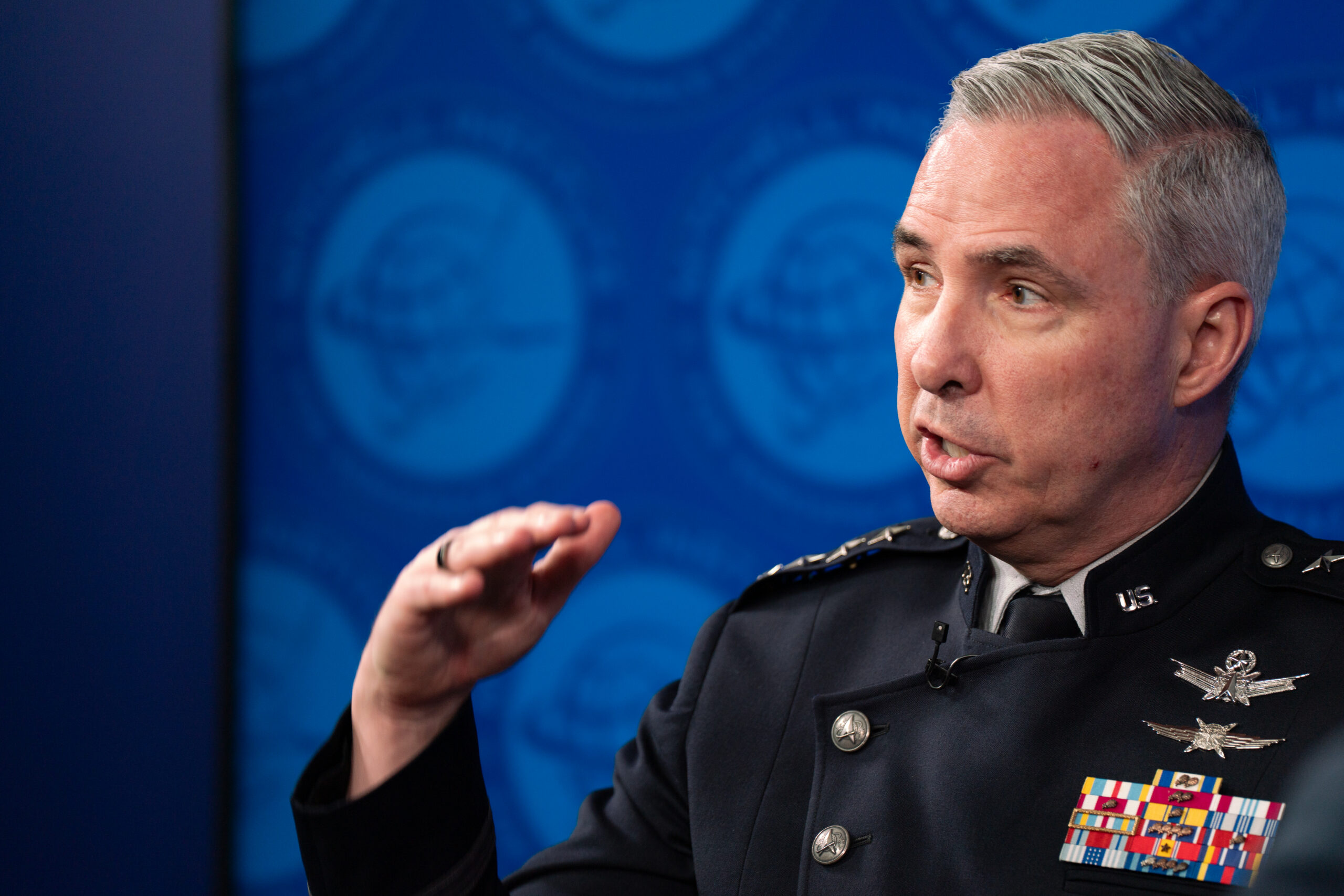
U.S. Space Command, in collaboration with its key international allies, is developing a comprehensive joint strategy to safeguard orbital assets from potential threats. This initiative, articulated by Commander Gen. Stephen Whiting, aims to define a collective approach to the protection and defense of critical space infrastructure.
General Whiting announced during a May 12 event hosted by the Air & Space Forces Association’s Mitchell Institute for Aerospace Studies that a finalized concept of operations (CONOPS) for the defense of orbital assets is expected by the end of the current year. This CONOPS represents a significant evolution of work already underway through Operation Olympic Defender, a multinational partnership established in 2013 under U.S. Strategic Command and expanded in 2024. The alliance currently includes the United States, the United Kingdom, Australia, Canada, Germany, France, and New Zealand.
Highlighting the collaborative spirit, General Whiting stated, “We’ve collectively decided, and we are in the process of building, a defense of orbital assets [concept of operations.]” He emphasized the objective of leveraging the unique capabilities contributed by each partner nation, aiming to “integrate them and synchronize them and synergize them” to achieve a more robust and coordinated defense posture.
While specific capabilities were not detailed, General Whiting confirmed that the CONOPS would address various operational aspects, including orbital warfare operations and rendezvous and proximity operations (RPO). RPO involves precise orbital maneuvers to approach, inspect, or dock with another spacecraft. The Operation Olympic Defender team has actively engaged in practical demonstrations of these maneuvers, conducting three such exercises over the past 18 months.
The most recent of these exercises, dubbed Operation Selene, was led by Canada. Its primary objective was to maintain continuous surveillance (“custody”) of a designated “high-interest target” by integrating the collective space domain awareness capabilities of all seven participating nations. General Whiting reported the exercise’s success, indicating it would become a regular operational fixture for the partners. “We’re going to make that a permanent operational now where we work together to identify what are those targets that are most concerning to us,” he explained.
Operation Selene follows previous joint RPO missions, including two conducted by the U.S. with France in 2023 and 2024, and another with the United Kingdom in September 2023. These exercises are integral to demonstrating joint maneuvering capabilities in orbit, a critical component of what U.S. Space Command and the U.S. Space Force refer to as “dynamic space operations.” This concept emphasizes the necessity for satellites capable of performing frequent maneuvers without the constraints of limited fuel, thereby enhancing agility and responsiveness in space.
To further test and refine these concepts, SPACECOM recently announced a series of exercises known as the “Apollo Maneuvers.” These maneuvers are designed to explore advanced space maneuver concepts and directly inform the development of future operational frameworks, such as the comprehensive CONOPS being forged by Operation Olympic Defender.
In his recent testimony to the Senate Armed Services Committee, General Whiting outlined key objectives for Operation Olympic Defender in the coming fiscal years. For fiscal year 2026, a primary focus will be on testing and refining the concepts for combined force operations among the allies. This includes determining how to effectively “challenge the posture” of potential adversaries whose activities are perceived as threatening the peaceful and secure use of outer space.
Specifically, General Whiting stated in his March 26 written testimony, “We must also challenge the posture of our competitors in key regions, for example, as we partner with allies and other [combatant commands,] to look at reducing potential adversaries’ space enabling infrastructure and influence in the Western Hemisphere and around the world.” This indicates a proactive stance aimed at deterring hostile actions in space and safeguarding allied interests globally.
Looking ahead to fiscal year 2027, the allied nations plan to integrate their space operations with broader NATO exercises. General Whiting described this as “a positive step toward expanding the effects provided by this critical multinational body,” suggesting a future where space defense is more deeply interwoven with traditional military alliances and operations.
Operation Olympic Defender achieved Initial Operational Capability (IOC) last year, a milestone signified by the fulfillment of five critical criteria:
- The establishment of collective concepts for space domain awareness, ensuring a shared understanding of the space environment.
- Agreement on a combined operational framework, providing a common structure for joint activities.
- Defining the scope of national space input from each participating nation, clarifying roles and responsibilities.
- Crafting a comprehensive plan to synchronize communication channels among partner nations, enhancing coordination.
- Approval of an initial campaign plan in April, outlining strategic objectives and operational guidelines.
Regarding the potential expansion of Operation Olympic Defender to include additional spacefaring allies, General Whiting indicated that the current focus is on refining existing operational concepts. He stated at the Mitchell Institute event that the coalition prioritizes achieving full operational capability with its current members before considering new additions. However, he anticipates that once this goal is met, opportunities to introduce more partners will arise. “We have had a discussion with some of those additional countries that we know are interested,” Whiting noted, concluding, “We’re not looking to expand, but I expect that in the not-too-distant future.”
Why This Matters
The collaborative efforts by U.S. Space Command and its allies to define a joint plan for defending space assets underscore a critical shift in global security paradigms. Space, once considered a sanctuary, has become an increasingly contested domain. Nations worldwide, particularly major powers, are developing anti-satellite (ASAT) capabilities, including ground-based missiles, co-orbital weapons, and cyber tools, which threaten the integrity and functionality of orbiting spacecraft. The development of a joint Concept of Operations (CONOPS) by Operation Olympic Defender nations signals a proactive and collective response to these escalating threats.
The significance of this initiative extends beyond military implications. Modern societies are profoundly reliant on space assets for a vast array of services. Satellite technologies underpin global communications, navigation (GPS), weather forecasting, financial transactions, and critical infrastructure management. Any disruption or degradation of these assets, whether through intentional attacks or accidental collisions exacerbated by orbital debris, could have severe economic, social, and humanitarian consequences globally. A coordinated defense strategy aims to deter such actions and ensure the continued peaceful and secure use of space for all.
Furthermore, the emphasis on “dynamic space operations” and rendezvous and proximity operations (RPO) highlights the evolving nature of space warfare. RPO, while having legitimate uses for satellite servicing or inspection, also possesses dual-use capabilities that could be employed for espionage or kinetic attacks. By conducting joint RPO demonstrations, the allied nations are not only enhancing their own operational readiness but also signaling their capability and resolve to monitor and respond to potentially hostile maneuvers by adversaries. This contributes to deterrence and stability by reducing ambiguity about their capabilities.
The integration of these space defense concepts with NATO exercises in fiscal year 2027 represents a significant step towards mainstreaming space as a core domain of collective defense. It acknowledges that future conflicts, whether conventional or hybrid, will almost certainly have a space dimension. By embedding space operations into broader alliance frameworks, Operation Olympic Defender aims to ensure that allied forces can operate effectively even in a degraded or contested space environment, thereby strengthening deterrence across all domains.
Finally, while the immediate focus is on refining capabilities among the current seven nations, the eventual expansion of Operation Olympic Defender could lead to a broader coalition committed to space security. Such an expansion would foster greater international norms for responsible behavior in space, potentially leading to a more stable and predictable environment. This collective approach is crucial for addressing the complex challenges of space security, ensuring that space remains an arena for innovation and cooperation, rather than conflict.