
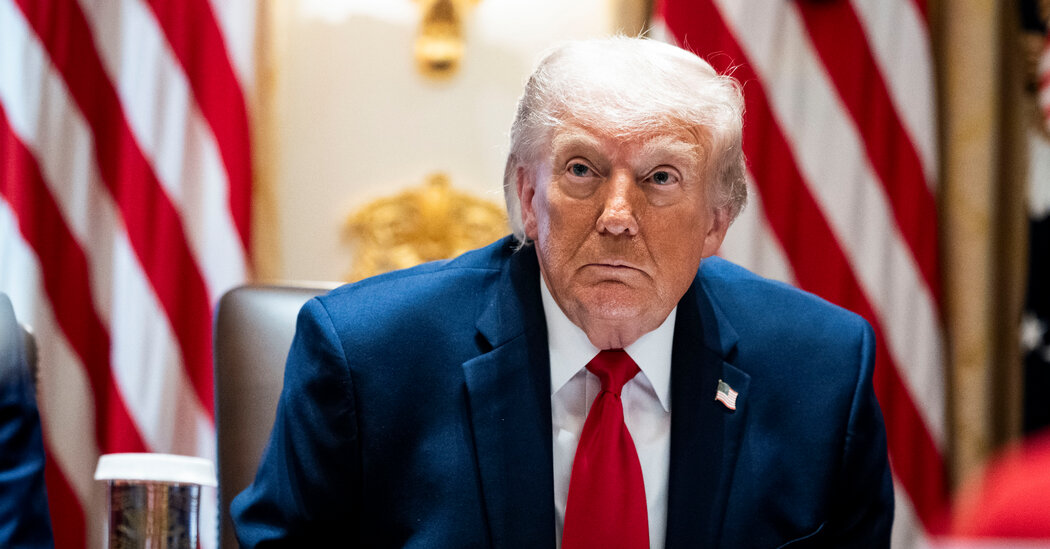
President Trump has frequently articulated a preference for swift and decisive military and diplomatic resolutions. He reportedly keeps models on his Oval Office desk, referencing past rapid military actions as examples of effective U.S. power. In the initial phases of the current Iran conflict, he often spoke of replicating what he termed “the perfect scenario” in Venezuela — a phrase understood to denote a rapid leadership change through commando operations, aimed at installing a government favorable to American interests.
However, analyses of his presidency’s foreign policy initiatives suggest a shift towards prolonged engagements and unresolved conflicts.
The conflict with Iran, for example, appears to be in a phase of protracted negotiation. When declaring a ceasefire on April 7, President Trump stated on social media that an end to combat operations was conditional on “the COMPLETE, IMMEDIATE, and SAFE OPENING of the Strait of Hormuz.” This condition has not been fully met. While commerce may now be resuming across the strait under a memorandum of understanding that is still being negotiated, the future of Iran’s nuclear and missile programs remains the subject of further discussions. The administration has indicated these negotiations will be “time limited,” likely to 60 days.
Analysts suggest that Iran may perceive a U.S. reluctance to resume military operations, which face significant domestic unpopularity in the United States. Consequently, many Iran experts anticipate that Tehran will seek to extend negotiations for an extended period, a tactic observed in interactions with past administrations.
Similarly, the conflict in Ukraine, now in its fifth year, was a situation President Trump had previously stated he could resolve within 24 hours of taking office. Sixteen months into his term, direct references to the war from President Trump have become less frequent. Secretary of State Marco Rubio recently expressed frustration regarding the protracted nature of ongoing negotiations, suggesting an openness to other nations assuming a mediating role.
Sources familiar with the negotiations report that Russian officials have privately indicated a preference for a more stable and structured diplomatic process, involving working groups and regular meetings, over the episodic visits of special envoy Steve Witkoff and presidential son-in-law Jared Kushner. The position of U.S. Ambassador to Russia has remained unfilled for nearly a year, a point also noted by Russian interlocutors.
In the context of Gaza, following his trip to Israel to mark the release of the last remaining living hostages from the October 7, 2023, attack, President Trump outlined a 20-point plan. This plan included the disarming of Hamas, the establishment of an international stabilization force, and a vision for rebuilding Gaza. Eight months following that trip, Hamas remains armed, and progress on the broader plan, including the disarming of the group, has been limited.
While humanitarian aid flows into the territory have increased, many Palestinians continue to reside in temporary shelters, and significant rebuilding efforts have yet to commence. Israeli Prime Prime Minister Benjamin Netanyahu recently announced an expansion of Israeli military control to approximately 70 percent of the Gaza Strip.
These developments have led some observers to suggest that the administration’s ambitious foreign policy goals are encountering the complexities of international dynamics. Others propose that the U.S. approach, potentially influenced by earlier military actions perceived as swift successes, may have underestimated the challenges of political transformation in certain regions.
Analysts have also posited that the outcomes may stem from a particular interpretation of American power. A close aide to President Trump reportedly remarked that while the U.S. excels at military interventions such as disabling strategic sites, it faces greater challenges in influencing political outcomes in countries like Iran, Russia, and Ukraine.
Richard Fontaine, former top aide to Senator John McCain and now chief executive of the Center for a New American Security, commented in a recent interview: “Foreign policy tends to be a long and difficult enterprise. Mr. Trump is not the first president to imagine quick, simple solutions to complicated and enduring international problems. Yet it is the sustained management and follow-through that often makes all the difference, not the grand and dramatic announcement.”
Sustained follow-through on complex diplomatic initiatives has been identified by critics as a challenge for the current administration. President Trump has episodically acknowledged the complexity of the Russia-Ukraine conflict and the limits of persuasion.
“I’ve had cases where I had Putin all done and Zelensky wouldn’t make the deal, which shocked me,” President Trump stated in an interview with The New York Times in January, referring to Presidents Vladimir V. Putin of Russia and Volodymyr Zelensky of Ukraine. “Then I’ve had cases where it was the reverse. I think now they both want to make a deal, but we’ll find out.”
In the nearly five months since that interview, President Trump has continued to express optimism about an impending deal, though a resolution has not materialized. Ukrainian forces have intensified their operations, utilizing long-range drones and missiles to target energy infrastructure, industrial facilities, and weapons component production sites within Russian territory, including occasional strikes on Moscow. Anne Keast-Butler, a British intelligence chief, stated last week that nearly half a million Russian soldiers had been killed in the conflict, which Russian President Vladimir Putin had reportedly anticipated would conclude rapidly.
Secretary Rubio, who has largely delegated negotiating responsibilities to Mr. Witkoff and Mr. Kushner, recently indicated a subdued expectation for an immediate peace accord. “The U.S. stands ready and prepared to help do whatever we can to help facilitate the end of this war,” he told reporters on Tuesday. “And hopefully the opportunity will present itself at some point that we can play that role again.”
Some experts involved in fostering negotiations suggest that the administration’s approach, characterized by episodic calls and special envoy visits, has lacked the continuous engagement often associated with traditional diplomatic processes to sustain momentum.
Thomas Graham, a longtime American diplomat who served in Moscow before the collapse of the Soviet Union and managed a strategic dialogue with the Kremlin during the George W. Bush administration, offered his perspective: “This conflict is ripe for conclusion. The mood has changed in Moscow. The battlefield is different: The Ukrainians have frozen the front line. The economic problems in Russia are building, and some political discontent is bubbling up. Conversations inside the Kremlin are on ‘How…”
Why This Matters
The current state of U.S. foreign policy, as evidenced by ongoing situations in Iran, Ukraine, and Gaza, holds significant global implications. The approach taken by a major global power like the United States influences international stability, the trajectory of conflicts, and the effectiveness of diplomatic efforts worldwide.
For allies, consistent and predictable U.S. engagement is crucial for collective security and coordinated responses to global challenges. Perceived shifts in diplomatic strategy or a lack of sustained follow-through could lead to uncertainty and potentially alter alliances.
For adversaries, the perception of U.S. resolve and diplomatic capacity can influence their strategic calculations. Protracted negotiations without clear outcomes might embolden parties to extend conflicts or resist concessions, complicating efforts toward peace and stability.
Domestically, the outcomes of these foreign policy endeavors directly impact national resources, public opinion regarding international intervention, and the long-term strategic position of the United States. The effectiveness of the administration’s foreign policy approach will continue to be a key factor in assessing its overall governance and its role on the global stage.
Shifting Strategies: US Navigates Complex Stalemate in Iran and Gaza
The global diplomatic landscape is currently defined by persistent stalemates and the challenging pursuit of sustainable resolutions, particularly evident in the United States’ evolving approach to conflicts in Iran and Gaza. After periods characterized by intense military pressure and hardline demands, there is a discernible shift towards re-engaging with complex, often contentious, negotiation processes.
This strategic pivot highlights the inherent difficulties in translating military superiority or economic sanctions into desired political concessions, underscoring the enduring necessity of diplomacy even in the most fraught international relations.
Iran: From “Unconditional Surrender” to Revised Demands
The situation with Iran presents a particularly complex form of diplomatic deadlock. Former President Donald Trump’s administration initially adopted a stringent stance, demanding “unconditional surrender” or “capitulation” from Tehran. This position was articulated early in the conflict, with Mr. Trump expressing curiosity as to why Iran had not yielded, as noted by Mr. Witkoff in an interview with Fox News during negotiations in Geneva in February.
In pursuit of these political goals—primarily the cessation of Iran’s enriched uranium program and its missile development—the Trump administration initiated military action. This included a series of strikes and an economic blockade. Mr. Trump himself cited a list of targets hit by the military, pointing to a “devastated Iranian air force and navy” during a flight back from China in mid-May. However, despite these military engagements, Iran did not cease its uranium enrichment or missile program, leading to a critical reassessment of the strategy’s effectiveness in achieving stated political objectives.
Jake Sullivan, the National Security Adviser to President Joseph R. Biden Jr. and a key figure in the Obama-era negotiations with Iran, recently summarized the outcome of the previous approach, stating, “He tried to bomb Iran, he tried to blockade Iran, he tried to bully Iran, and he is stuck.” This assessment reflects a consensus among some analysts that a solely coercive strategy has reached its limits.
Two weeks ago, following the apparent inability of military action to compel Iran’s surrender, Mr. Trump’s administration initiated a shift. It is now reportedly attempting a “mix of incentives, threats and revised demands” aimed at compelling Iran into a new round of negotiations, similar to those underway in February when the conflict was initiated by Mr. Trump and Mr. Netanyahu. Should both Mr. Trump and Iran’s clerical and military leadership agree to such an accord, it would mark the beginning of a potentially protracted negotiation process.
Experts highlight the limitations of military force in addressing the broader geopolitical challenges. As Mr. Fontaine observed, “The narrower problem of ongoing Iranian enrichment was solvable through bombing, at least in the medium term. The broader problem of the Islamic Republic is not.” This distinction suggests that while military actions might temporarily disrupt specific capabilities, they are insufficient to fundamentally alter the nature or long-term strategic posture of the Iranian state.
Gaza: A Truce Followed by Stalled Progress
Similar challenges in translating immediate successes into lasting political outcomes have been observed in Gaza. Mr. Trump successfully brokered a truce between Israel and Hamas, which notably led to the release of all hostages, both deceased and alive. This diplomatic achievement brought a temporary halt to hostilities and offered a glimmer of hope for post-conflict stability.
However, progress beyond the immediate truce has largely stalled. Efforts to establish a new Palestinian administration, which Mr. Trump had suggested would be in place within months to oversee the rebuilding of devastated cities, have not materialized. Furthermore, Mr. Trump’s proposed “Board of Peace,” an initiative intended to spearhead reconstruction and investment efforts, has barely commenced operations. Compounding these setbacks, Israel continues to conduct bombardments in the territory almost daily, maintaining a cycle of violence and instability.
As the Iran conflict consumed significant attention, Mr. Trump’s focus reportedly shifted, further contributing to the stagnation of post-truce initiatives in Gaza. This underscores how interconnected and resource-intensive international crises can divert attention and resources from other critical areas, leaving fragile peace efforts vulnerable.
The Imperative for Institutionalized Negotiation
The experiences in both Iran and Gaza underscore a broader realization within foreign policy circles: the critical need for robust and institutionalized negotiation processes. The initial question, “how do we present this as a victory?” reflects the difficulty in defining success when military actions do not lead to desired political concessions.
While the necessity of a negotiating process is widely acknowledged, its consistent application remains elusive. Mr. Graham, an observer of these developments, noted a desire for a more structured approach, stating, “I think they would like to see the process institutionalized, so it’s more than a couple of envoys talking to Putin.” While Mr. Graham used the example of talks with the Russian leader, the sentiment applies broadly: there is a growing recognition that effective diplomacy requires formal, sustained frameworks rather than intermittent, ad-hoc discussions between specific envoys or leaders. This institutionalization is seen as crucial for building trust, ensuring continuity, and achieving durable agreements in complex geopolitical environments.
The evolving strategies in these two critical regions illustrate the ongoing debate and practical challenges faced by major powers in crafting foreign policy that effectively balances coercive measures with sustained diplomatic engagement.
Why This Matters
Global Stability and Regional Security:The persistent stalemates in Iran and Gaza are not isolated incidents; they represent focal points of wider regional instability with potential global repercussions. Unresolved conflicts in these strategically vital areas risk escalation, drawing in more international actors and potentially leading to broader geopolitical confrontations. Stability in the Middle East is intrinsically linked to global energy markets, counter-terrorism efforts, and international migration patterns.
The Efficacy of Foreign Policy Tools:The shift in US strategy, particularly regarding Iran, serves as a crucial case study on the effectiveness of different foreign policy instruments. It highlights the limitations of “maximum pressure” campaigns that rely solely on military force and sanctions to achieve political ends. The outcomes of these evolving approaches will significantly inform future foreign policy decisions by the United States and other major powers, influencing the balance between hard power and diplomatic engagement in addressing international crises.
Humanitarian Consequences:In Gaza, the stalled reconstruction efforts and continued daily bombardments have severe and ongoing humanitarian impacts on the civilian population. The failure to establish a stable post-conflict administration and implement rebuilding initiatives perpetuates immense suffering, displacement, and economic hardship. This prolonged crisis exacerbates regional tensions and presents a moral imperative for international intervention and sustainable solutions.
Precedent for International Relations:How these complex stalemates are ultimately resolved, or allowed to fester, will set important precedents for future international crises. It will influence perceptions of international law, the role of multilateral institutions, and the viability of various conflict resolution models. The capacity of diplomacy to succeed where military force has faltered could redefine approaches to future global challenges.
US Credibility and Leadership:The ability of the United States to effectively navigate these intricate conflicts and contribute to lasting peace and stability is a direct test of its diplomatic leadership and credibility on the world stage. The success or failure of its initiatives in Iran and Gaza will have long-term implications for American influence, its alliances, and its perceived commitment to global security.