
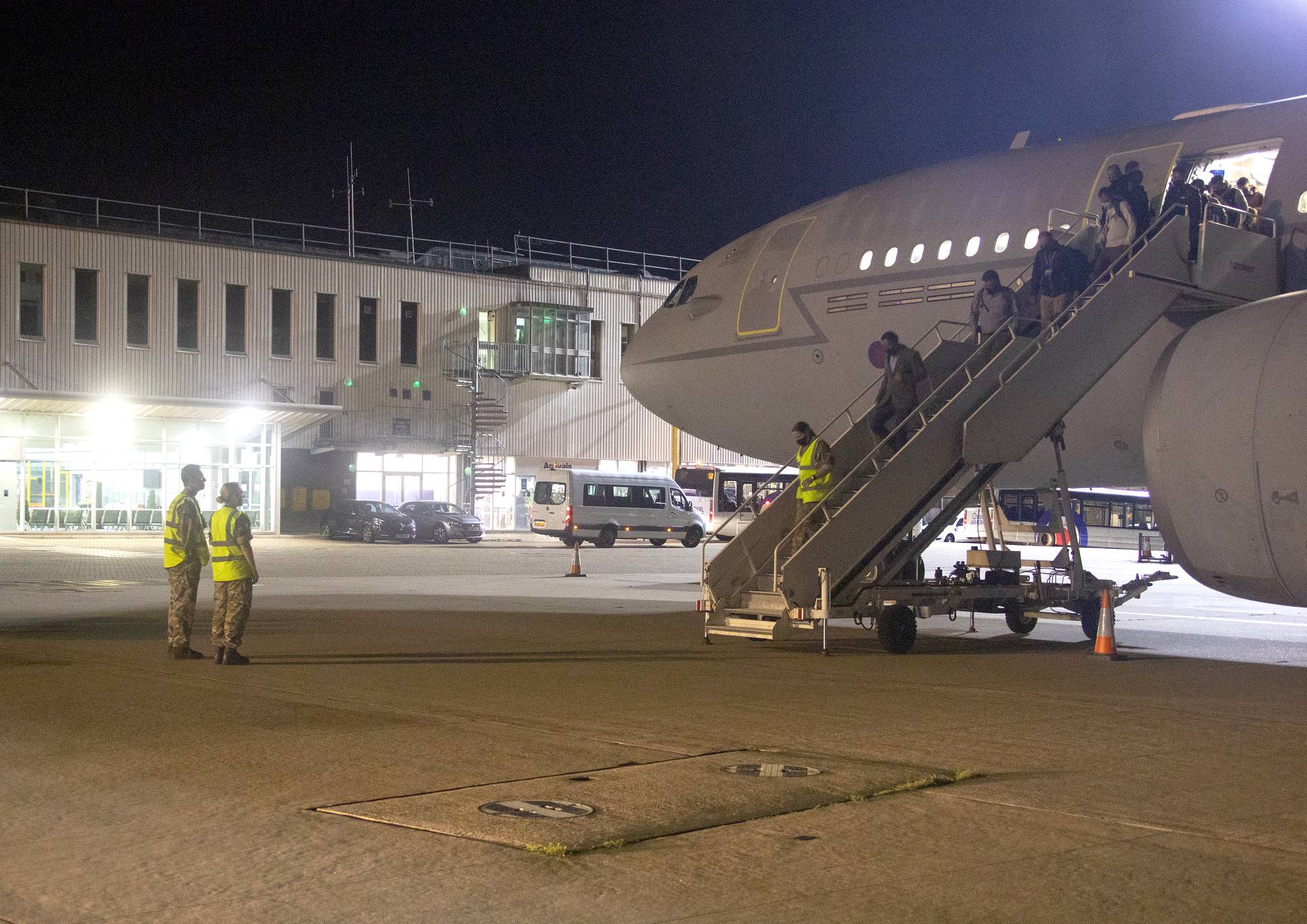
UK Ends In-Country Assistance for Afghan Resettlement Programme, Shifts Responsibility to Individuals
The United Kingdom’s Ministry of Defence (MoD) has announced a significant operational shift in its Afghan Resettlement Programme (ARP), ceasing direct in-country assistance for eligible individuals seeking to depart Afghanistan. Under the revised framework, those identified for relocation to the UK will now be required to independently facilitate their journey to a third country before receiving ongoing support from the UK government.
This decision, conveyed to Parliament by Minister for Defence Readiness and Industry Luke Pollard on April 28, marks a critical phase in the government’s commitment to conclude the central delivery aspects of the programme within the current parliamentary term. The ARP was established in the wake of the Taliban’s takeover of Afghanistan in August 2021, aiming to provide a safe route to the UK for Afghan citizens who assisted the UK government and military, or who are otherwise at high risk.
Minister Pollard stated that the move followed “increased evidence of successful self-moves” by eligible Afghans to third countries. He emphasized that the policy change was implemented after a careful assessment of risks to the cohort and a thorough evaluation of value for money for the British taxpayer. “Having seen increased evidence of successful self-moves and after assessing carefully again the risks to this cohort and other factors, including the value for money for the taxpayer, we have decided to end in-country assistance for movements out of Afghanistan,” Pollard told Parliament.
While direct assistance within Afghanistan is being withdrawn, the government has affirmed its commitment to continue supporting individuals once they reach a safe third country. Pollard clarified, “Once individuals reach a safe third country, we maintain provision of our current support until 2028.” This support is intended to bridge the gap until their full relocation to the UK can be finalized, though the precise nature and extent of this ‘current support’ in third countries were not explicitly detailed beyond its duration.
The MoD highlighted significant progress in managing the application pipeline since the programme’s inception. The outstanding application caseload, which stood at approximately 25,000 individuals when all schemes were closed to new applicants in July 2025, has since fallen to fewer than 17,000. The MoD’s objective is to complete all decisions on this remaining caseload by spring of next year. Furthermore, the government estimates that fewer than 9,000 eligible persons remain to be relocated under the programme. This reduction is attributed, in part, to a more stringent application of eligibility criteria, with Pollard noting, “we are finding far fewer applicants meet the eligibility criteria than in the years after the scheme opened.”
Two significant structural changes were also announced to streamline and ultimately conclude the programme. Firstly, the MoD will now strictly enforce the existing immigration rule requiring eligible individuals to attend a visa application centre appointment within 12 months of notification. Exemptions will only be granted in exceptional circumstances. This measure aims to accelerate the processing of applications and ensure timely progression through the resettlement pathway.
Secondly, a definitive backstop date of December 2028 has been introduced for all MoD support provided in third countries and, crucially, for relocations to the UK. Minister Pollard was unequivocal about the implications of this deadline: “save for exceptional circumstances, December 2028 will therefore mark the end of relocations to the UK.” This establishes a firm timeline for the conclusion of the entire resettlement operation, signaling the government’s intent to transition away from direct management of the programme.
Changes are also being implemented regarding accommodation provisions. The MoD has ceased operating transitional sites on the defence estate, with the remaining small number of Afghans in such accommodation now being supported by local authorities. Furthermore, service family accommodation properties currently utilized as settled accommodation for Afghans are scheduled to have their use ended by 2028. In a move to reduce transitional pressures, two of the six hotels initially procured to support the programme will have closed by May of this year.
Minister Pollard extended his gratitude to local government partners and other supportive organizations, acknowledging their indispensable role. “I want to thank our partners in local government and other supportive local organisations, who have, and continue to provide critical support to eligible Afghans in the resettlement process,” he stated. Pollard expressed confidence in the progress being made, reaffirming the government’s aim to conclude central government delivery of the programme “well before the end of this Parliament,” consistent with its broader strategy to manage public resources effectively and transition from emergency responses.
Why This Matters
This policy shift in the UK’s Afghan Resettlement Programme carries significant implications for various stakeholders, from the vulnerable Afghans still seeking sanctuary to the UK’s international standing and domestic resource allocation. For the thousands of eligible Afghans remaining in Afghanistan, the cessation of in-country assistance introduces a formidable new hurdle. The requirement to “self-move” to a third country places the burden of navigating perilous journeys, often without official documentation or financial means, onto individuals who may already be at extreme risk from the Taliban regime or other threats. This could effectively bar some of the most vulnerable from accessing the programme, potentially leaving them in dangerous situations despite their eligibility for UK protection.
From a humanitarian perspective, the decision raises questions about the UK’s moral obligations to those who supported its mission in Afghanistan. While the government cites “successful self-moves,” critics may argue that relying on individuals to undertake dangerous and often costly journeys undermines the humanitarian principles upon which such resettlement programmes are typically founded. It also puts pressure on neighboring countries, which may become transit points for Afghans attempting to reach a third country, potentially straining their resources and protection capacities.
For the UK government, the move reflects a broader drive towards concluding what was initially an emergency response, transitioning to a more managed, long-term approach. The emphasis on “value for money” and the introduction of strict deadlines like the December 2028 backstop underscore a desire to streamline operations and reduce the financial burden of the programme. This aligns with government priorities to manage public spending and move beyond the ad-hoc arrangements necessitated by the rapid withdrawal from Afghanistan. However, the policy’s effectiveness will depend on how many eligible individuals can realistically overcome the new logistical and financial challenges to reach a third country and complete their resettlement.
Domestically, the changes also impact local authorities and community organizations that have been crucial in supporting arriving Afghans. While Minister Pollard thanked these partners, the shift in accommodation responsibilities and the impending closure of transitional sites suggest a rebalancing of roles. Local councils may face new pressures in integrating and supporting arrivals as central government support phases out. The long-term success of the programme, therefore, hinges not only on the government’s policy but also on the continued capacity and willingness of local partners to provide essential services to those who make it to the UK.
Ultimately, this policy adjustment marks a critical juncture for the UK’s commitment to its Afghan allies. While aiming for efficiency and finality, it also presents substantial challenges that will determine whether the programme effectively fulfills its promise to those it was designed to protect.