
Key Takeaways:
- Even Healthcare secured $50 million in a Series B round, valuing the Indian startup at $300 million, to revolutionize the country’s healthcare payment and delivery model.
- The company is pivoting to owning and operating its hospitals, moving away from partner facilities to ensure complete control over patient care and eliminate incentives for unnecessary treatments.
- Backed by Khosla Ventures, Even’s innovative approach links doctor and management compensation to patient outcomes and long-term company performance rather than the volume of procedures.
Even Healthcare Lands $50M to Reshape India’s Hospital Landscape with Outcome-Driven Model
In a significant move poised to disrupt India’s massive healthcare sector, Even Healthcare has successfully closed a $50 million Series B funding round. Led by long-time investor Khosla Ventures, with participation from Alpha Wave, this all-equity infusion now values the Bangalore-based startup at an impressive $300 million – a threefold increase from its valuation just 18 months prior. The latest capital injection brings Even’s total funding to over $120 million, signaling strong investor confidence in its audacious mission: to fundamentally alter how hospitals in the world’s most populous country earn revenue and how medical professionals are rewarded.
Traditionally, the Indian healthcare system has been riddled with perverse incentives. Hospitals often see higher profits when patients undergo more tests, more complex procedures, or endure longer stays, even when these may not be medically necessary. This model, unfortunately, prioritizes volume and billing over genuine patient welfare and efficient care. Even Healthcare is charting a different course, one that places patient care and optimal health outcomes at its absolute core, deliberately sidestepping the financially driven push for superfluous treatments that inflate medical bills.
From Partnerships to Ownership: Taking Control of Care Quality
Even’s journey began with a model reliant on partner hospitals to provide treatment for its members. However, this approach quickly revealed systemic flaws. Mayank Banerjee, who co-founded Even in 2021 alongside Matilde Giglio and Alessandro Ialongo, shared insights into this pivotal realization. “We think patients are getting not only a bad experience, but insurers are getting a bad economic deal,” Banerjee told TechCrunch. The startup began observing instances where patients were subjected to tests or recommended surgeries that Even deemed unnecessary, highlighting the inherent conflict of interest in the traditional fee-for-service model.
This discovery spurred a crucial strategic pivot: Even Healthcare decided to take matters into its own hands. “As a result, we decided to fix it by building our own hospitals,” Banerjee explained. This shift allows Even to exert complete control over the patient journey, from diagnostics to treatment and recovery, ensuring that every decision is aligned with the patient’s best interest and clinical necessity, rather than financial gain. This radical move is a testament to Even’s commitment to its founding principles and its belief that true healthcare reform requires integrated ownership of the delivery mechanism.
Khosla Ventures’ Enduring Conviction in a Disruptive Model
The Silicon Valley venture firm Khosla Ventures has been a consistent supporter of Even Healthcare, investing since its seed round in 2021. Their continued backing, particularly in this Series B round, underscores their conviction in Even’s transformative potential. Vinod Khosla, founder of Khosla Ventures, articulated the profound implications of Even’s strategy. He emphasized that Even’s approach transcends mere incremental fixes to a fragmented system; instead, it boldly integrates financing, technology, and direct care delivery. The ultimate objective, as Khosla stated, is to “reward better health outcomes rather than greater use of healthcare services.”
This philosophy resonates deeply with Khosla Ventures’ investment thesis in disruptive technologies and business models. “The clinical and economic results so far give us conviction that this can become an important new model for healthcare in India and beyond,” Khosla affirmed. This ringing endorsement from such an influential venture capitalist provides significant validation for Even’s unconventional path, suggesting its impact could extend far beyond the Indian subcontinent.
Incentivizing Health: A New Compensation Paradigm
A cornerstone of Even’s disruptive model lies in its innovative compensation structure. Unlike conventional hospitals where doctors might have financial incentives tied to the volume of procedures, Even ensures its doctors receive fixed salaries. While bonuses are available, they are directly linked to patient-reported clinical outcomes, not the number of tests or surgeries performed. This ensures that a doctor’s focus remains squarely on patient well-being and effective recovery.
This principle extends to hospital management as well. Their compensation is deliberately decoupled from the number of procedures. Instead, managers receive salaries coupled with company-wide incentives, aligning their interests with the overall success and efficiency of the organization, not revenue generation from individual treatments. Furthermore, Even’s marketing teams are tasked with attracting patients based on the quality of care, rather than the potential revenue those patients might generate. In a pioneering move, every employee, from doctors to administrative staff, receives equity in Even. This empowers the entire team with a vested interest in the startup’s long-term performance and the delivery of superior patient outcomes, moving away from a system that rewards the generation of more medical bills.
Rapid Expansion and Tangible Impact
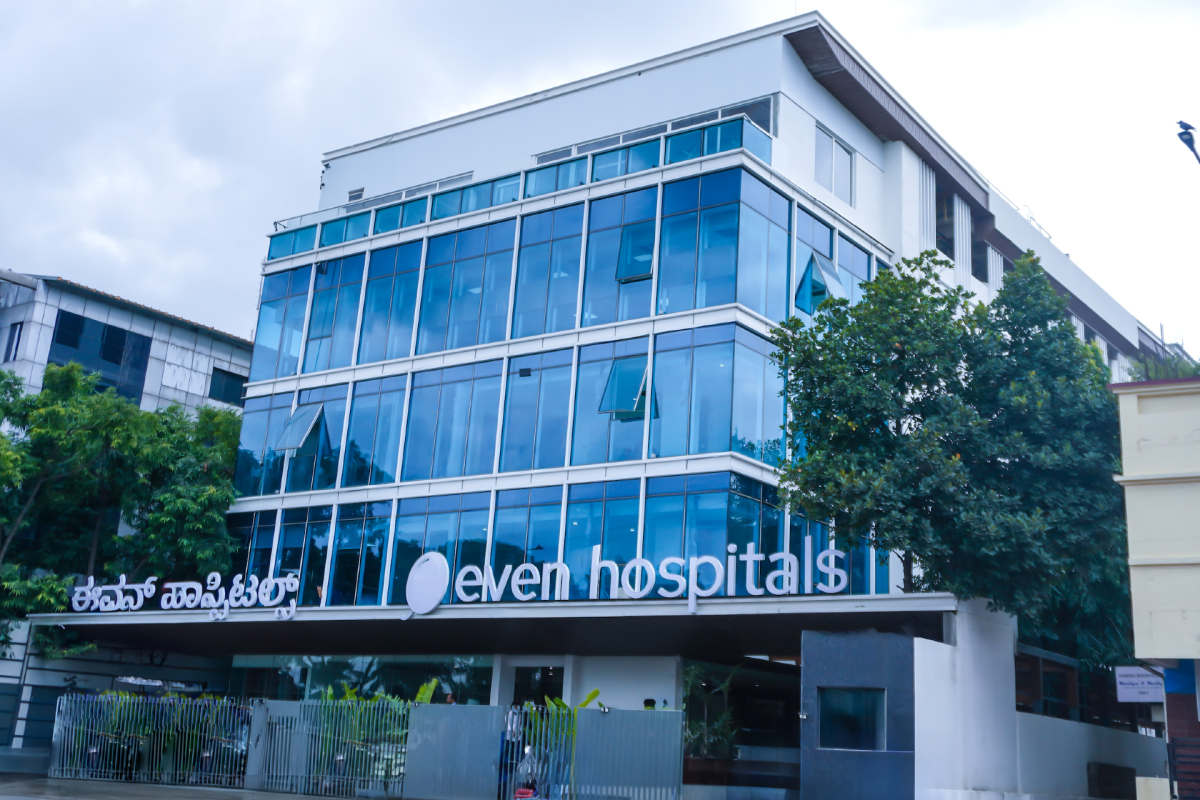
Even Healthcare’s strategic pivot to owning and operating its facilities is already yielding tangible results. The startup has successfully launched two hospitals in Bengaluru, both of which achieved operational profitability, excluding depreciation, within a year of opening. Building on this early success, Even plans to open five more hospitals in the bustling southern Indian city over the next six months, with the latest funding round providing the necessary capital for this ambitious expansion. The company adopts a sustainable growth model by leasing hospital buildings on 20-year agreements, then investing in fitting them out and acquiring state-of-the-art medical equipment.
The impact of Even’s model is not just anecdotal; it’s measurable. The startup meticulously tracks patient recovery using established medical scoring systems, such as the Oxford Knee Score for knee replacements, to objectively measure pain and mobility. These outcomes are transparently published on its website, often alongside comparative figures from other healthcare systems. Even boasts an unplanned readmission rate of less than 1%, a stark contrast to the industry benchmark of 8% to 15%. Patients treated at Even hospitals also experience, on average, 40% less time in the hospital. Collectively, this patient-centric approach has already saved insurers more than ₹500 million (approximately $5.27 million), proving that better patient care can also lead to significant economic efficiencies.
Navigating Growth and Future Prospects
Despite its impressive growth and operational successes, Even Healthcare is still in its investment phase. Regulatory filings indicate a net loss of ₹902 million (approximately $9.50 million) in fiscal 2025, an increase of nearly 25% from the previous year, against a revenue of ₹272 million (about $2.86 million). The company also faced a challenging period in August, laying off around 350 employees, as reported by Indian startup-news website Entrackr. Banerjee acknowledged the restructuring as a difficult but necessary decision, confirming that affected employees received severance, extended health insurance, and accelerated equity vesting.
Currently, Even employs approximately 650 people, including around 300 full-time doctors. Since its inception in 2021, the startup has amassed about 250,000 members and recorded over 750,000 patient interactions, encompassing consultations, diagnostic tests, and surgeries. Banerjee candidly admitted that Even could achieve profitability within months if it ceased its aggressive expansion plans. However, the company is deliberately choosing growth over immediate profit, prioritizing the scaling of its transformative model to serve more patients across India. While he declined to specify a timeline for profitability, Banerjee’s message is clear: “Right now, we’re investing in growth and serving more patients.”
Bottom Line
Even Healthcare represents a bold and much-needed paradigm shift in the Indian healthcare landscape. By securing substantial funding and leveraging a unique model that integrates ownership, technology, and outcome-driven incentives, the startup is directly challenging the entrenched, volume-based profit motives that have long plagued the industry. While navigating the inherent complexities of rapid expansion and balancing growth with profitability, Even’s commitment to patient-centric care and transparent outcomes offers a compelling vision for a healthier future. Its success could not only redefine healthcare delivery in India but also serve as a blueprint for other nations grappling with similar systemic inefficiencies, proving that quality, affordable care and sustainable business models can indeed go hand-in-hand.
When you purchase through links in our articles, we may earn a small commission. This doesn’t affect our editorial independence.
{content}
Source:{feed_title}