
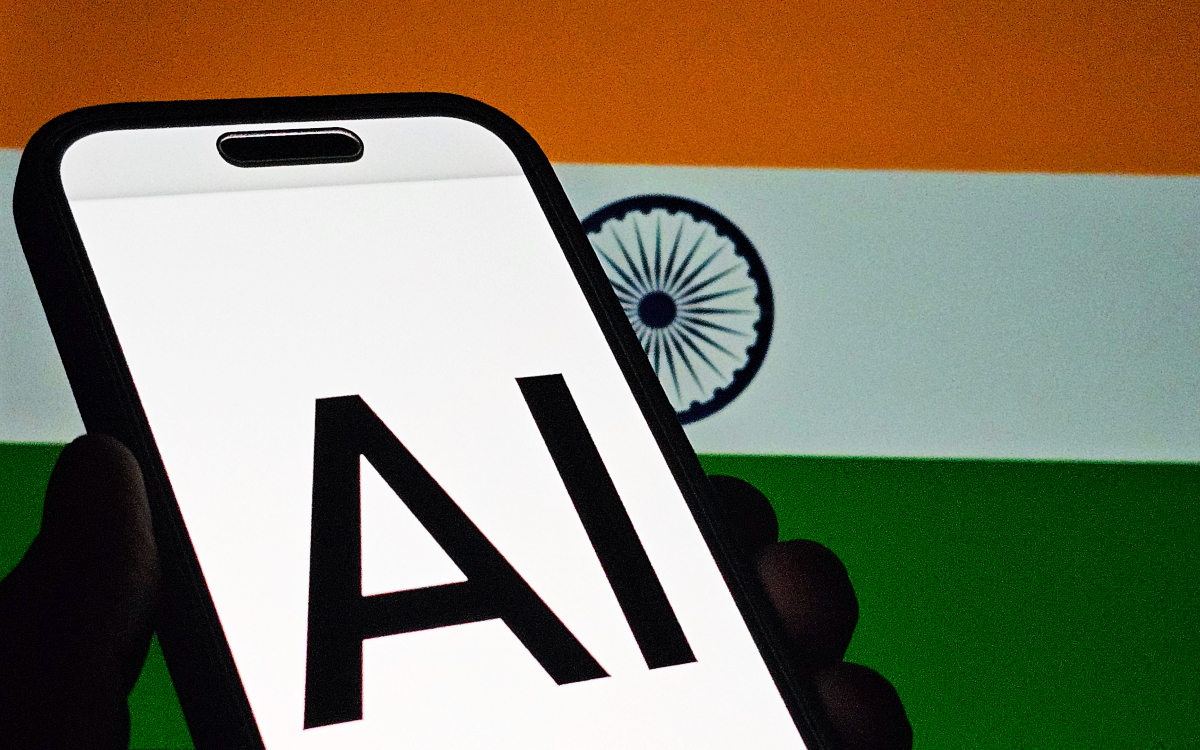
This week, India is staging a four-day AI Influence Forum, designed to attract increased capital in artificial intelligence to its shores. The event will be graced by prominent executives from leading AI research institutions and colossal tech firms, including OpenAI, Anthropic, Nvidia, Microsoft, Google, and Cloudflare, alongside several national leaders.
Anticipating an attendance of 250,000 guests, the gathering is slated to welcome Alphabet CEO Sundar Pichai, OpenAI CEO Sam Altman, Anthropic CEO Dario Amodei, Reliance Chairman Mukesh Ambani, and Google DeepMind CEO Demis Hassabis.
On Thursday, Narendra Modi, India’s premier, is set to give an address alongside French President Emmanuel Macron.
Below are the significant developments from the conference:
- A sum of $1.1 billion has been allocated by India to its government-supported venture capital fund, which is poised to finance nascent companies specializing in artificial intelligence and sophisticated manufacturing nationwide.
- Sam Altman, CEO of OpenAI, disclosed that India registers over 100 million weekly active ChatGPT users, ranking second globally only to the United States. He further noted that Indian students constitute the largest demographic utilizing ChatGPT.
- During a $600 million equity capital raising round, Blackstone acquired a controlling interest in the Indian AI startup Neysa. Other investors included Teachers’ Venture Growth, TVS Capital, 360 ONE Asset, and Nexus Venture Partners. The firm now intends to secure an additional $600 million in debt financing and deploy over 20,000 GPUs.
- C2i, a Bengaluru-based entity developing a power management system for data centers, secured $15 million in its Series A funding round led by Peak XV, with involvement from Yali Deeptech and TDK Ventures.
- Vineet Nayyar, CEO of HCL, stated that Indian IT corporations would prioritize profit generation rather than acting as employment generators. This assertion emerges amidst a decline in Indian IT stock values, fueled by escalating apprehensions regarding AI’s potential to disrupt the IT services industry.
- According to Vinod Khosla, founder of Khosla Ventures, sectors such as IT services and BPOs (Business Process Outsourcing) could “nearly vanish entirely” within half a decade due to AI. He informed the Hindustan Times that 250 million young individuals in India ought to be marketing AI-driven products and offerings globally.
- AMD is collaborating with Tata Consultancy Services (TCS) for the creation of rack-scale AI infrastructure, leveraging AMD’s “Helios” platform.
- Anthropic announced the establishment of its inaugural office in India, situated in Bengaluru. The firm also stated that India ranks as the second-largest user base for Claude, following only the United States.
- Anthropic is forming a partnership with the IT behemoth Infosys to implement Claude models and utilities, such as Claude code, for Indian businesses. Initially, both entities plan to roll out AI tools within the telecommunications sector, supported by a dedicated Anthropic Center of Excellence.
- Sarvam, an Indian AI firm, offered a glimpse of its forthcoming smart glasses, dubbed Sarvam Kaze. In recent weeks, the company has launched multiple models, among them a dubbing model, a speech-to-text model, a text-to-speech model, and a vision model tailored for Optical Character Recognition (OCR).
- The Indian conglomerate Adani declared its commitment of $100 billion towards establishing AI data centers powered by renewable energy in India by the year 2035. The firm indicated that this capital injection is projected to stimulate an extra $150 billion in investments across domains such as server production, sophisticated electrical infrastructure, sovereign cloud ecosystems, and ancillary sectors.
- Cartesia, a voice AI firm, is collaborating with the Indian orchestrator Blue Machines to implement voice technologies for businesses requiring in-country data storage.
- Cohere Labs unveiled a suite of multilingual models featuring open weights, capable of supporting more than 70 languages and deployable on local hardware. The firm also mentioned the release of models optimized for particular geographical areas.
- OpenAI announced its intention to establish two new offices in India, specifically in Bengaluru and Mumbai.
- OpenAI has also formed a partnership with the Tata group for the deployment of 100 megawatts of computing power in India, with the goal of expanding it to 1 gigawatt.
- Ashwini Vaishnaw, India’s technology minister, stated that the nation aims to draw more than $200 billion in funding for AI infrastructure over the coming two years.
- Emergent, an Indian vibe-coding startup, announced it has achieved $100 in Annual Recurring Revenue (ARR) and released a mobile application.
- The Indian AI startup Sarvam unveiled two novel open-source models: Sarvam 30B and Sarvam 105B.
- Sarvam additionally declared a collaboration with Qualcomm, HMD, and Bosch to integrate its AI models into various devices, such as smartphones, feature phones, automobiles, laptops, and smart glasses.
- Gnani, a voice AI startup, launched ‘Vachana,’ a zero-shot voice cloning text-to-speech model compatible with 12 languages.
- BharatGen, an AI consortium supported by the government, unveiled ‘Param 2,’ a 17 billion parameter model capable of operating across 22 languages.
- The streaming service JioHotstar announced its intention to utilize ChatGPT to enhance content discovery through conversational search.
- Sarvam introduced ‘Indus,’ its rival to ChatGPT, which offers support for several Indian languages.
- OpenAI reported that users aged 18-24 in India contribute to almost 50% of ChatGPT’s usage within the country.
- Tech Mahindra, an Indian technology firm, unveiled an 8 billion parameter model primarily focused on Hindi, designed for educational applications.
- The UAE’s G42 collaborated with American chip manufacturer Cerebras to implement 8 exaflops of computing power in India via a supercomputer. The Mohamed bin Zayed University of Artificial Intelligence (MBZUAI) from Abu Dhabi and India’s Centre for Development of Advanced Computing (C-DAC) are also participants in this initiative.
- During the India AI summit, Sam Altman dismissed concerns regarding AI’s water consumption as “entirely unfounded,” though he conceded the relevance of water consumption when “evaporative cooling was standard practice in data centers.”
- He curiously added that humans expend considerable energy throughout their development and in processing their environment. He views arguments concerning ChatGPT’s energy expenditure as “unjustified.”
“However, cultivating a human also demands substantial energy,” Altman remarked. He elaborated, “It requires approximately two decades of existence and all the sustenance consumed throughout that period before intelligence is attained.”
- India announced that more than 88 nations and entities endorsed the New Delhi AI declaration, aiming to leverage AI for societal and economic benefit. Among the signatories were the U.S., China, and Russia.
- India became a member of the U.S.-spearheaded Pax Silica group, established to forge an efficient supply chain for materials vital to AI infrastructure development. The U.K., United Arab Emirates, Singapore, Qatar, Japan, Israel, South Korea, and Australia are also constituents.
{content}
Source:{feed_title}