
Key Takeaways:
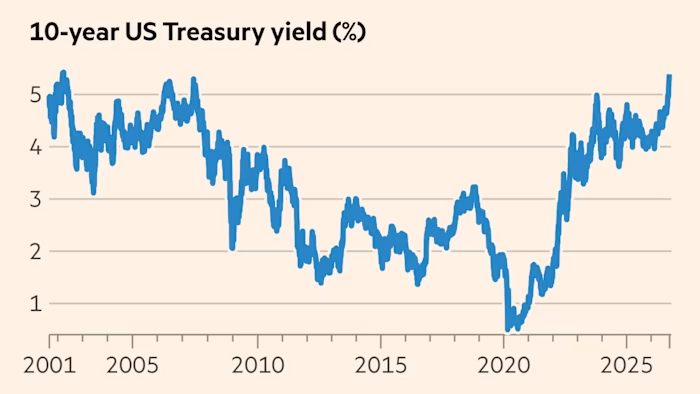
- Global sovereign debt costs are soaring to multi-year highs, driven by persistent inflation, aggressive monetary tightening, and expansive fiscal policies, fundamentally altering the landscape for government financing.
- This surge translates into immense pressure on national budgets, diverting funds from essential public services and investments, potentially necessitating austerity measures or tax hikes to maintain fiscal stability.
- The higher cost of capital poses a significant headwind to global economic growth, increasing financial market volatility and raising the specter of debt crises, particularly for highly leveraged and emerging economies.
Sovereign Debt Costs Around the World Return to Multi-Year Highs: A Looming Fiscal Storm
The era of cheap government borrowing has definitively drawn to a close. Across developed and emerging markets alike, the cost for nations to finance their operations and existing debt burdens has surged to multi-year highs, signaling a profound shift in global financial conditions. This dramatic recalibration of sovereign bond yields is more than just a technical market adjustment; it represents a significant tightening of financial conditions with far-reaching implications for national budgets, economic growth, and financial stability worldwide.
Several potent forces are converging to drive this upward trajectory in borrowing costs. At the forefront is the stubborn persistence of elevated global inflation. After decades of relative price stability, the post-pandemic surge in demand, coupled with persistent supply chain disruptions and geopolitical shocks (most notably the war in Ukraine and its impact on energy and food prices), has forced central banks into an unprecedented cycle of monetary tightening. The Federal Reserve, European Central Bank, Bank of England, and many others have hiked policy rates aggressively and embarked on quantitative tightening programs, unwinding years of asset purchases. This deliberate removal of liquidity from the financial system directly impacts the bond market, pushing yields higher as investors demand greater compensation for holding government debt in an environment of rising interest rates and inflation erosion.
Compounding the monetary policy pivot is the legacy of expansive fiscal policy. Governments globally unleashed massive stimulus packages during the COVID-19 pandemic to cushion economic shocks and support livelihoods. While necessary at the time, these measures significantly swelled national debt piles. Coupled with ongoing structural spending pressures – from aging populations to climate change initiatives and increased defense budgets – the supply of government bonds has continued to grow. In an environment where central banks are are no longer the primary buyers (as they were during quantitative easing), the market must absorb this increased supply, often at higher yields to attract private investors.
The ramifications for national budgets are immediate and stark. Higher interest rates mean that a larger portion of government revenue must be allocated to debt servicing. For instance, countries like Italy, with substantial existing debt, face a particularly acute challenge, as do many emerging market economies that frequently borrow in foreign currencies and are more susceptible to capital outflows and currency depreciation. Even fiscally sound nations, like the United States, are seeing interest payments consume an ever-larger share of their federal budget, potentially crowding out spending on vital public services, infrastructure, education, or healthcare. This fiscal squeeze can lead to difficult political choices: raise taxes, cut spending, or risk further accumulation of debt and potential credit rating downgrades.
The impact extends beyond public finances to the broader economy. Higher sovereign yields typically serve as a benchmark for other forms of borrowing, including corporate bonds, mortgages, and consumer loans. This means businesses face higher costs for capital investment, potentially slowing job creation and economic expansion. Households experience increased mortgage payments and higher costs of consumer credit, dampening demand. This broad tightening of financial conditions acts as a drag on economic activity, increasing the risk of a global slowdown or even recession. Small and medium-sized enterprises, often more reliant on bank lending, are particularly vulnerable to this rising cost of capital.
For emerging markets, the situation is often more precarious. Many developing nations accumulated significant debt during the low-interest-rate environment, often denominated in U.S. dollars. As the dollar strengthens due to Fed tightening and global risk aversion, their debt servicing costs in local currency terms skyrocket. This, combined with potential capital flight, can lead to balance of payments crises, currency collapses, and even sovereign defaults, as witnessed in Sri Lanka and Ghana, and looming risks in others. The International Monetary Fund and World Bank have repeatedly warned about the growing risk of debt distress in the developing world.
Investor sentiment also plays a crucial role. Periods of heightened uncertainty – whether economic, geopolitical, or financial – often lead to a ‘flight to quality,’ where investors seek the safest assets, typically U.S. Treasuries or German Bunds. However, even these traditional safe havens have seen their yields rise as inflation and central bank policies dictate. Furthermore, concerns over long-term fiscal sustainability in heavily indebted nations can lead to a ‘term premium’ demanding higher yields for longer-dated bonds, reflecting increased risk perception.
Looking ahead, the trajectory of sovereign debt costs will remain a critical barometer for global economic health. Central banks face a delicate balancing act: curb inflation without triggering a severe recession or destabilizing highly indebted governments. Governments, in turn, must confront the imperative of fiscal consolidation without stifling economic growth. The interplay of inflation dynamics, monetary policy responses, and government fiscal decisions will determine whether the current elevated borrowing costs normalize or persist, potentially ushering in an era of constrained public finances and slower global growth.
Market Impact:
The sustained rise in sovereign debt costs is reverberating across all asset classes. Infixed income, government bond markets are expected to remain volatile, with continued pressure on prices and upward trajectory for yields, making it a challenging environment for long-duration bond holders. This also elevates borrowing costs for corporations, potentially widening corporate credit spreads.Equity marketsface headwinds from multiple directions: higher discount rates for future earnings, increased corporate debt servicing costs, and the dampening effect of tighter monetary policy on economic growth and consumer demand, leading to potential earnings revisions and valuation compression.Currency marketswill likely see continued strength in the U.S. dollar due to its safe-haven status and the Fed’s aggressive stance, while currencies of fiscally vulnerable nations or those with significant external debt will remain under pressure.Commodity marketscould experience mixed signals; demand-side pressures from a global economic slowdown might weigh on prices, while ongoing geopolitical risks and supply disruptions could provide intermittent support. Finally, thereal estatesector is directly impacted by higher long-term interest rates, leading to increased mortgage costs, reduced affordability, and potentially significant price corrections in overvalued markets globally.