
Housing and Urban Development Secretary Scott Turner joins ‘Mornings with Maria’ to discuss rising mortgage rates, cutting housing regulations and the Trump administration’s push to boost affordable homebuilding.
Key Takeaways for Investors:
- **Demand Erosion Overrides Supply:** The U.S. housing market in late 2025 and early 2026 pivoted from a supply-driven shortage to a demand-suppressed environment. Soaring affordability barriers and severe macroeconomic uncertainty, including a significant drop in employment growth and consumer confidence, have stifled household formation and major purchasing decisions across both homeowner and renter segments.
- **Macro Headwinds Intensify:** A dramatic slowdown in employment growth (from 1.5M in 2024 to a mere 116K in 2025) and plunging consumer confidence, exacerbated by escalating geopolitical tensions (the Iran war), directly impacted the fundamental drivers of housing demand, signalling broader economic deceleration and risk aversion among consumers.
- **Affordability Crisis Deepens:** Median home prices now demand over 5x the median income, significantly above the historical 3x ratio, while monthly mortgage payments have nearly doubled since 2020. This structural affordability challenge implies sustained pressure on housing market accessibility and suggests a prolonged period of stagnant sales volume and potential equity stagnation.
A new report on the U.S.housingsector paints a stark picture of a market grappling with unprecedented affordability challenges and weakening demand through the first part of 2026. The findings underscore a critical shift in market dynamics, moving from a narrative previously dominated by inventory shortages to one now plagued by a significant erosion of buyer purchasing power and confidence, exacerbated by a deteriorating macroeconomic landscape.
The Joint Center for Housing Studies of Harvard University, in its annual“State of the Nation’s Housing” reportreleased on Wednesday, reveals that existing home sales remain stubbornly near the multi-decade lows first observed in 2023. This persistent stagnation in the resale market, a crucial bellwether for housing liquidity, signals a profound “lock-in” effect. Homeowners, many with historically low interest rates, are increasingly reluctant to sell and re-enter a market with much higher borrowing costs, further constraining the already tight inventory available for genuine buyers and limiting transactional velocity across the sector.
While sales of new homes remained relatively unchanged, a nuanced look at the rental market shows rising retention rates and a decline in new occupancies. This indicates that potential first-time buyers are either delaying homeownership or are unable to transition due to affordability constraints, creating a backlog in the rental market but not necessarily translating to robust new rental demand. New construction starts dipped 1% over the last year, critically driven by a 7% decline in single-family starts. This contraction in single-family construction is particularly concerning for future supply, suggesting that homebuilders are responding to — or anticipating — a sustained period of subdued demand, higher financing costs for projects, and persistent labor shortages, which collectively impact their project viability and long-term pipeline.
“Although supply shortages are still a major concern, depressed demand became a headline in housing over the past year,” the report stated, highlighting a significant pivot in market sentiment and underlying drivers. This shift is clearly evidenced by slower growth in the number of homeowner households as well as a marked deceleration in renter household formation compared with a year ago. This demand-side vulnerability, rather than simply a lack of homes, is now the primary bottleneck for market activity and represents a more systemic challenge for the entire real estate ecosystem.
The rate of growth of homeowner households declined by half, causinghomeownership ratesto decline for the second straight year. This trend indicates a widening gap in wealth accumulation potential and societal aspirations for homeownership, potentially exacerbating socio-economic disparities. Additionally, the year-over-year increase in the number of renters in the first quarter of 2026 was less than half of what it was a year earlier, suggesting that even the rental market, often seen as a fallback in times of housing stress, is feeling the pinch of broader economic pressures on household formation and affordability.
Economic uncertaintyhas weighed heavily on housing demand, with a dramatic deceleration in employment growth being a primary culprit. The report noted that employment growth plummeted from a robust gain of 1.5 million in 2024 to a mere 116,000 in 2025. This precipitous drop in job creation directly impacts potential homebuyers’ confidence, income stability, and ability to qualify for mortgages, creating a significant headwind for the housing market. Compounding this,consumer confidencedropped by more than 20 percentage points in 2025 and fell even further in the first part of 2026 due to the escalating Iran war, reaching an all-time low in April. Such a severe deterioration in sentiment suggests households are bracing for prolonged economic headwinds and geopolitical instability, leading to significant delays in major purchasing decisions.
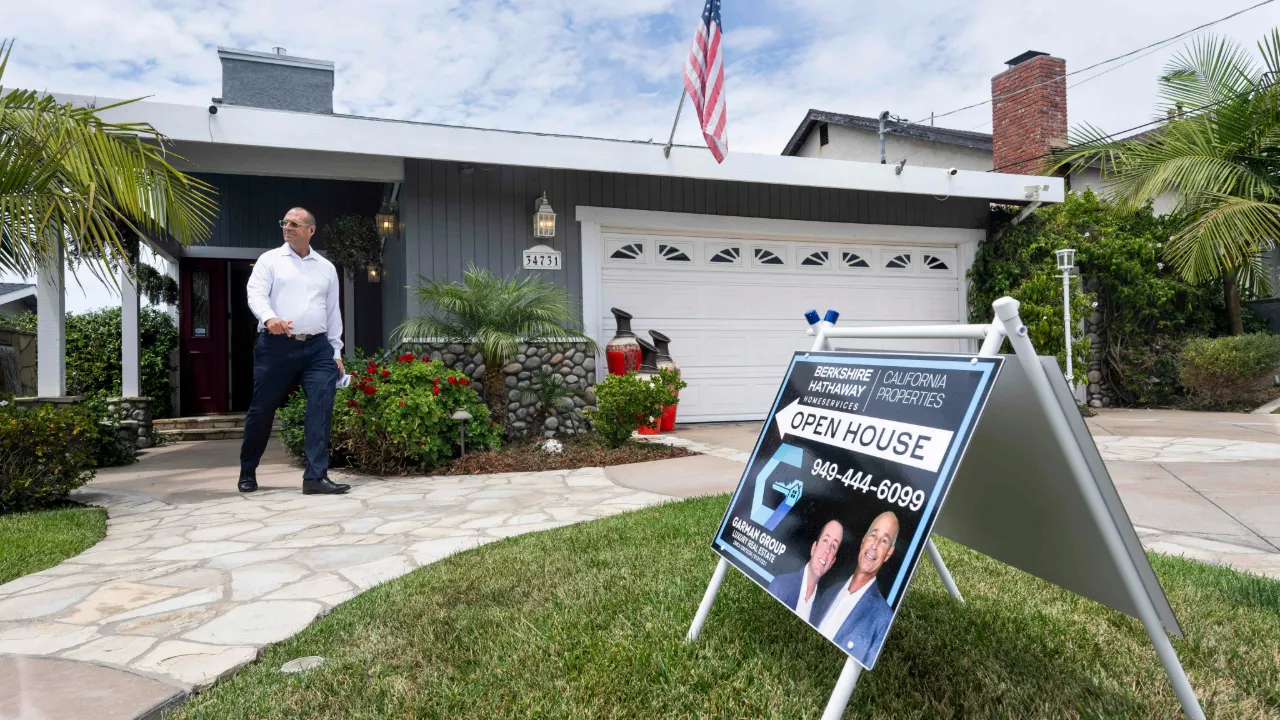
The household income needed to afford a home has nearly doubled since 2020, the report noted.(Paul Bersebach/MediaNews Group/Orange County Register via Getty Images)
“Without a job, graduates are less likely to form a new household or move to a new region,” the report emphasized, drawing a direct line between employment prospects and housing activity. “Without confidence in employment, families are less likely to move or make a big purchase like a house.” This highlights the profound interconnectedness of the labor market, consumer psychology, and the real estate sector. The ripple effects extend beyond housing, potentially impacting durable goods spending, retail sales, and broader economic vitality, signaling a potential slowdown in consumer-driven growth.
High costs and the persistent lack ofaffordable housingoptions are also critically contributing to the weaker demand, creating an insurmountable barrier for many prospective buyers. Households are struggling intensely with elevated home prices in conjunction with stubbornly high interest rates, leading to a profound and deepening affordability crisis across the nation.

Demand for homes is depressed by high prices.(Eric Thayer/Bloomberg/Getty Images)
The report starkly illustrates this by noting that median prices for new and existing homes are both well over $400,000. Existing home prices, in particular, have surged by an astonishing 54% since 2020 and now stand at approximately 5-times the median income. This ratio is significantly above the historical average of 3-times that prevailed throughout the 1990s, indicating a structural shift in housing valuation relative to earnings. This profound imbalance represents a substantial hurdle for a generation of potential homeowners and raises serious concerns about long-term wealth inequality and intergenerational economic mobility.
Mortgage rates, remaining stubbornly above 6% through the period, amplify this affordability crunch. The report highlights that the monthly payment on a median-priced home surged to $3,100 in the fourth quarter of 2025, a dramatic increase from just $1,700 in early 2020. Consequently, the household income required to comfortably afford such a payment has skyrocketed to more than $120,000 – a staggering jump from $66,000 just five years prior. This exponential increase in the cost of homeownership effectively prices out a vast segment of the population, even those with stable employment, severely restricting the pool of eligible buyers and hindering market recovery.

High mortgage rates and a scarcity of new supply has pushed the cost of buying a home and making monthly payments harder.(David Paul Morris/Bloomberg via Getty Images)
Market Impact:
The Harvard Joint Center for Housing Studies report paints a bearish outlook for the real estate sector and its ancillary industries in the near term. For publicly traded homebuilders (e.g., represented by ETFs like ITB or XHB), the 7% decline in single-family starts, coupled with subdued new home sales, signals ongoing revenue and margin pressures due to reduced demand and higher cost of capital. Mortgage lenders face reduced origination volumes and potential risks from rising delinquencies if economic conditions deteriorate further, directly impacting their profitability and potentially increasing credit risk. Real estate investment trusts (REITs), particularly those focused on residential properties, may see slower rent growth and increased vacancy rates in certain segments, although rising rental retention rates could offer some stability against new occupancies. Materials suppliers, home improvement retailers, and residential real estate brokerage firms could also experience significant headwinds from declining construction and transaction activity. More broadly, the profound affordability crisis and the deceleration in household formation pose a significant drag on consumer spending and broader economic growth. As housing accounts for a substantial portion of household wealth and spending, its prolonged weakness could dampen GDP expansion, influence Federal Reserve monetary policy decisions towards potential rate cuts (should inflation permit), and even contribute to political pressures for interventionist housing policies, as alluded to by HUD Secretary Turner. Investors should brace for continued volatility and exercise caution in sectors highly sensitive to housing market performance, potentially favoring defensive plays or segments with less direct exposure to residential real estate cycles until clearer signs of recovery emerge.