
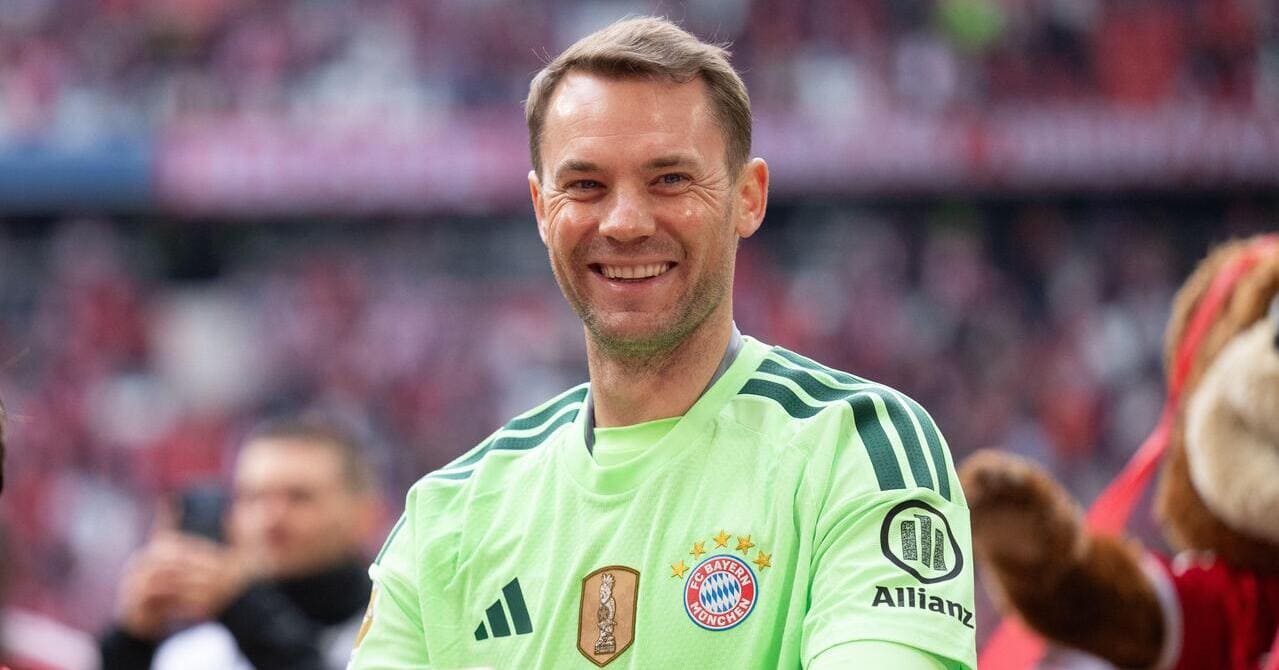
The Phoenix Rises: Manuel Neuer’s Shock World Cup Comeback Ignites Germany’s Hopes!
The footballing world held its breath, then roared in collective surprise and anticipation! Julian Nagelsmann, Germany’s ambitious head coach, has officially unveiled his squad for the 2026 World Cup in North America, and it’s a roster packed with intrigue, talent, and arguably the most audacious comeback story of recent memory. The headline? A colossal one:Manuel Neuer, at the grand age of 40, is not only back but widely expected to reclaim his rightful place between the sticks for Die Mannschaft!
Just two years after seemingly bowing out from international football, the legendary Bayern Munich shot-stopper has answered the call, setting the stage for what will be an incredible fifth World Cup appearance. From his debut in 2010 to orchestrating Germany’s triumph in Brazil in 2014, Neuer has defined an era. His return isn’t merely a nostalgic nod; it’s a powerful statement of intent from Nagelsmann, banking on unparalleled experience and an intimidating aura that few goalkeepers in history possess. The debate will rage, but the DFB has made its choice, with Hoffenheim’s Oliver Baumann and Bayern teammate Alexander Nubel confirmed as his capable, yet likely understudy, backups. The young Jonas Urbig, while promising, will have to wait for his moment.
Captaincy duties fall to the indefatigable Joshua Kimmich, the Bayern Munich midfield maestro whose leadership and tenacity will be crucial in a demanding tournament. But it’s not just about seasoned campaigners. Nagelsmann has sprinkled his squad with tantalizing youth, none more exciting than Bayern’s 18-year-old sensation, Lennart Karl. This bold inclusion signals a clear commitment to nurturing the next generation while maintaining a competitive edge.
The squad also sees the return of talents like Mainz’s Nadeim Amiri, whose inclusion despite limited recent international appearances underscores Nagelsmann’s belief in his unique skillset. Perhaps most eagerly awaited is the comeback of Jamal Musiala. The Bayern attacker, sidelined since March 2025 due to a Club World Cup injury, brings a spark of genius and unpredictability that Germany desperately needs. His recovery and form will be pivotal.
However, with every selection, there are tough omissions. Brentford’s dynamic Kevin Schade, the prolific Niclas Fullkrug (fresh from a loan spell at AC Milan from West Ham), Inter Milan’s Yann Aurel Bisseck, and Borussia Dortmund’s electric Karim Adeyemi are among those who will watch from afar. Their absence speaks volumes about the depth Nagelsmann now commands and the difficult choices he faced in shaping this formidable unit.
“In the past few days I have felt in the conversations with our players how extremely great the anticipation is among each individual for this World Cup,” Nagelsmann affirmed, exuding confidence. “Everyone is eager to start preparing for the next week. We have a strong squad, of which I am absolutely convinced. With the support of our fans, we want to play a very good World Cup.”
Germany finds itself in Group E, a seemingly manageable, yet potentially tricky, pool. They kick off their campaign against Curacao on June 14, followed by clashes against the formidable Ivory Coast and a resilient Ecuador. The path is set, the pieces are in place, and the stage is ready for Germany to either reclaim its past glory or stumble in the face of renewed pressure.
Decoding Nagelsmann’s Masterplan: A Deep Dive into Die Mannschaft
Nagelsmann’s squad is a fascinating blend of battle-hardened veterans and electrifying young talent, signaling a strategic shift. The decision to bring back Neuer is a double-edged sword: immense experience and leadership, but also the physical demands on a 40-year-old in a high-intensity tournament. His unparalleled “sweeper-keeper” style will be key to Germany’s high defensive line and build-up play, offering a unique security blanket.
In defense, the likes of Antonio Rudiger (Real Madrid) and Jonathan Tah (Bayern Munich) bring a physical presence and tactical intelligence. Their partnership will be critical in neutralizing threats. The inclusion of Nathaniel Brown (Eintracht Frankfurt) and Malick Thiaw (Newcastle United) hints at Nagelsmann’s desire for athletic, ball-playing defenders capable of adapting to various systems. David Raum (RB Leipzig) offers blistering pace and delivery from the left flank, while Pascal Gross (Brighton) brings versatility and a keen footballing mind, a testament to his impressive Premier League form.
The midfield is arguably Germany’s jewel. Joshua Kimmich, the appointed captain, is the engine and heartbeat, dictating tempo, winning battles, and initiating attacks. Alongside him, Leon Goretzka (Bayern Munich) offers power and goal-scoring threat from deep. The return of Jamal Musiala, alongside the prodigious Florian Wirtz (Liverpool), promises a creative explosion. Musiala’s dribbling wizardry and Wirtz’s vision and killer pass could unlock any defense. The emergence of Aleksandar Pavlovic (Bayern Munich) adds another layer of technical brilliance and composure, hinting at a bright future. Nadiem Amiri’s inclusion, despite less fanfare, suggests Nagelsmann values his passing range and ability to dictate play from a deeper position.
Upfront, Kai Havertz (Arsenal) remains a crucial figure, capable of playing across the front line and linking play effectively. Leroy Sane (Galatasaray) brings directness, pace, and a potent left foot, while Deniz Undav (Stuttgart) offers a clinical edge and intelligent movement. The selection of Maximilian Beier (Borussia Dortmund) and Jamie Leweling (Stuttgart) provides raw speed and an element of unpredictability, perfect for impactful substitutions. The wildcard, Lennart Karl, could be Germany’s breakout star, a fearless attacking talent with a knack for the spectacular.
Game Highlights: What to Expect from Germany’s World Cup Campaign
While the actual games are yet to be played, Nagelsmann’s squad provides a vivid blueprint of what to anticipate from Die Mannschaft. Here’s a speculative look at the potential “highlights” we can expect:
- The Neuer Masterclass:Expect vintage Neuer moments – audacious sweeps outside his box, incredible reflex saves, and pinpoint distribution initiating attacks. His leadership will be palpable, marshaling the defense with unmatched authority.
- Musiala & Wirtz Unleashed:Prepare for moments of pure magic. Musiala’s mesmerizing dribbles through tight spaces and Wirtz’s incisive passes and goal-scoring runs will be Germany’s primary creative outlets, tearing apart opposition defenses with their youthful exuberance and telepathic understanding.
- Kimmich’s Midfield Dominance:Kimmich will be everywhere – breaking up play, spraying passes, and driving forward. His relentless energy and tactical awareness will be the foundation upon which Germany builds its attacks and stifles opponents. Expect crucial tackles and perfectly weighted through balls.
- Attacking Versatility:Germany will likely exhibit a fluid front line. Havertz dropping deep to link play, Sane stretching defenses with his pace, and the likes of Beier or Undav providing direct goal threats. Look for intelligent rotations and quick transitions designed to exploit defensive weaknesses.
- Set-Piece Threat:With players like Rudiger, Tah, and Goretzka strong in the air, and Kimmich’s precise delivery, Germany will be a significant threat from corners and free-kicks, adding another dimension to their attacking prowess.
- Nagelsmann’s Tactical Adaptability:The squad’s versatility suggests Nagelsmann won’t be tied to a single system. Expect tactical tweaks mid-game and between matches, keeping opponents guessing. He will likely deploy a high-pressing game, aiming to win the ball back quickly and transition to attack.
Germany squad in full
Goalkeepers:Oliver Baumann (Hoffenheim), Manuel Neuer (Bayern Munich), Alexander Nubel (Bayern Munich).
Defensive:Waldemar Anton (Borussia Dortmund), Nathaniel Brown (Eintracht Frankfurt), Pascal Gross (Brighton and Hove Albion), Joshua Kimmich (Bayern Munich), Felix Nmecha (Borussia Dortmund), Aleksandar Pavlovic (Bayern Munich), David Raum (RB Leipzig), Antonio Rudiger (Real Madrid), Nico Schlotterbeck (Borussia Dortmund), Angelo Stiller (Stuttgart), Jonathan Tah (Bayern Munich), Malick Thiaw (Newcastle United)
Offensive:Nadiem Amiri (Mainz), Maximilian Beier (Borussia Dortmund), Leon Goretzka (Bayern Munich), Kai Havertz (Arsenal), Lennart Karl (Bayern Munich), Jamie Leweling (Stuttgart), Jamal Musiala (Bayern Munich), Leroy Sane (Galatasaray), Deniz Undav (Stuttgart), Florian Wirtz (Liverpool), Nick Woltemade (Newcastle United)
The Road Ahead: Prediction
Germany’s group stage draw, featuring Curacao, Ivory Coast, and Ecuador, presents a good opportunity to build momentum. While Curacao should be dispatched comfortably, Ivory Coast offers a stern test of physical prowess and individual flair, and Ecuador’s resilience and tactical discipline cannot be underestimated. However, with the blend of experience and explosive youth at Nagelsmann’s disposal, Germany should navigate Group E as winners.
Looking further, the biggest question mark remains Neuer’s enduring fitness and agility through a grueling tournament, and whether Musiala and Wirtz can stay fit and consistently deliver. If these key players hit their stride, and the defense holds firm, Germany possesses the quality to make a deep run. The energy and tactical acumen of Nagelsmann, combined with a hungry squad determined to erase recent tournament disappointments, points towards a strong campaign. My prediction:Germany will reach the semi-finals, and with a bit of luck and the right tactical execution, they could very well find themselves challenging for the ultimate prize on home soil. This squad has the potential to reignite a nation’s passion and remind the world why they are perennial contenders.