
Key Takeaways for Investors:
- **Accelerated Defense Tech Spending:** The pivot to AI-powered autonomous systems is driving a significant reallocation of defense budgets globally, boosting demand for advanced semiconductors, AI software, sensor technology, and specialized robotics, creating distinct investment opportunities in both established defense primes and innovative tech startups.
- **Dual-Use Technology & Supply Chain Focus:** The lines between military and civilian technology are blurring, leading to increased investment in “dual-use” innovations. Investors should scrutinize companies with robust supply chains for critical components (e.g., microchips, rare earths) and those poised to benefit from both defense and commercial applications of AI and robotics.
- **Geopolitical Risk & ESG Scrutiny:** The proliferation of advanced autonomous weapons heightens geopolitical instability, potentially impacting global trade and creating new market volatilities. Simultaneously, growing ethical concerns surrounding autonomous lethal weapons systems will increasingly influence ESG investment mandates and corporate governance strategies within the defense tech sector.
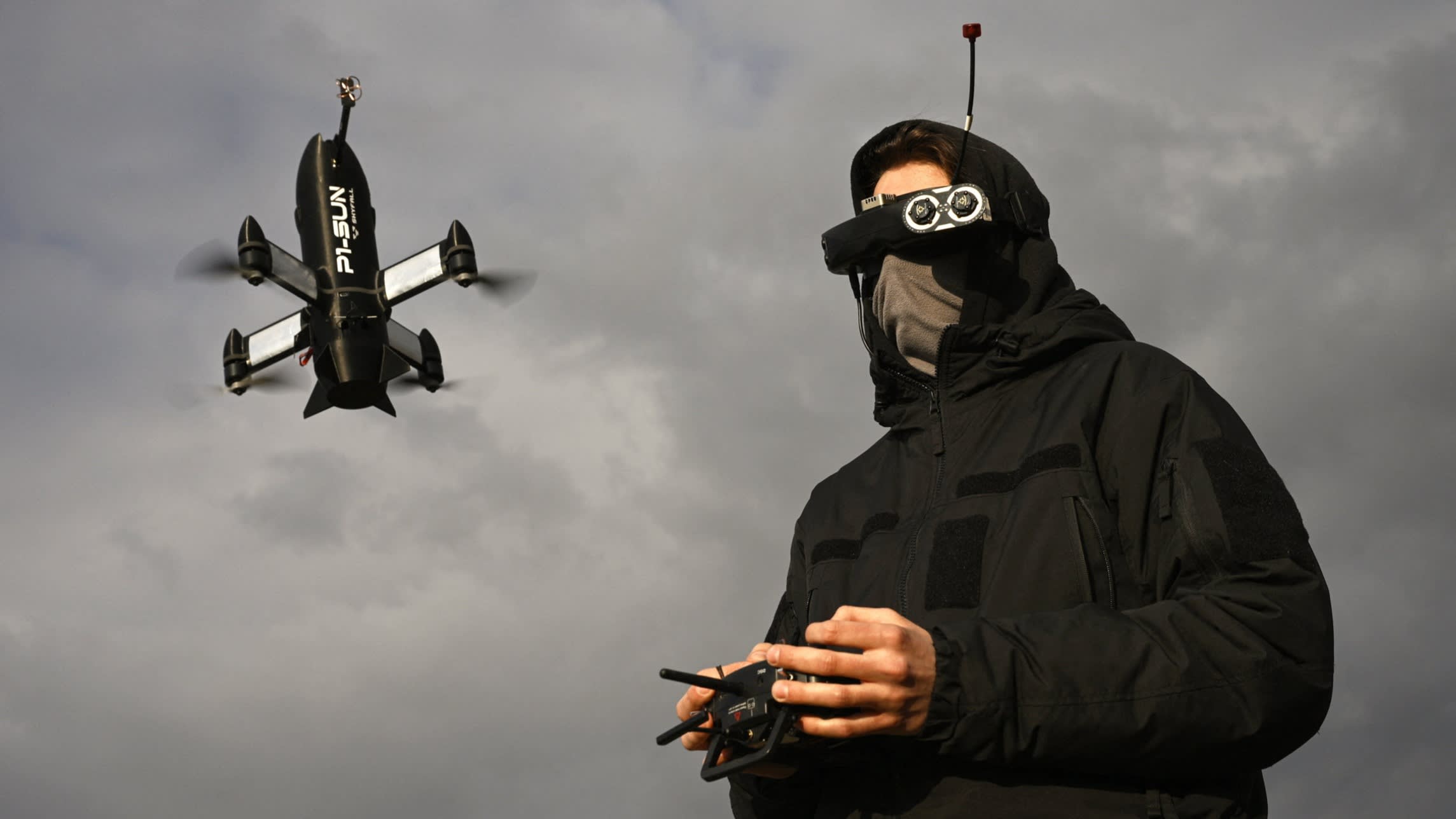
The stark reality emerging from modern conflict zones serves as a chilling testament to a profound military-technological paradigm shift: armed drones and artificial intelligence (AI) have transformed the frontline into treacherous kill zones comparable, in their unforgiving lethality, to the first world war. However, for financial journalists and the investment community, this isn’t merely a tactical observation; it’s a powerful signal reverberating across global markets, reshaping defense spending, accelerating technological innovation, and redefining geopolitical risk premiums.
The Economic Imperative of Autonomous Warfare
The comparison to World War I, while evocative of mass casualties, points to a deeper, more systemic transformation. Just as the Great War spurred industrial-scale manufacturing, mass mobilization, and the rapid deployment of nascent technologies like tanks and aircraft, today’s conflicts are similarly accelerating a new industrial revolution—one built on bits, algorithms, and networked autonomy. Governments worldwide are witnessing the unprecedented effectiveness of relatively low-cost, expendable, AI-enabled drones against vastly more expensive traditional military hardware. This realization is triggering a fundamental re-evaluation of defense postures, budgets, and procurement strategies.
From an economic standpoint, this translates into a multi-billion-dollar reallocation of resources. Traditional defense contractors, once focused on large, expensive, manned platforms, are now compelled to pivot rapidly towards unmanned systems, AI integration, and counter-drone technologies. This shift isn’t just about replacing old equipment; it’s about investing in an entirely new ecosystem of hardware, software, data analytics, and secure communication networks. The economic imperative is clear: invest heavily in autonomous capabilities or face strategic obsolescence.
Industry Beneficiaries and Disruptors
This evolving landscape presents a complex tapestry of opportunities and challenges for various market sectors. At the forefront are companies specializing in:
- **Semiconductors and AI Processors:** The “brains” of autonomous systems require immense processing power. Companies like NVIDIA, AMD, Intel, and specialized AI chip developers are critical suppliers, seeing increased demand for their GPUs, TPUs, and custom silicon designed for edge computing in rugged environments.
- **AI Software and Machine Learning:** Firms developing advanced algorithms for computer vision, target recognition, swarm intelligence, autonomous navigation, and predictive analytics are seeing a surge in government and defense contractor contracts. This includes both established tech giants with defense divisions and nimble startups pushing the boundaries of AI research.
- **Sensor Technology:** High-resolution cameras, thermal imaging, LiDAR, radar, and acoustic sensors are vital for drones to perceive their environment and identify threats. Companies in the optoelectronics and sensor manufacturing space are direct beneficiaries.
- **Robotics and Aerospace:** Manufacturers of the drone platforms themselves, from small quadcopters to larger fixed-wing surveillance and strike aircraft, are experiencing burgeoning demand. This includes both traditional aerospace firms adapting their production lines and new entrants focused solely on unmanned aerial systems (UAS).
- **Cybersecurity:** As reliance on networked autonomous systems grows, so does the vulnerability to cyberattacks. Investment in robust cybersecurity solutions to protect drone fleets, control systems, and data links becomes paramount, bolstering the cybersecurity sector.
Beyond these direct beneficiaries, the shift also presents a disruptive force. Companies slow to adapt or heavily invested in legacy systems may face dwindling contracts and increased pressure. Venture capital is increasingly flowing into defense tech startups, bypassing traditional procurement hurdles to bring innovative solutions to market faster, often under the banner of “dual-use” technology that has both civilian and military applications.
Geopolitical Implications and Supply Chain Vulnerabilities
The proliferation of AI-powered drones is not just reshaping battlefields; it’s fundamentally altering the global balance of power and increasing geopolitical instability. Nations without advanced drone capabilities face significant disadvantages, prompting a new arms race focused on autonomous systems. This leads to increased defense budgets across the board, particularly in regions prone to conflict or seeking to project power.
From an investor’s perspective, this means heightened scrutiny of international relations and potential flashpoints. Escalating conflicts, even localized ones, can disrupt global supply chains, particularly for critical components like rare earth minerals essential for advanced electronics and batteries, or the aforementioned high-end semiconductors. Companies with diversified supply chains or those vertically integrated for critical components may prove more resilient. Furthermore, the ethical implications of autonomous lethal weapons systems are beginning to influence ESG (Environmental, Social, and Governance) investing, leading to debates about “responsible” defense investment and potentially impacting companies involved in controversial AI applications.
The Dual-Use Dilemma and Ethical Investing
A significant aspect of this market transformation is the “dual-use” nature of many underlying technologies. The same AI algorithms used for autonomous vehicles in civilian life can be adapted for military drones. The same sensor technology for industrial inspection can be repurposed for military reconnaissance. This blurs the lines for investors. How do ESG funds evaluate companies whose core technology could contribute to autonomous weapons systems, even if their primary market is civilian? This ethical dilemma is becoming a material risk factor, as public opinion and regulatory frameworks may evolve to restrict investment in certain categories of AI or robotics if their military applications are deemed too controversial.
Companies operating in this space must increasingly demonstrate robust ethical AI frameworks and transparency regarding their technology’s applications. This creates a competitive advantage for firms that can navigate the ethical landscape effectively while still delivering cutting-edge capabilities.
Market Impact
The profound integration of armed drones and AI into military doctrine is poised to have a multifaceted and lasting impact on global markets. Defense contractors adept at transitioning to AI-centric platforms will likely see robust revenue growth and potentially higher valuations, while specialized tech firms in semiconductors, AI software, and advanced sensors will experience sustained demand. The cybersecurity sector will continue its upward trajectory as nations invest heavily in protecting their digital assets and autonomous fleets. However, investors must also contend with elevated geopolitical risk, potential supply chain disruptions, and the growing influence of ESG considerations, particularly concerning the ethical development and deployment of autonomous weapons. This paradigm shift necessitates a vigilant and nuanced investment approach, prioritizing companies with adaptive innovation, resilient supply chains, and a clear strategy for navigating both technological advancement and evolving ethical landscapes.